Camillo Boccaccino
1505–1546 · Duchy of Milan · Mannerism, Renaissance
The story
Between 1535 and 1537 Camillo Boccaccino covered the apse, vault and presbytery of San Sigismondo with frescoes. The church sits just outside Cremona, on the spot where Francesco Sforza married Bianca Maria Visconti in 1441, the wedding that handed the city to the Sforza. What he painted there was new for Lombardy, deep shadow with figures pushing out of it, and the Campi brothers, who ran Cremonese painting after him, started from what they saw.
He had learned the trade at home. His father, Boccaccio Boccaccino, was the leading painter in Cremona and had carried Venetian colour back from his own travels. Camillo went further, studying Titian at first hand and taking up the stretched elegance of Parmigianino, the Parma painter then changing how figures were drawn across northern Italy.
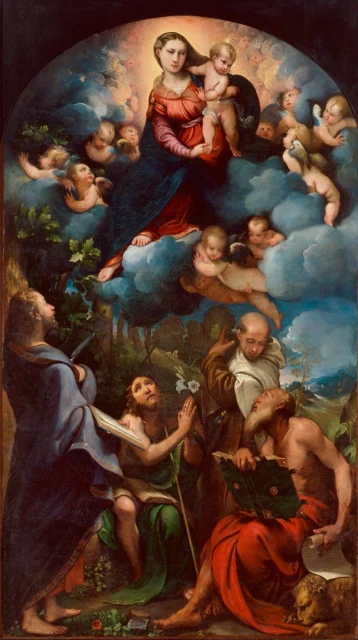
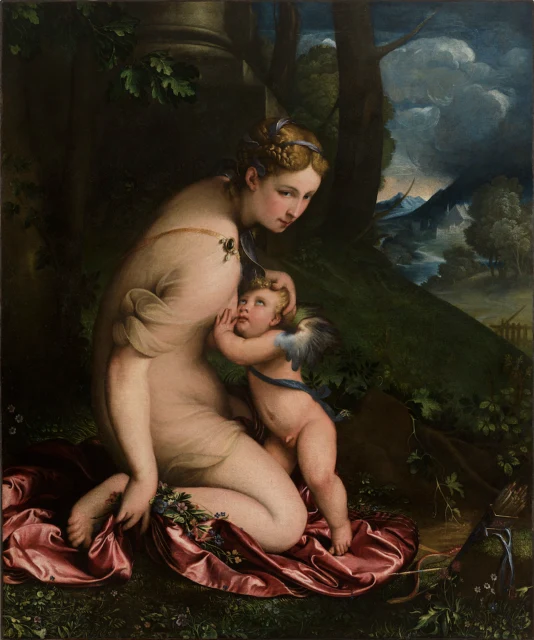
The tall altarpiece at Brera was made for the Carmelite church of San Bartolomeo in Cremona, four saints below craning up at the Virgin in the light. The other painting of his at Brera is a small Venus and Cupid, which reached the museum from a private collection and was admired enough for the Milanese painter and theorist Giovanni Paolo Lomazzo to write a sonnet about it. Camillo died in Cremona on 2 January 1546, in his early forties.