Carl Spitzweg
1808–1885 · Kingdom of Bavaria · Biedermeier
The story
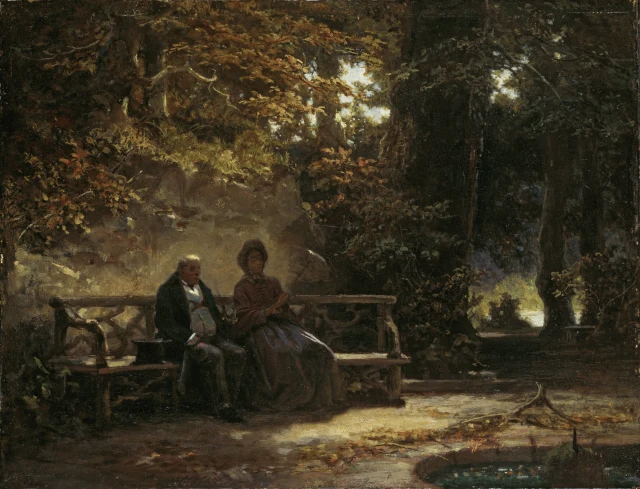
Carl Spitzweg trained as a pharmacist and only turned to painting in his mid-twenties, after an inheritance freed him to teach himself by copying Flemish and Dutch masters. He never lost the amateur's affection for small, closely watched scenes of ordinary Munich life.
His best-known work sums up his gentle humour. The Poor Poet, from 1839, shows a writer in a freezing attic garret, huddled in bed under an umbrella propped against the leaking roof, a stack of his own manuscripts feeding the stove for warmth while he pinches a flea between his fingers. It teases the Romantic cliché of the poet as a suffering genius, and audiences of the Biedermeier years, that inward-looking era of home and small comforts between the Napoleonic wars and the revolutions of 1848, recognised themselves in it at once.
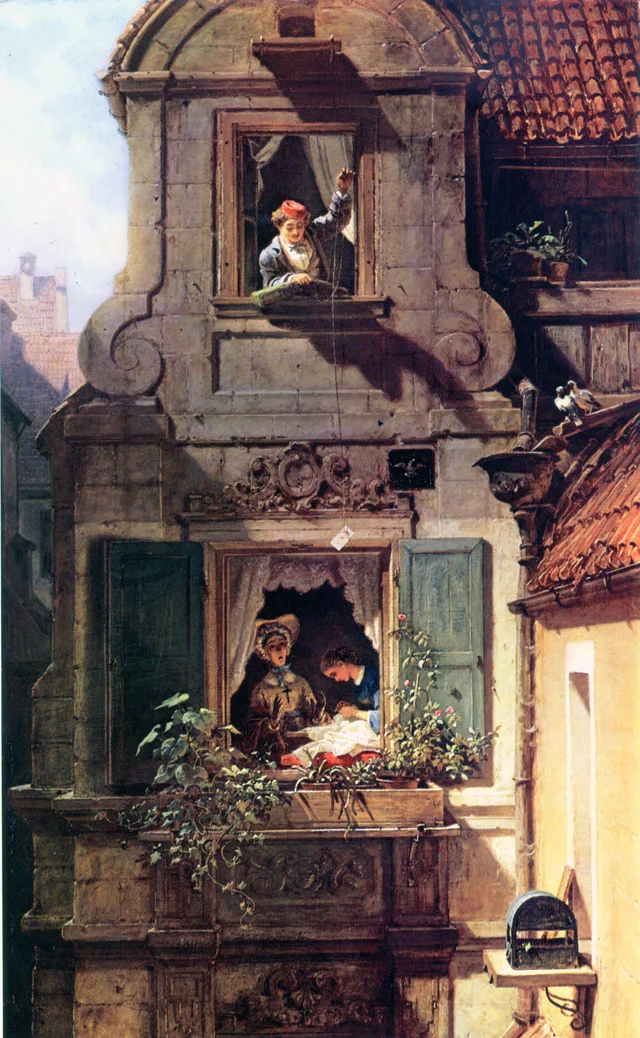
Spitzweg kept painting such figures for decades, the bachelors and bookworms and cactus-growers at their windows. The Poor Poet hangs today in the Neue Pinakothek in Munich, one of several versions he painted of the same shivering figure.