Carolus-Duran
1837–1917 · France · Academic art, Realism, Salon painting
The story
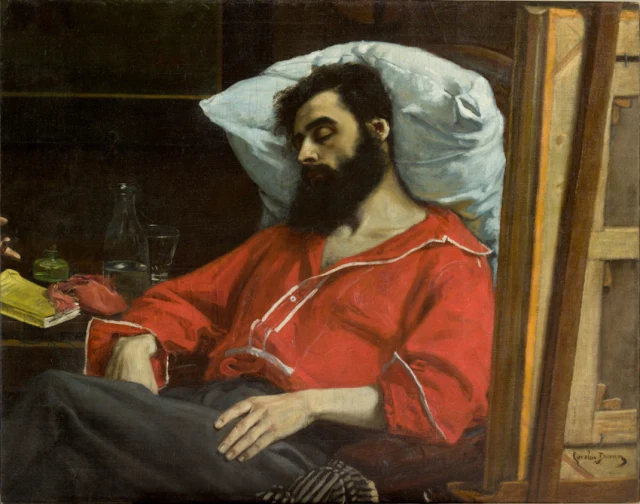
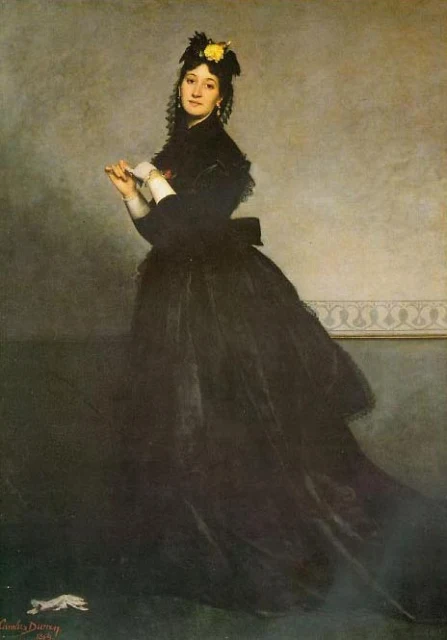
Charles Durand renamed himself Carolus-Duran and, by his thirties, was one of the most sought-after portrait painters in Paris. His breakthrough came at the Salon of 1869 with The Lady with the Glove, a full-length portrait of his wife, Pauline Croizette, in a black silk dress, caught in the small act of peeling off a white glove. It won a medal and made his name.
What set him apart was how he taught others to paint. Duran had spent time in Spain absorbing Velázquez, and he passed that study on as a method. A face began with its main planes laid straight onto bare canvas with a loaded brush, no cautious under-drawing to fall back on. Painters came to his studio for exactly that directness, and the most brilliant of them was the young American John Singer Sargent, who entered the atelier in 1874.
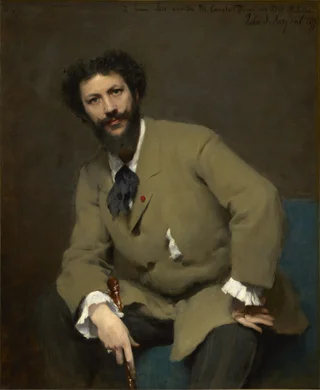
Duran stayed at the centre of French official art for decades and, near the end of his life, ran the French Academy in Rome, the villa where France sent its prize-winning young artists. He died in Paris in 1917. The portrait Sargent painted of him in 1879, dark and supremely confident, now hangs at the Clark Art Institute in Massachusetts.