Cecco del Caravaggio
1589–1620 · Papal States · Baroque, Caravaggism
The story
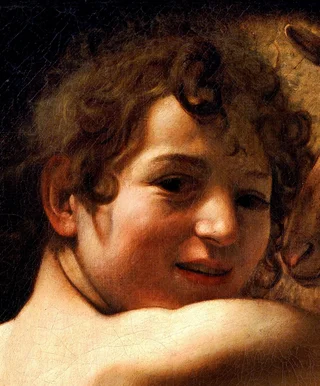
For three centuries this painter had a nickname and no name. Cecco is short for Francesco, and del Caravaggio tied him to Caravaggio. The Roman writer Giulio Mancini, around 1620, listed a Francesco called del Caravaggio among the master's imitators, and an English visitor to Rome in 1650, Richard Symonds, noted that the model for Caravaggio's Amor Vincit Omnia, the painting of a young winged Cupid, had been the painter's own servant, Checco.
From the 1990s the art historian Gianni Papi argued that this was Francesco Boneri, a name that turns up in Roman payment records, probably born in the territory of Bergamo in Lombardy. Roberto Longhi had called him one of the most notable figures of northern Caravaggism, meaning northern Europe. On Papi's reading the north in question is northern Italy. The identification is in general use now and still not accepted by everyone.
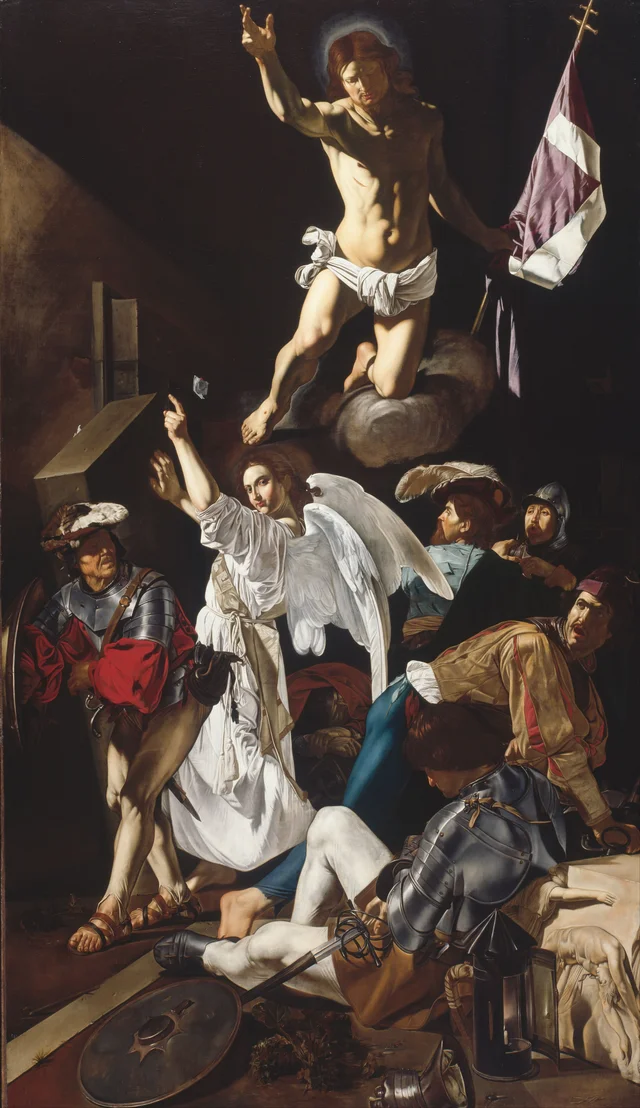
Most of what survives in the archives concerns money. In September 1619 Piero Guicciardini, the Tuscan grand duke's ambassador in Rome, began paying a Francesco Buonero, painter, for a Resurrection destined for his family chapel in Florence. The payments reached 200 scudi by June 1620, and Guicciardini refused the finished canvas. It was sold on in Rome for 160 scudi and is now in Chicago.
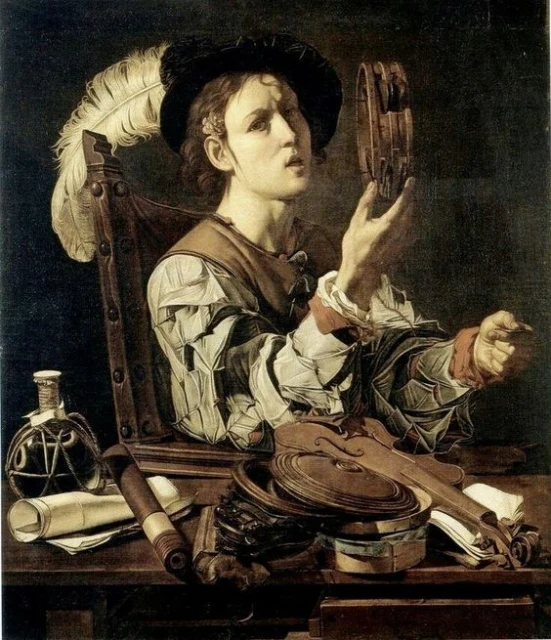
After 1620 he disappears from the documents, leaving about two dozen attributed pictures, hard-lit and unusually attentive to objects. One of them, a young musician among instruments in a workshop, is in the National Gallery in Athens, where even the subject is disputed: Longhi read it as an instrument maker's shop, and a later director of the gallery, Marina Lambraki-Plaka, proposed an allegory of the five senses. The first exhibition devoted to Cecco opened in Bergamo in 2023.