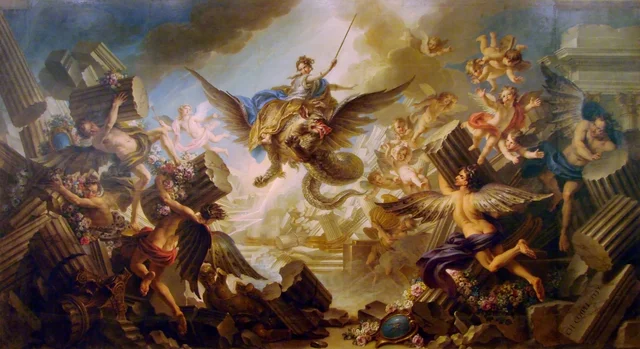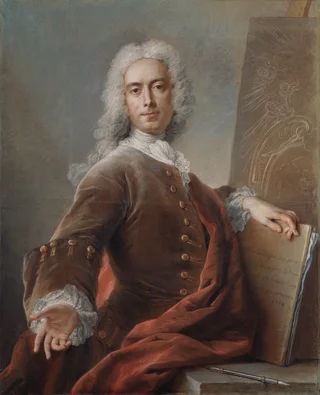
Charles-Antoine Coypel
1694–1752 · France · Rococo, Baroque
The story
Charles-Antoine Coypel spent almost his whole life inside one building: the Louvre, then a royal palace crowded with lodged artists, still far from being a museum. His father, the painter Antoine Coypel, secured the family rooms under the Grande Galerie in 1697, when Charles-Antoine was three, and he grew up there among studios and hung canvases.
He came from a dynasty of court painters, since both his grandfather Noël and his father had served the crown, and in 1722, when his father died, he inherited the post of premier peintre du roi, first painter to the king, at the age of 27. Royal work followed, with commissions for Versailles, designs for Madame de Pompadour, the king's mistress, and above all a set of 28 paintings retelling Don Quixote, which the Gobelins workshops turned into tapestries woven again and again across the 18th century. In 1747 he took the top posts outright, director of the Académie Royale and keeper of the king's pictures.
What set him apart from other court painters was the theatre. Between 1717 and 1747 he wrote around 40 plays, comedies and tragedies staged for private and court audiences, and only one, Les Folies de Cardenio, drawn again from Don Quixote, ever reached print. His pictures carry that habit of the stage, with figures caught mid-gesture as if a curtain had just risen.