Charles Bird King
1785–1862 · United States · Romanticism
The story
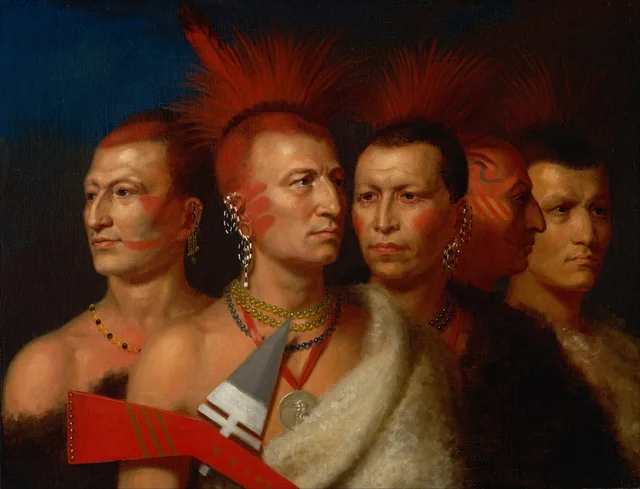
In the autumn of 1821 a delegation of Pawnee, Omaha, Kansa, Oto and Missouria leaders came to Washington to negotiate with the government over their lands. Thomas McKenney, the official in charge of trade with Native nations, wanted a record of the visitors, and they sat for Charles Bird King in his Seventh Street studio. The group canvas now called Young Omahaw, War Eagle, Little Missouri, and Pawnees comes from those sittings. War Eagle wears a presidential peace medal, a mark of status worn on formal occasions, and the war axes and red face paint, as the Smithsonian notes, lean toward a warrior image at odds with written accounts of dignified, peaceful guests.
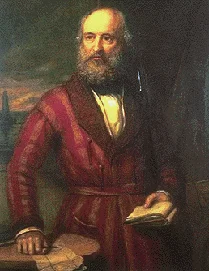
King was a portraitist from Newport, Rhode Island, who had trained in London under Benjamin West, the American-born president of the Royal Academy. Over the next two decades he painted more than 140 portraits of Native American visitors for the War Department's collection, which became known as the Indian Gallery.
Most of that gallery is gone. Transferred to the Smithsonian in 1858, the portraits burned there in a fire on 24 January 1865, and only a few were saved. Many of the lost faces survive through hand-coloured lithographs in a three-volume History of the Indian Tribes of North America, produced by McKenney and the writer James Hall.