Charles Howard Hodges
1764–1837 · Kingdom of Great Britain, Kingdom of the Netherlands · Neoclassicism
The story
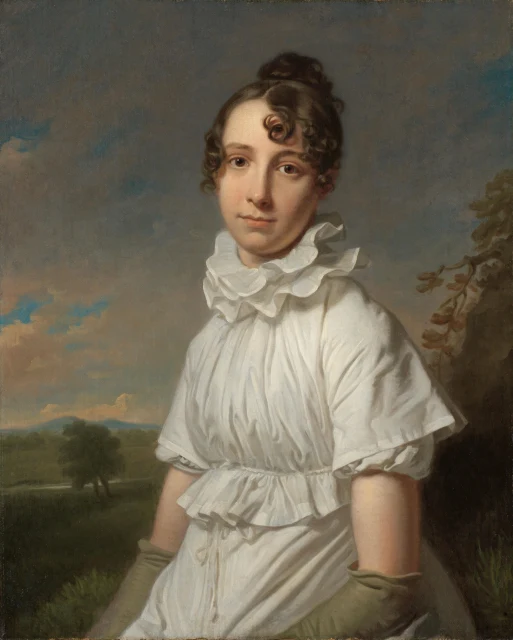
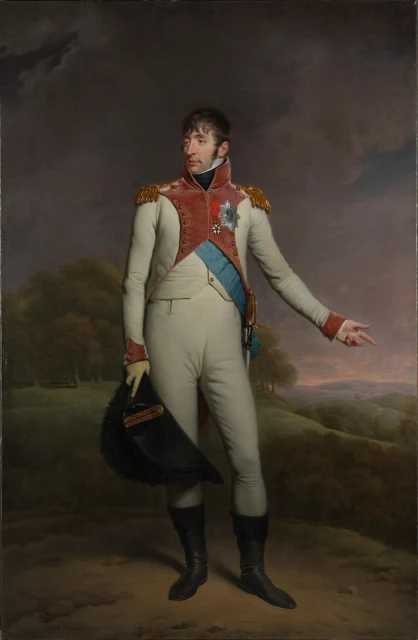
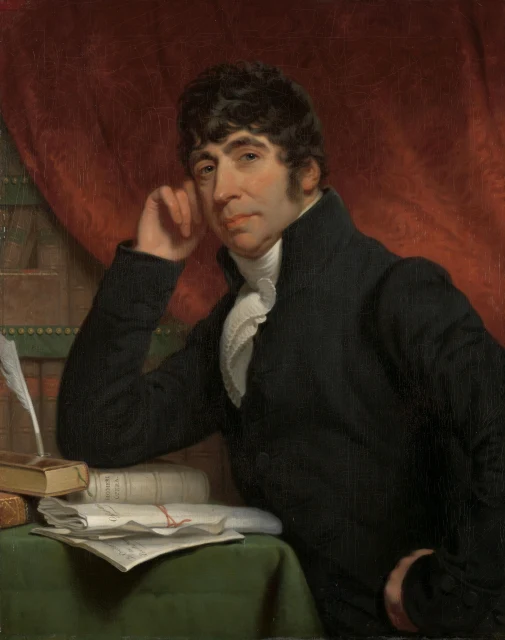
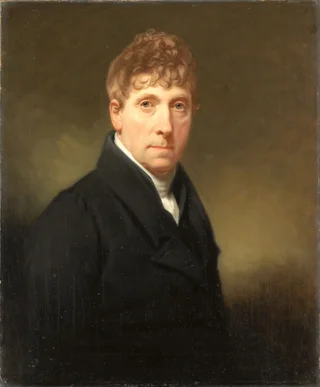
Between 1795 and 1815 the Netherlands changed its form of government again and again, and one Amsterdam portrait painter kept pace with every change. Charles Howard Hodges, an Englishman, painted Stadtholder Willem V, the last of the old princes of Orange, then Rutger Jan Schimmelpenninck, head of the Batavian Republic, then Louis Napoleon, the brother Napoleon made King of Holland, then Napoleon himself, and finally King Willem I of the new kingdom. His full-length portrait of Louis Napoleon from 1809 hangs in the Rijksmuseum. The king gave it to the museum himself in 1810, the year he lost his throne.
Hodges was born in 1764 and learned mezzotint, a velvety kind of engraving, from the London printmaker John Raphael Smith. He first visited Amsterdam in 1788, spent two years in Dublin, and settled in The Hague in 1792, making mezzotints after English paintings. From the German portraitist Johann Friedrich August Tischbein, in whose Amsterdam house he lived, he learned pastel. After 1797 Amsterdam was his home for good, and he became one of its most sought-after portraitists, with some 700 portraits to his name.
In 1815, after Napoleon's fall, Hodges advised the Dutch government on recovering the thousands of works of art the French had confiscated in 1795, among them paintings from Willem V's own gallery. His son and pupil, James Newman Hodges, later looked after the Rijksmuseum's collection while it was housed in the Trippenhuis, a 17th-century mansion in Amsterdam.