Coppo di Marcovaldo
1225–1276 · Republic of Florence · Italo-Byzantine, Byzantine art, Italian Gothic
The story
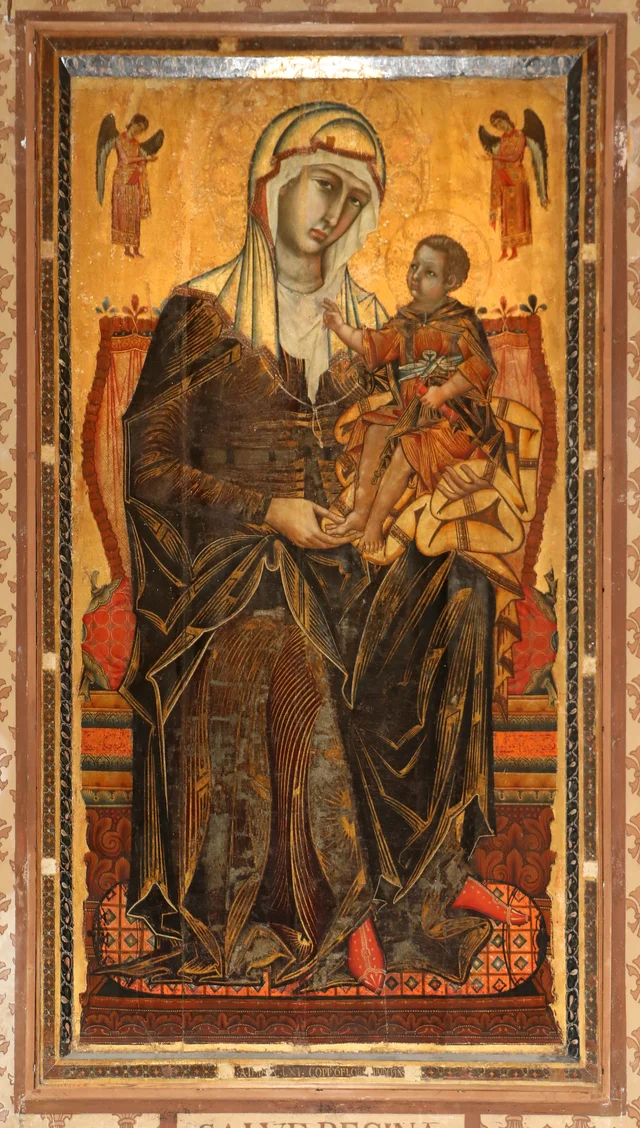
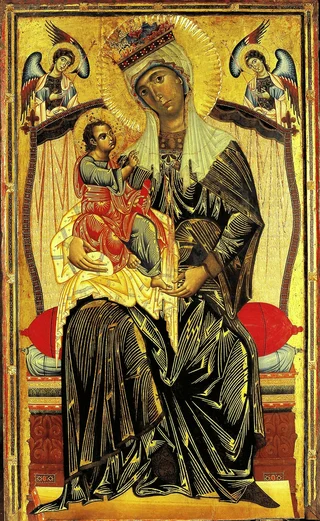
On 4 September 1260 the armies of Florence and Siena met at Montaperti, and Florence was crushed in one of the bloodiest days of medieval Italy. Among the Florentine soldiers listed in the muster roll was a painter named Coppo di Marcovaldo. Taken prisoner by the Sienese, he seems to have bought his freedom with a brush rather than coin. In 1261, for the Servite friars of Siena, he painted a large panel of the Madonna and Child now called the Madonna del Bordone. It is signed and dated, and it is the one work securely his.
That matters, because Coppo is the first Florentine painter we can both name and tie to a surviving picture. He worked in the Italo-Byzantine manner of his day, with the gold grounds and long solemn faces borrowed from Greek icons, yet he loosened it. His Madonna turns and softens in a way that points ahead to the painters Cimabue and Giotto a generation later.
Look at the Christ Child on his mother's knee, bare-legged and oddly grown-up. Scholars have argued for years over what that pose meant to a 13th-century Sienese congregation, tying it to imagery from the Eastern church. Coppo also worked in Pistoia, near Florence, where records place him and his son Salerno on a painted cathedral crucifix in the 1270s.