Copy after Peter Paul Rubens
The story
The Galleria Palatina at Palazzo Pitti shows a small panel portrait of George Villiers, Duke of Buckingham, the English court favourite assassinated in 1628, and the wall label says Rubens. The gallery's own inventory sheet reads "Rubens Pieter Paul, copia da", copy after Rubens. The state catalogue prints the name as well, then records in its own text that the execution is weak and slapdash and that the panel may preserve a lost Rubens composition. Three museum records, three positions, one picture.
Copies after Rubens exist in remarkable numbers, and the reason is that he published himself. In 1619 he obtained a privilege giving him control of the engraving of his own compositions, and printmakers such as Lucas Vorsterman turned them into sheets that sold across Europe. A painter in Munich or Kraków could copy a Rubens he had never stood in front of. One of the pictures gathered under this heading, an Adoration of the Shepherds in Munich, was made from Vorsterman's engraving rather than from the painting.
What the trade left behind is what this heading now holds: versions of the Lion Hunt, of the Drunken Silenus, of the portraits of Helena Fourment, the young woman Rubens married in 1630. They span two centuries. A Saint Catherine in the Plantin-Moretus museum in Antwerp is dated around 1730, 90 years after his death, and a Judgement of Paris at Wawel Castle in Kraków is a canvas of the 1820s.
Works
5 works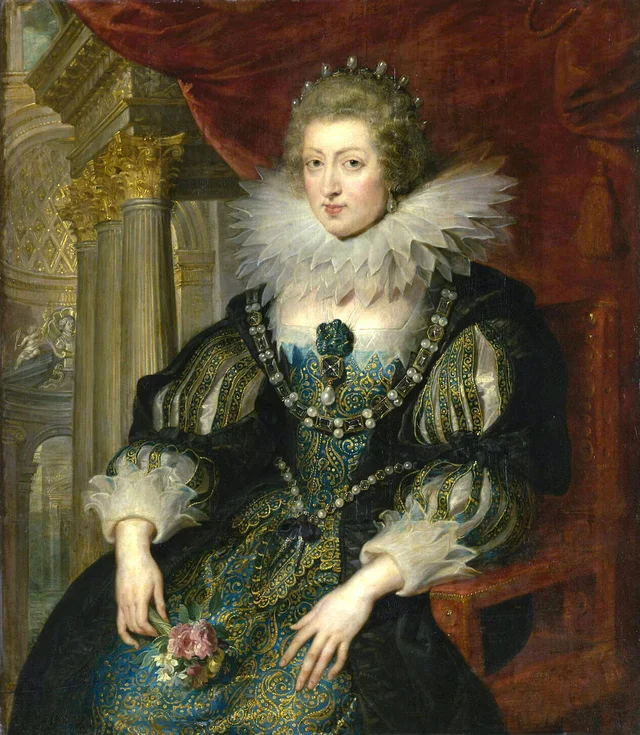 Anne of Austria, Queen of FranceCopy after Peter Paul Rubens, 1620
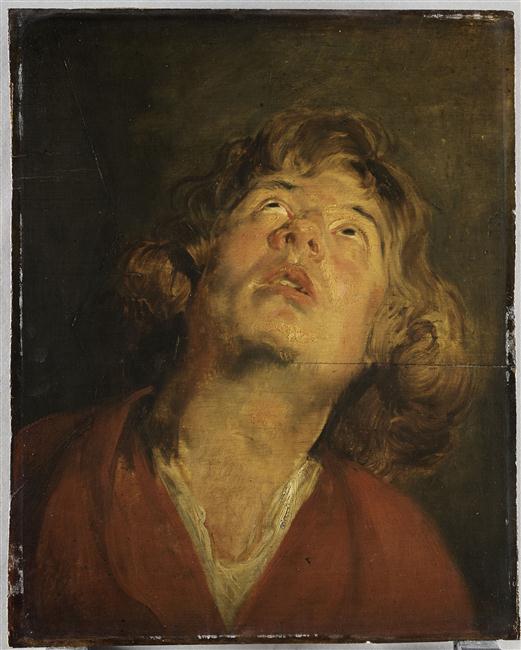 Head Study of a Saint (Saint George?)Copy after Peter Paul Rubens, 1618
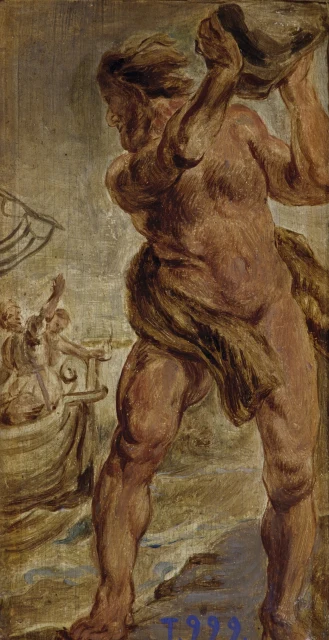 The Giant PolyphemusCopy after Peter Paul Rubens
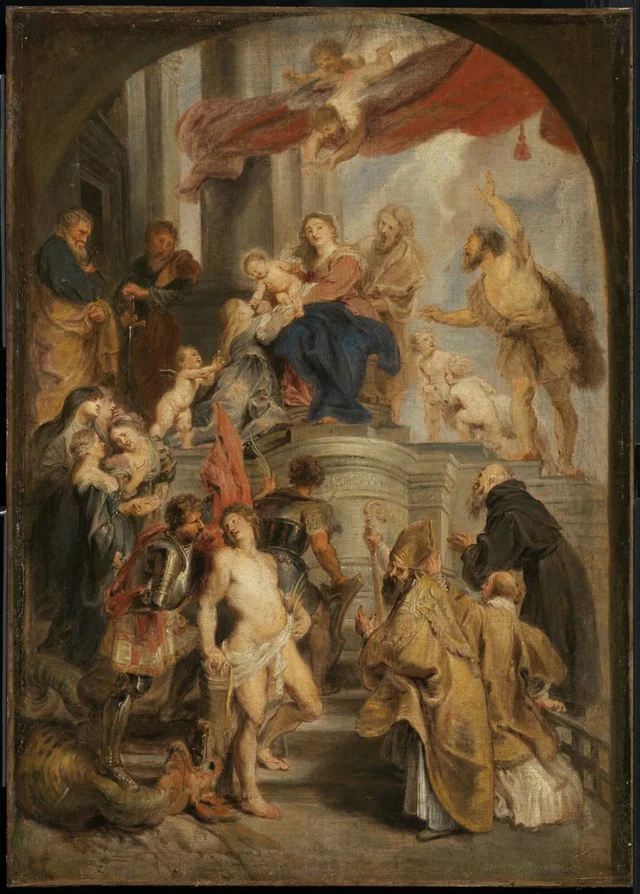 Virgin and Child Adored by SaintsCopy after Peter Paul Rubens
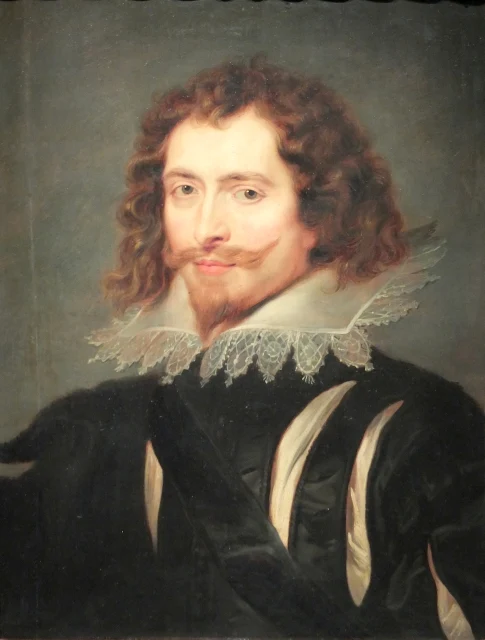 Portrait of George Villiers, Duke of BuckinghamCopy after Peter Paul Rubens, 1625