Cornelis de Man
1621–1706 · Dutch Republic · Dutch Golden Age, Baroque
The story
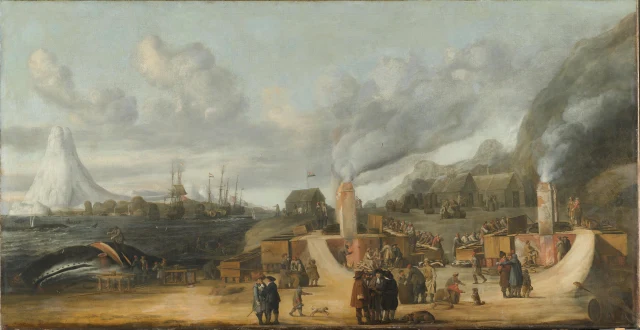
On a beach at Smeerenburg, the Dutch whaling station on Spitsbergen, strips of blubber are boiled down into train oil in rows of try-pots, while men cut up whale carcasses at the water's edge and their barracks stand behind. The canvas is dated 1639 and hangs in the Rijksmuseum. Its painter, Cornelis de Man, was about 18 at the time, and he never went to Spitsbergen. He put the scene together from pictures and stories already in circulation.
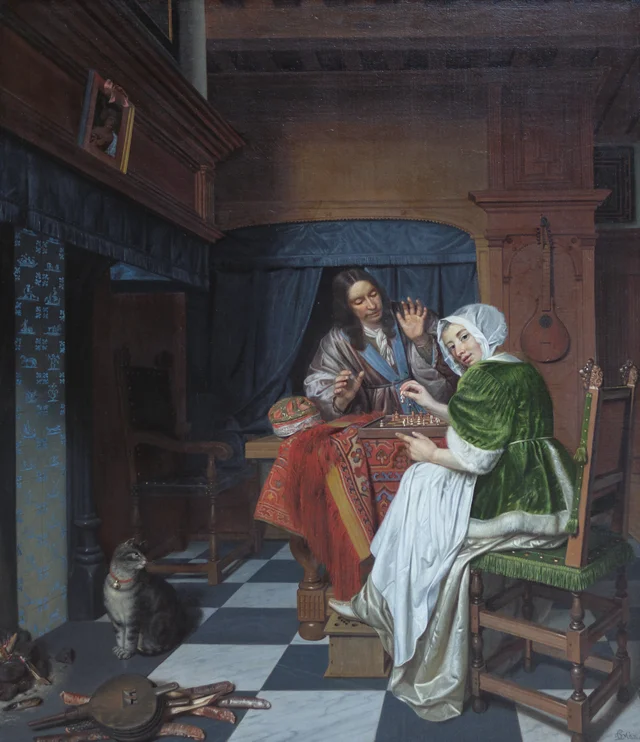
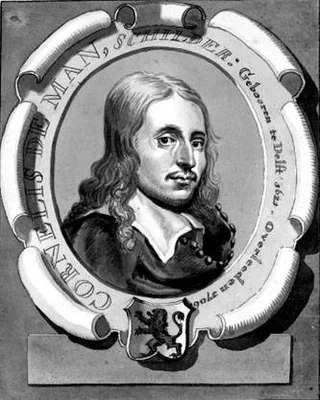
De Man was born in Delft in 1621 and joined its painters' guild in 1642. Then he left for most of a decade, spending about a year in Paris, two years in Florence, a long stay in Rome and time in Venice, before he came home in 1653. Back in Delft he painted portraits, church interiors and domestic scenes close to the manner of Pieter de Hooch, his fellow Delft painter of quiet courtyards and rooms. The Chess Players in the Museum of Fine Arts in Budapest is one of those scenes.
He became a respected figure in his town, a regent of charitable institutions, and he served as headman of the guild six times. In 1681 he painted the group portrait of the Delft surgeons at an anatomy lesson. He lived to about 84 and died in Delft in 1706.