Cornelis Kruseman
1797–1857 · Kingdom of the Netherlands · Romanticism, Neoclassicism
The story
In 1829 a young Javanese nobleman, Raden Saleh, arrived in the Netherlands on a government grant to study painting. In The Hague he learned portraiture from Cornelis Kruseman and landscape from Andreas Schelfhout, a painter of Dutch winter scenes. Saleh went on to work in Europe for some 20 years, and Indonesia regards him as the pioneer of its modern painting. In the same year Kruseman painted Johannes van den Bosch, newly appointed governor-general of the Dutch East Indies, a portrait now in the Rijksmuseum.
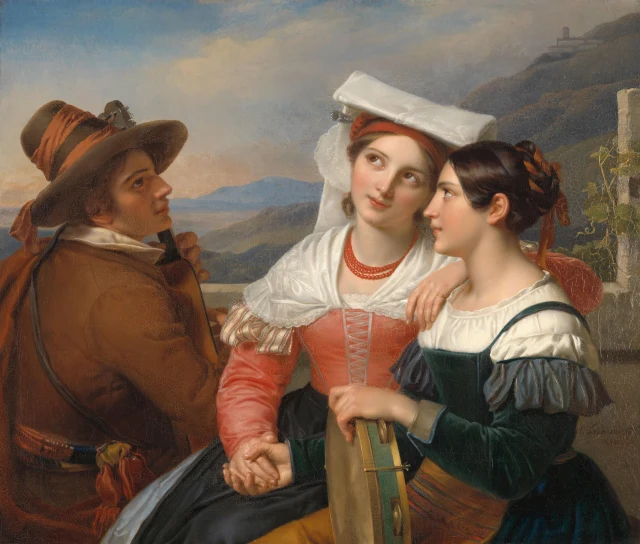
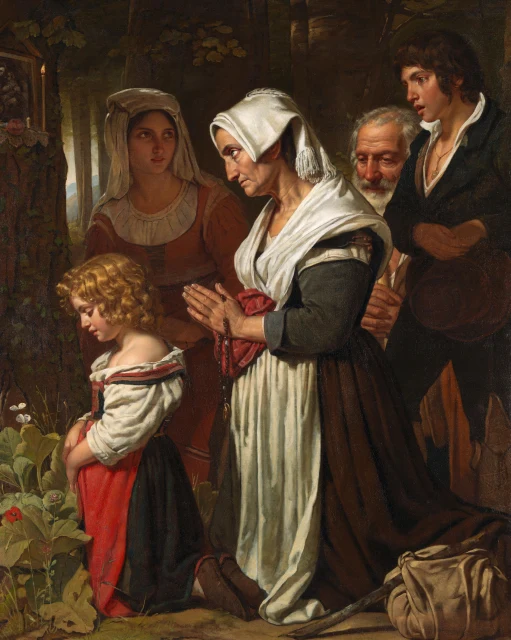
Kruseman was born in Amsterdam in 1797 and entered the city's drawing academy at 14, where one of his teachers was the English-born portraitist Charles Howard Hodges. In 1821 he set out through Switzerland for Italy and stayed four years, much of the time in Rome, where he came to know the French painters Jean-Victor Schnetz and Léopold Robert, both painters of Italian country people. Back in the Netherlands he settled in The Hague, and in 1826 he published an account of his journey.
He returned to Italy from 1841 to 1847, which earned him the nickname 'the Italian Kruseman'. He died in 1857 in Lisse, a village between Leiden and Haarlem.