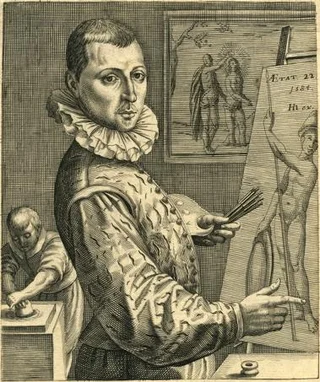
Cornelis van Haarlem
1562–1638 · Dutch Republic · Mannerism
The story
In the mid-1580s three artists in Haarlem began meeting to draw together from life and from casts, a loose brotherhood later called the Haarlem Academy. One was the printmaker Hendrick Goltzius, one the painter and biographer Karel van Mander, and the third was Cornelis van Haarlem. Van Mander had just returned from Italy carrying drawings by Bartholomeus Spranger, court painter to the emperor in Prague, and those elongated, twisting bodies set the group's early style.
For a decade Cornelis painted huge canvases packed with muscular nudes in impossible poses, gods and biblical sinners seen from every difficult angle at once. His Massacre of the Innocents is a knot of straining limbs that fills the whole surface. The work is clever, athletic, and deliberately hard.
Then he calmed down. As the new century began his figures grew simpler and more natural, closer to everyday Dutch painting, and he became the official painter of the city of Haarlem, turning out portraits and group pictures of its civic-guard companies. Those measured, life-size portraits made him a direct forerunner of the young Frans Hals, the next painter to take up Haarlem's civic guard.
Works
10 works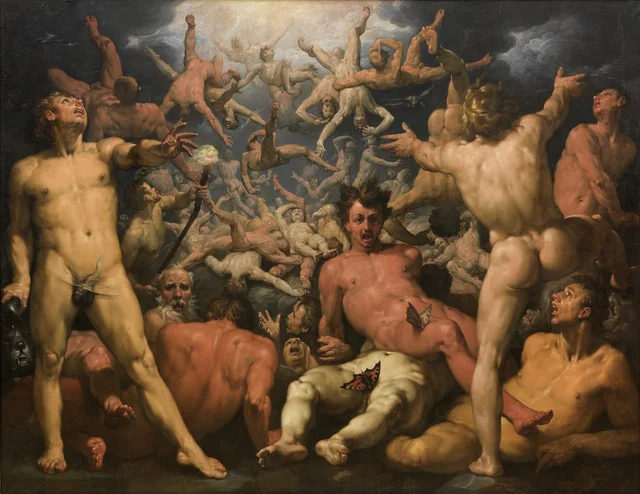 The Fall of the TitansCornelis van Haarlem, 1588
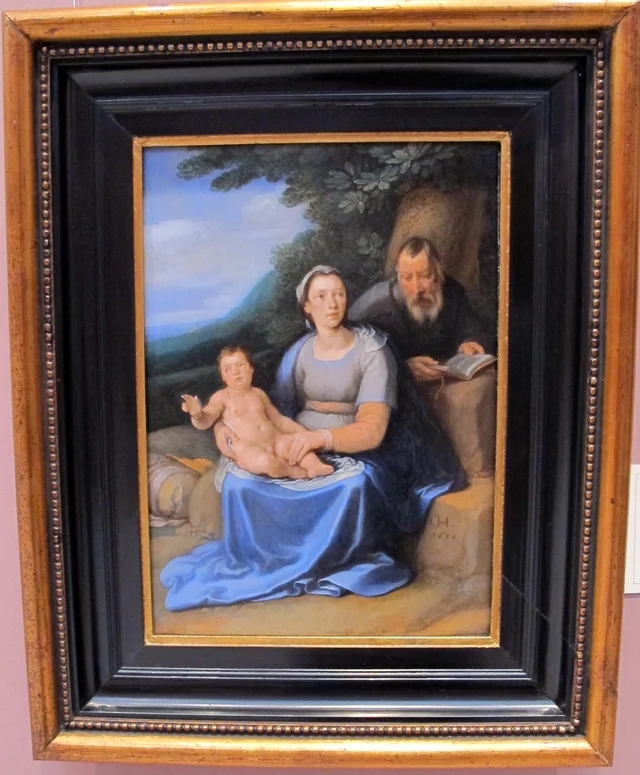 Rest on the Flight into EgyptCornelis van Haarlem
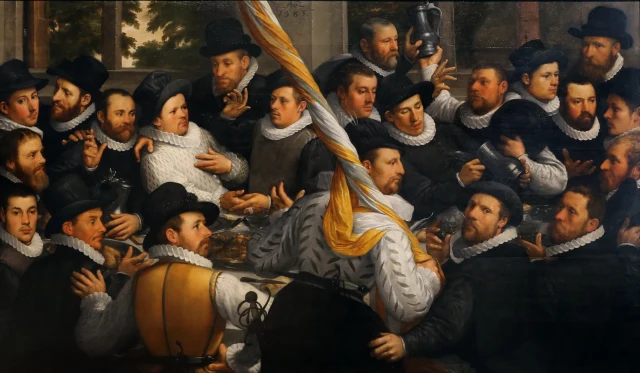 Banquet of Members of the Haarlem Calivermen Civic GuardCornelis van Haarlem, 1583
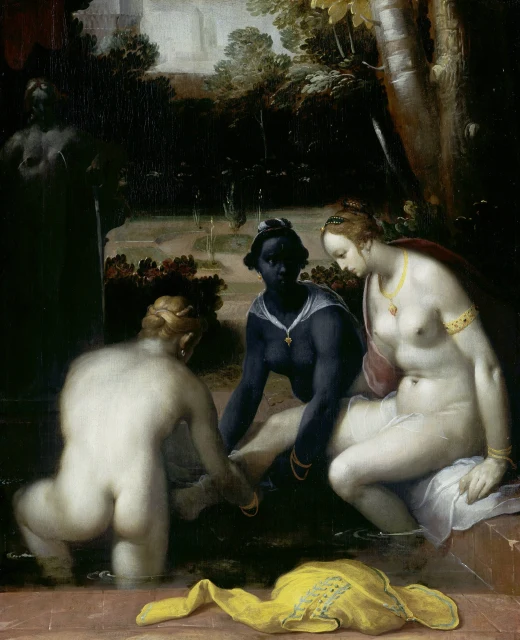 Bathsheba in the BathCornelis van Haarlem, 1594
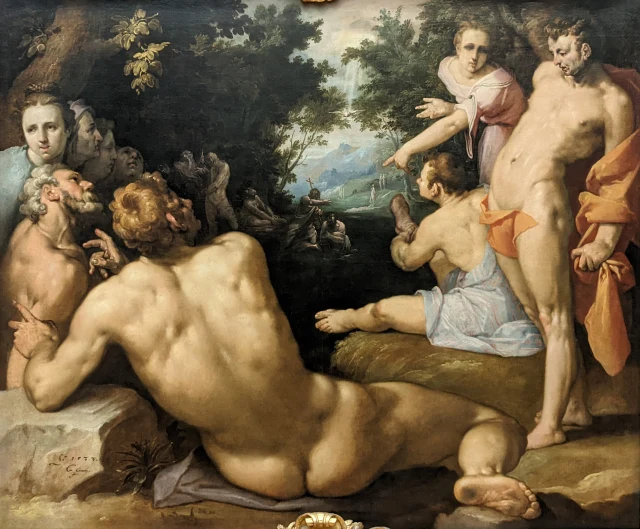 The Baptism of ChristCornelis van Haarlem, 1588
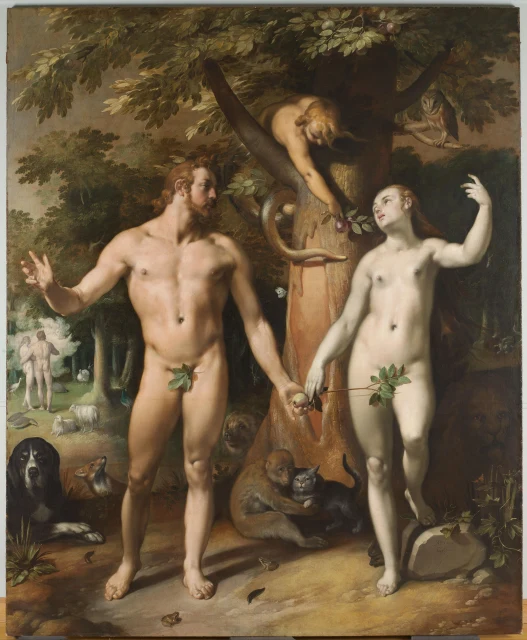 The Fall of ManCornelis van Haarlem, 1592
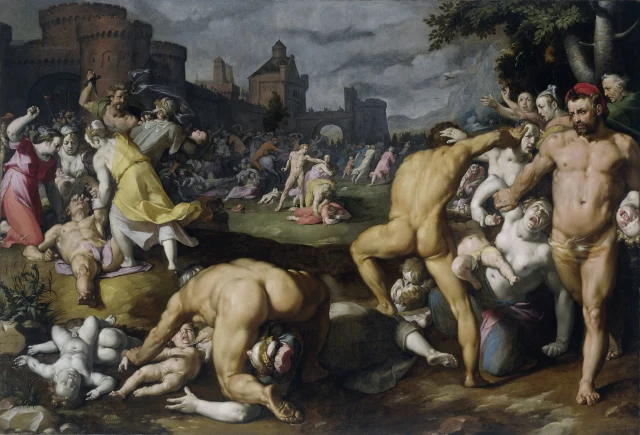 The Massacre of the InnocentsCornelis van Haarlem, 1590
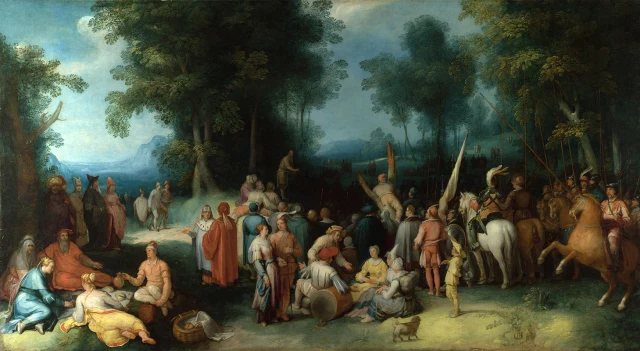 The Preaching of Saint John the BaptistCornelis van Haarlem, 1602
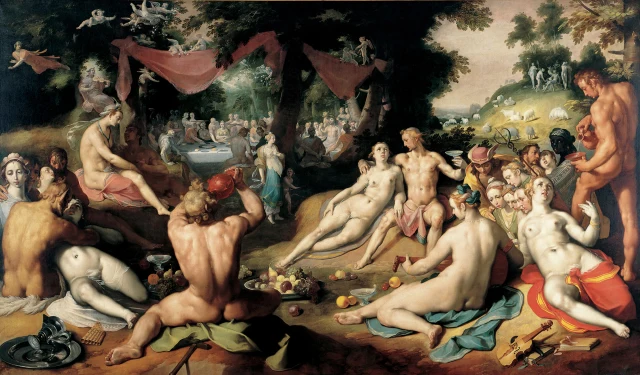 The Wedding of Peleus and ThetisCornelis van Haarlem, 1592
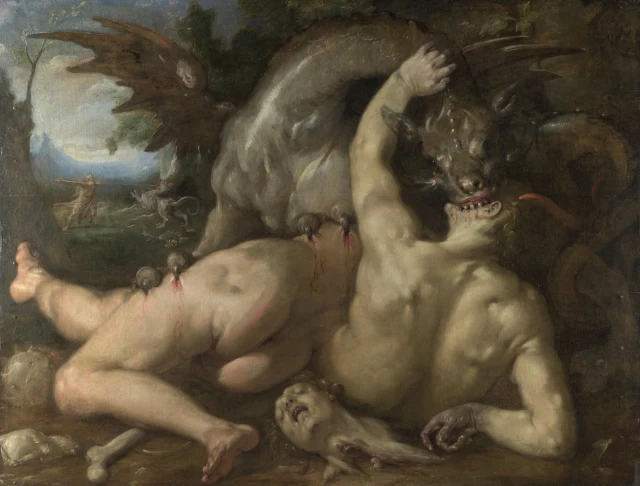 Two Followers of Cadmus devoured by a DragonCornelis van Haarlem, 1588