Corrado Giaquinto
1703–1766 · Kingdom of Naples · Rococo
The story
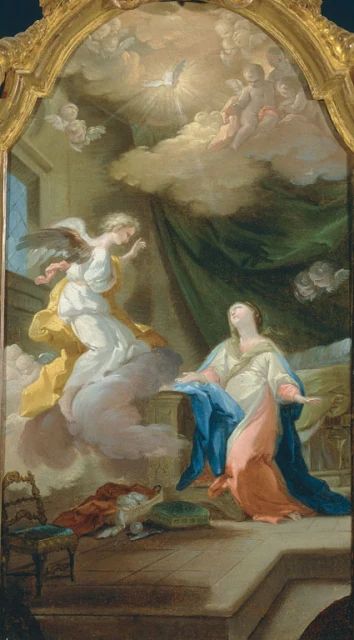
The main staircase of the Royal Palace in Madrid rises under a ceiling by Corrado Giaquinto, whom King Ferdinand VI of Spain called to his court in 1753, when the painter was 50. The palace had been rebuilt in stone after the old Alcázar burned in 1734, and its vaults were waiting to be painted. Giaquinto took on the royal chapel and the staircase, where Spain pays homage to Religion and the Church. The king made him his first painter and director of the new Royal Academy of San Fernando, and he supplied designs for the royal tapestry works. Young Spanish painters learned from what he did in Madrid, and his influence shows in the early work of Goya.
He was born in Molfetta, a port in Apulia, trained in Naples under Francesco Solimena, the leading painter in the city, and went to Rome in 1723. There he worked in the studio of Sebastiano Conca, another of Solimena's pupils, and by 1727 he had his own. Frescoes for Roman churches such as San Nicola dei Lorenesi made his name, and the architect Filippo Juvarra brought him to Turin to paint mythologies for the Villa della Regina, a royal residence on the hill above the city.
In 1761 the German painter Anton Raphael Mengs arrived in Madrid, bringing a cooler, classical taste to the court. The following year Giaquinto went back to Naples, where he went on working for the Spanish crown until his death in 1766.