Diego Velázquez and workshop
Spain · Baroque
The story
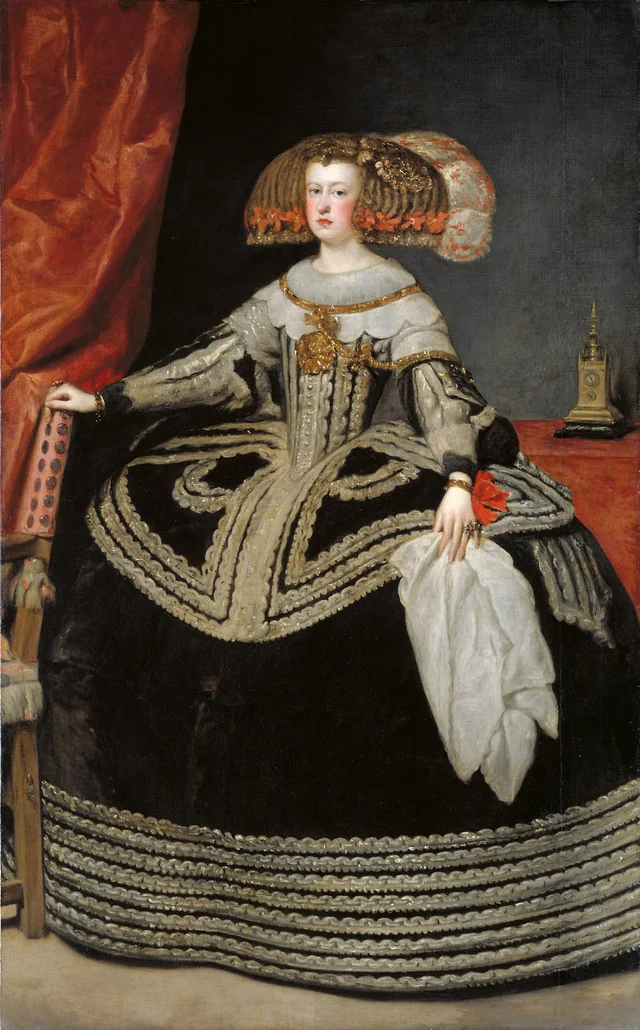
In 1649 Philip IV of Spain married his niece Maria Anna, the fourteen-year-old daughter of Emperor Ferdinand III. She had first been promised to his son Baltasar Carlos, who died in 1646. When Velázquez came back from Italy in 1651, he painted the new queen.
The formula "Velázquez and workshop" means that the design and part of the painting are his and the rest was done by assistants in his studio in the royal palace in Madrid. The chief of them was Juan Bautista Martínez del Mazo, who had married Velázquez's daughter Francisca in 1633. Portraits of the Spanish royal family went regularly to their relatives in Vienna, and without a workshop the demand could not be met.
The Kunsthistorisches Museum uses this credit for a full-length portrait of the queen, just over two metres tall and dated 1652 to 1653. It comes from the collection of Archduke Leopold Wilhelm and entered the picture gallery in 1913. The museum does not say which parts Velázquez painted himself. The canvas now hangs at Ambras Castle near Innsbruck.