Dionysius of Fourna
1670–1746 · Greek
The story
Sometime in the 1730s, in a painter's cell on Mount Athos, an elderly monk sat down to write out everything a church painter needed to know. His name was Dionysius, from the village of Fourna in central Greece, and the book he compiled is still called simply the Hermeneia, the Interpretation of the Art of Painting.
Dionysius had gone to Athos as a boy of about 16 and spent his life as a painter there, building himself a small cell and chapel near Karyes, the monastic capital, and decorating it with his own hand. By his old age the how of Byzantine painting lived mostly in memory and workshop habit, passed from master to apprentice. What he did was set it down: how to prepare a panel and grind colours, how to arrange the scenes of the Old and New Testaments and the lives of the saints, the exact words to inscribe on each image, and where in a church every subject belonged.
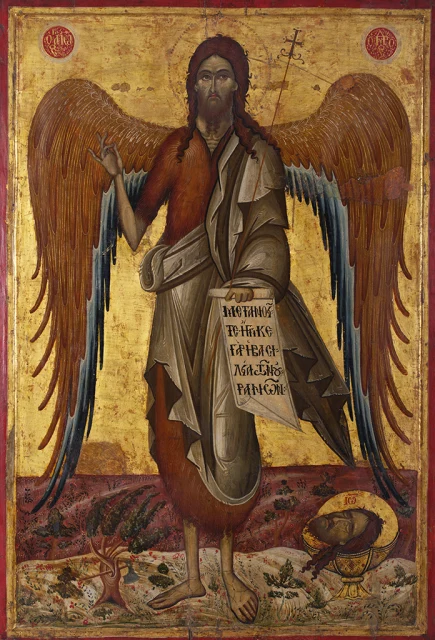
He drew on the older Cretan masters of the 16th century and on Athonite tradition, and he held to the flat gold-ground Byzantine manner at a time when Western painting had long since turned to depth and shadow. Painters on Athos used his manual through the rest of the 18th century as the working handbook for covering a church in images, and it was still being printed and translated for icon painters two centuries after he laid down his brush.