Dominique Lang
1874–1919 · Luxembourg · Impressionism
The story
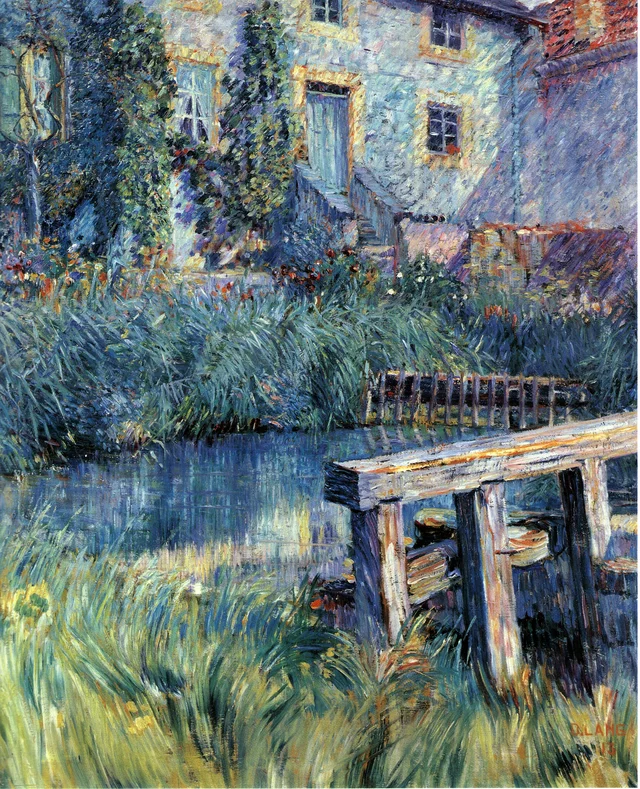
In 1913 Dominique Lang painted The Weir, one of the bright, loosely brushed landscapes that now earn him the name of Luxembourg's leading Impressionist. A decade earlier he had been working very differently, on church frescoes and dark Symbolist scenes of death entering a house.
Lang was born in 1874 in Dudelange, a steel town in the south of Luxembourg, and studied at the art academy in Antwerp, then in Munich, where he turned towards Impressionism. His paintings never paid his way, so he worked as an art teacher, at a girls' lycée in Luxembourg City and at a school in Esch-sur-Alzette. After 1911 his wife, Anne-Marie Ney, keeps appearing in his pictures, often as a young woman in white among the blues and greens of the countryside around Dudelange and Schifflange.
He won the Grand Duke Adolphe Prize, a Luxembourg art award, in 1904 and again in 1919. Severe migraines and near-blindness marked his last years, and he died in Schifflange in June of that year. Dudelange named its art centre after him, set in the old waiting room of the town's railway station.