Égide Charles Gustave Wappers
1803–1874 · Belgium, United Kingdom of the Netherlands · Romanticism
The story
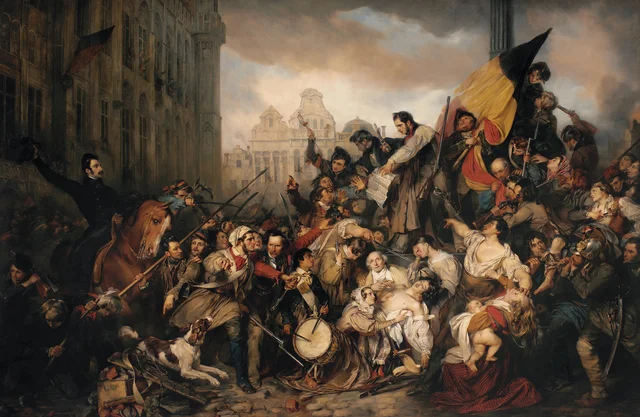
Belgium became a country in 1830, breaking from Dutch rule in a few weeks of street fighting, and it needed pictures of itself. Gustave Wappers gave it the defining one. In 1835, five years after the uprising, he unveiled an enormous canvas — more than six metres wide — showing the September days of the revolution on the Grand Place in Brussels, the dead and the living crowded together beneath the new tricolour flag.
Wappers had trained at the Antwerp Academy and studied in Paris, and he came home set on painting like his city's old master Rubens, all warmth and movement and drama, against the cooler classical taste then in fashion. That ambition made him the leader of Belgian Romanticism almost overnight.
The young state rewarded him: he was appointed professor and then director of the Antwerp Academy, and eventually made a baron. Among the foreign students who passed through his studio was a young Englishman, Ford Madox Brown, who would later help shape the Pre-Raphaelite circle back in Britain.