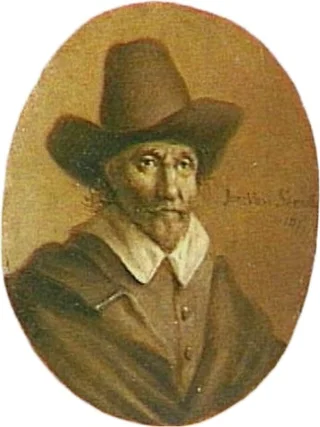
Emanuel de Witte
1692 · Dutch Republic · Dutch Golden Age, Baroque
The story
Emanuel de Witte painted the insides of churches, and he painted them for the light rather than the architecture. Where his contemporary Pieter Saenredam measured every column exactly, de Witte moved pillars, invented chapels and let sunlight pour across the whitewashed Protestant interiors of Amsterdam and Delft until the stone almost glows. People stand about in them, dogs wander, a gravedigger works at the floor.
He was admired and he was poor. Money troubles dogged him for decades, and around 1688, near the end, he moved in with a younger painter, teaching him church interiors in exchange for his keep.
Arnold Houbraken, the early biographer of the Dutch painters, tells how it ended. In the winter of 1692, after a quarrel over rent, de Witte tied himself to an Amsterdam bridge and jumped. The rope broke, he drowned, and the canal froze over that night, so his body was not found for 11 weeks.
Works
4 works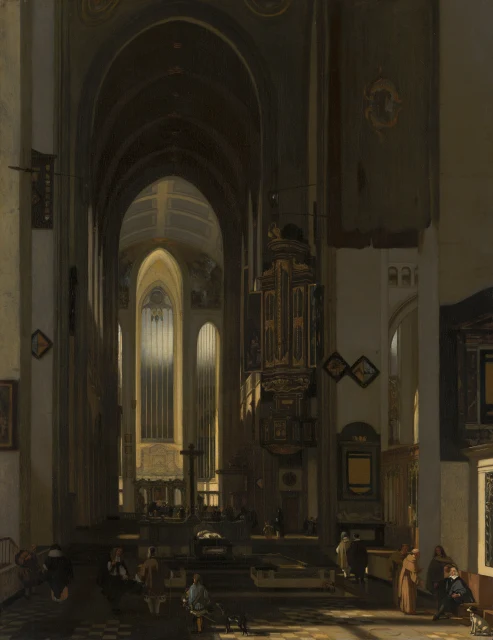 Interior of an Imaginary Catholic ChurchEmanuel de Witte, 1668
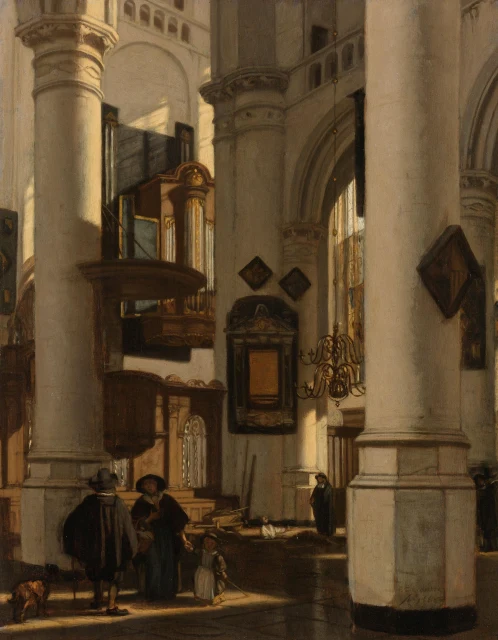 Interior of a Protestant, Gothic Church, with a Gravedigger in the ChoirEmanuel de Witte, 1669
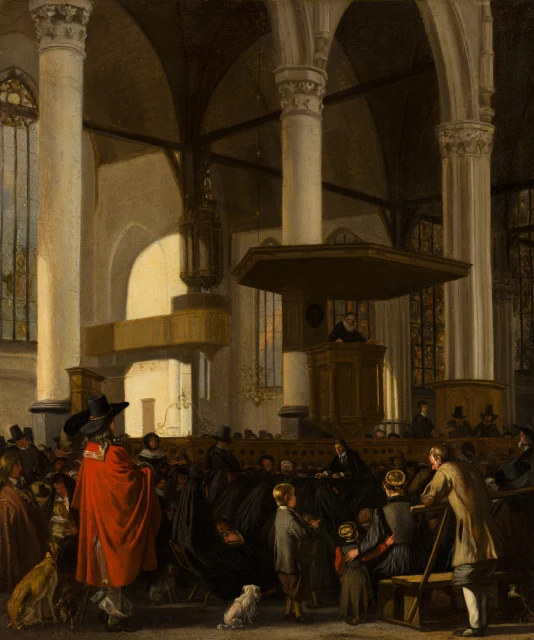 The Oude Kerk in Amsterdam during a ServiceEmanuel de Witte, 1654
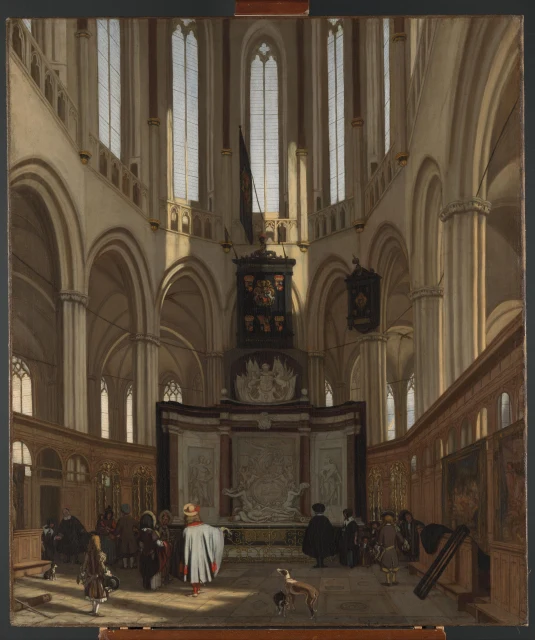 The Tomb of Michiel de Ruyter in the Nieuwe Kerk, AmsterdamEmanuel de Witte, 1683