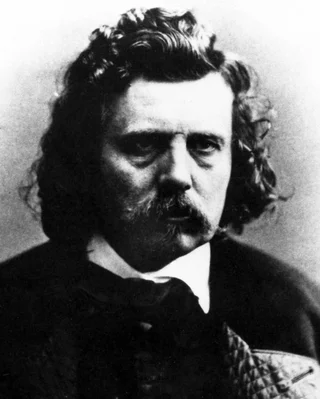
Emanuel Leutze
1816–1868 · Kingdom of Württemberg, United States · Romanticism
The story
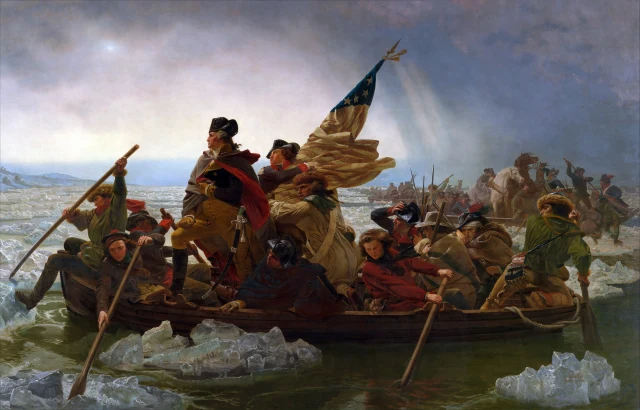
The most recognizable image of the American Revolution was painted in Germany, by an artist watching his own country's revolution collapse. Emanuel Leutze had come to the United States as a boy from Schwäbisch Gmünd in Württemberg, learned to paint by selling portraits after his father died, then sailed back across the Atlantic in 1841 to study at the Düsseldorf Academy, then the leading art school in Europe.
He began Washington Crossing the Delaware in 1849, just after the failed German revolutions of 1848, hoping a picture of American liberty might encourage reformers back home. That first canvas survived until an Allied bombing raid destroyed it during the Second World War. Leutze had already started a second version in 1850, and it was this one that traveled to New York and drew crowds in 1851.
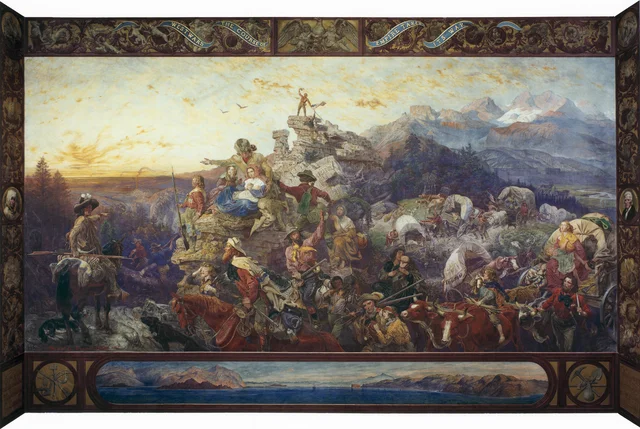
The scene owes as much to theater as to history. The Stars and Stripes he shows had not been designed yet in December 1776, the river ice is exaggerated, and models in a Düsseldorf studio posed for the freezing soldiers. Leutze settled in America for good in 1859 and spent his last years on a mural for the United States Capitol, Westward the Course of Empire Takes Its Way. He died in Washington in 1868.