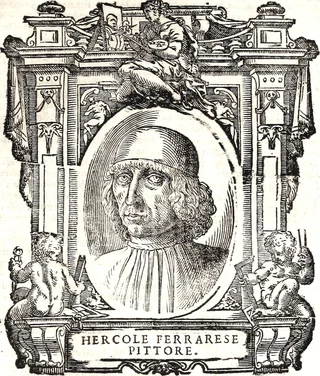
Ercole de' Roberti
1496 · Duchy of Ferrara · Early Renaissance, School of Ferrara
The story
Ercole de' Roberti worked at one of the sharpest, strangest courts of the Italian Renaissance. In Ferrara the ruling Este dukes prized art that was tense and highly wrought, and Roberti — trained alongside Francesco del Cossa and Cosmè Tura, the two masters of the local school — pushed that taste further, heightening the emotion of a face or a gesture even where it strained against natural proportion.
Around 1473 he was in Bologna in Cossa's workshop, where the two painted the Griffoni Polyptych, an altarpiece for a chapel in the church of San Petronio. Over the centuries it was taken apart and sold off panel by panel, its pieces scattered to London, the Vatican and elsewhere, until a 2020 exhibition in Bologna brought them back together for the first time in about 300 years. In 1486 Duke Ercole I made Roberti court painter of Ferrara in place of the ageing Tura, and much of his time after that went to festival decorations and portraits that have since been lost.
Works
6 works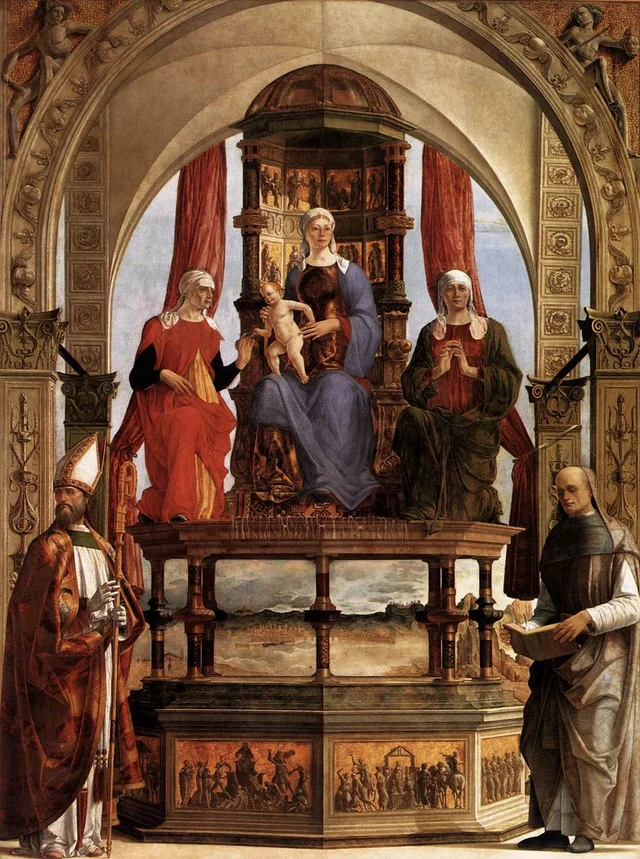 Santa Maria in Porto AltarpieceErcole de' Roberti, 1479
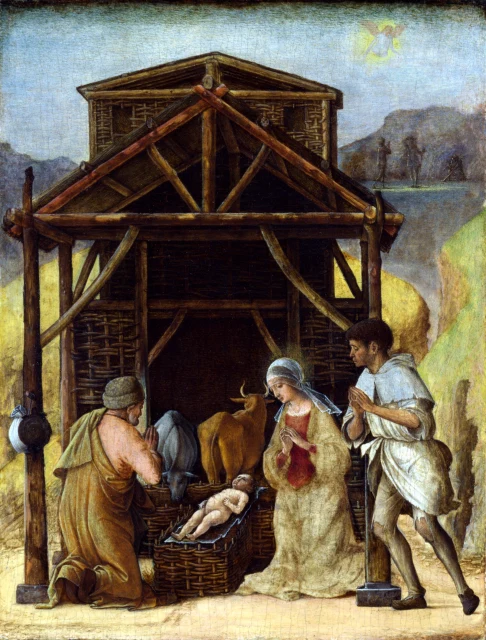 The Adoration of the ShepherdsErcole de' Roberti, 1490
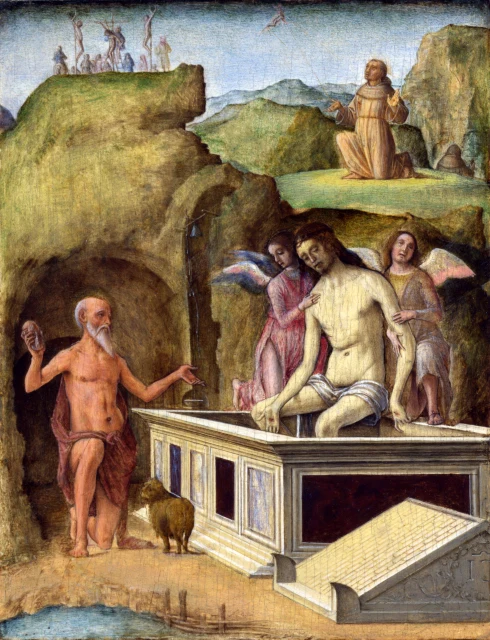 The Dead ChristErcole de' Roberti, 1490
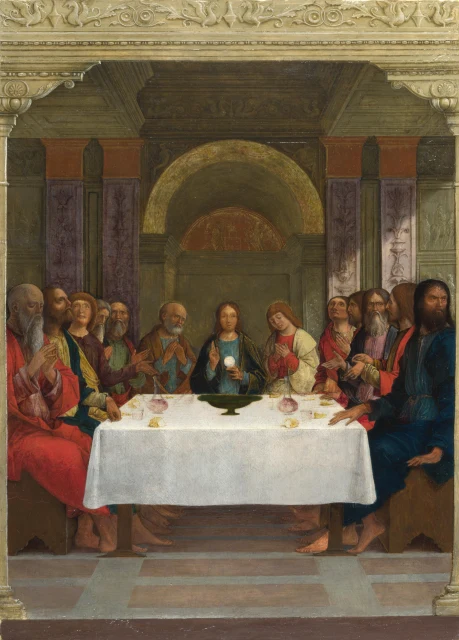 The Institution of the EucharistErcole de' Roberti, 1495
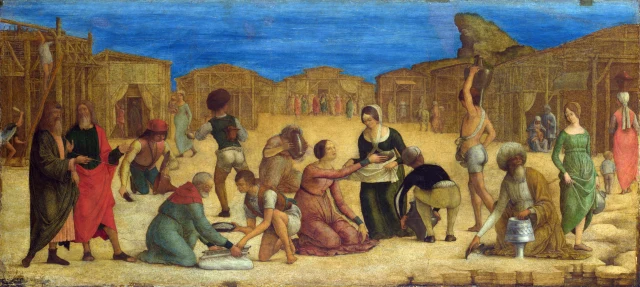 The Israelites gathering MannaErcole de' Roberti, 1495
 The Miracles of Saint Vincent FerrerErcole de' Roberti, 1473