Eugène Emmanuel Amaury Duval
1808–1885 · France · Academic art
The story
He spent his life in the orbit of one man. Amaury-Duval, born Eugène Emmanuel Pineux Duval in 1808, was among the first pupils to enter the Paris studio of Jean-Auguste-Dominique Ingres, the great defender of clean line and classical form against the colour and drama of the Romantics. The stamp of that teaching never left him, and decades later he set it down in a book, L'Atelier d'Ingres, a close memoir of the master at work that historians still mine today.
In 1829 the young painter joined a scientific expedition to Greece, sent by King Charles X of France to record ancient ruins, and drew archaeological sites in the field. A long stay in Florence, Rome and Naples in the mid-1830s opened Italian Renaissance painting to him, and its smooth, cool clarity fed straight into his portraits.
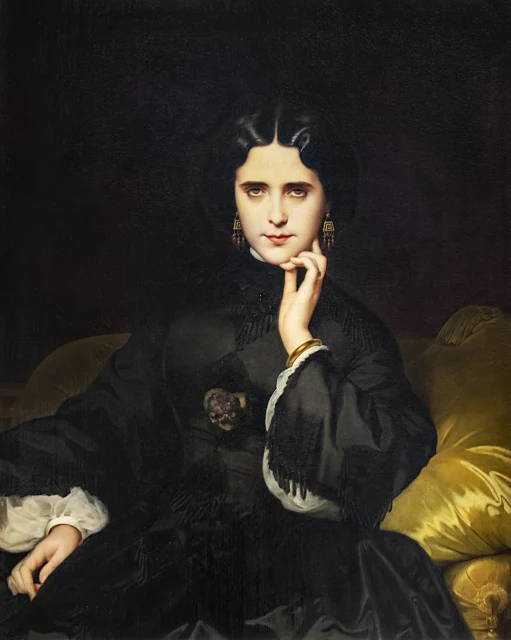
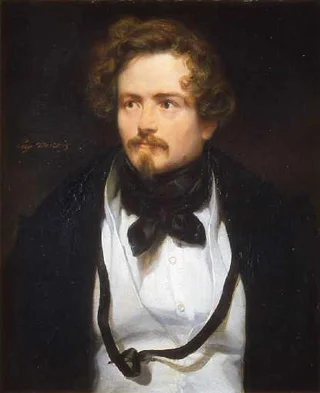
Those portraits are what survive best, faces set against plain grounds with the still, polished finish he had learned from Ingres. He kept showing them at the Paris Salon from 1833 onward, a loyal carrier of a style that the century was steadily leaving behind.