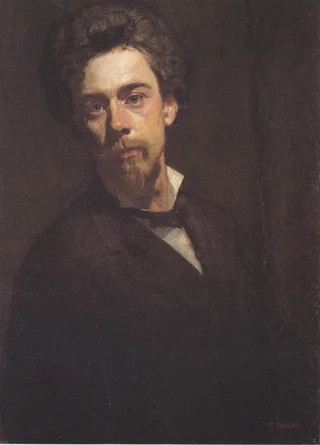
Ferdinand Hodler
1853–1918 · Switzerland · Art Nouveau
The story
Ferdinand Hodler built his art on repetition, a principle he called Parallelism, with figures echoing the same pose and hills mirroring the same curve, so a picture becomes almost a chant. His breakthrough painting, Night, of 1889, lines up sleeping bodies with one man jolted awake by a black-shrouded figure of death crouching on him. It scandalised the Geneva authorities, who barred it from an exhibition, and then made his name across Europe.
A poor Swiss orphan who lost most of his family to tuberculosis as a child, Hodler carried that early acquaintance with death into everything. He painted vast symbolic scenes of humanity, tender or marching in ranks, and clean, ordered landscapes of the Swiss mountains and Lake Geneva reflected in still water.
His hardest work was the most personal. When his lover Valentine Godé-Darel fell ill with cancer, he painted her steadily through her decline, dozens of drawings and canvases of her wasting body and her last breath. In his own final months he painted the view of the lake and the distant mountains from his window over and over, until he died in Geneva in 1918.
Works
9 works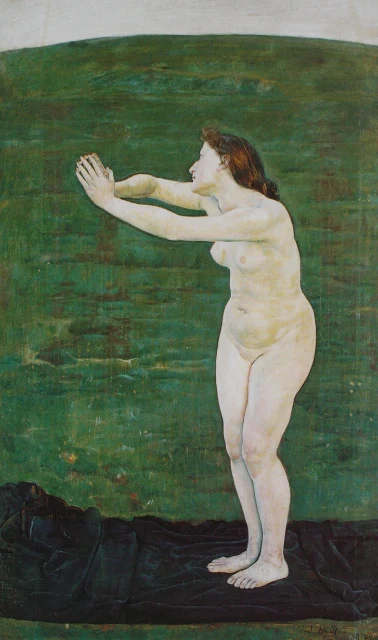 Communion with the InfiniteFerdinand Hodler, 1892
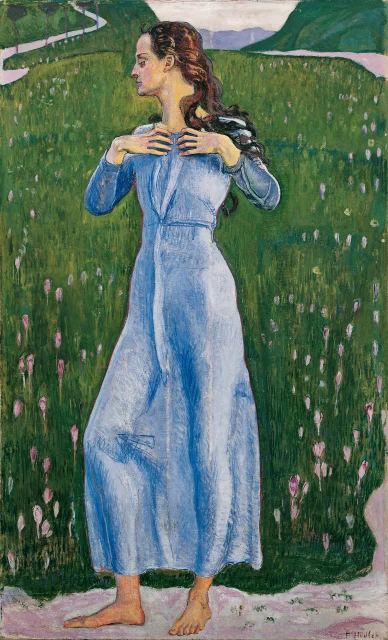 EmotionFerdinand Hodler, 1900
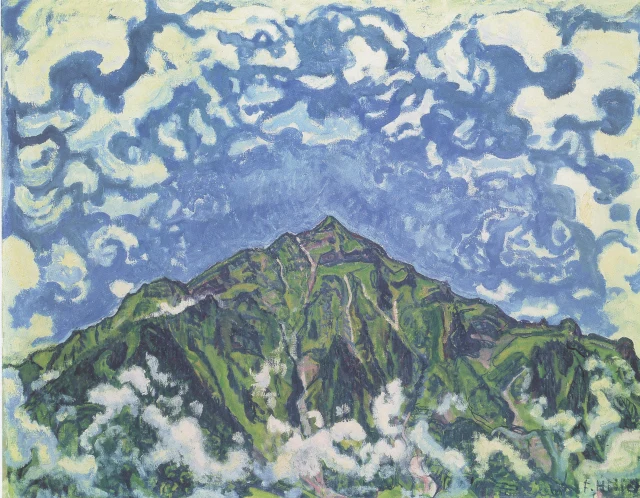 Mount Niesen seen from HeustrichFerdinand Hodler, 1910
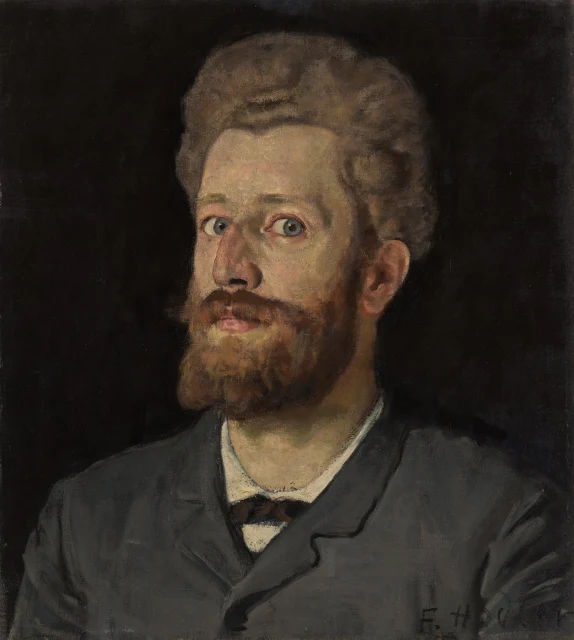 Portrait of Louis MontchalFerdinand Hodler, 1885
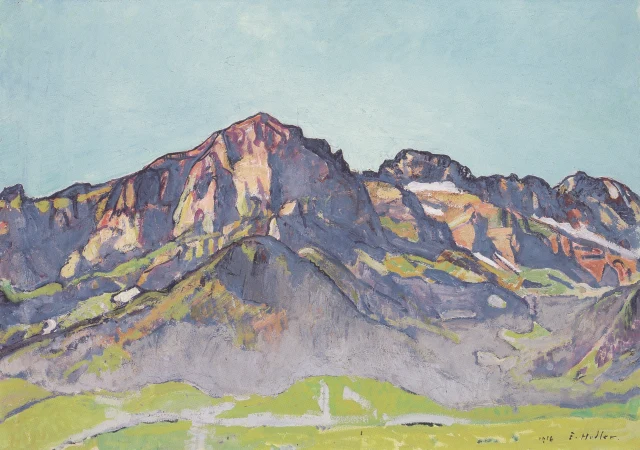 The Dents Blanches at Champéry in the Morning SunFerdinand Hodler, 1916
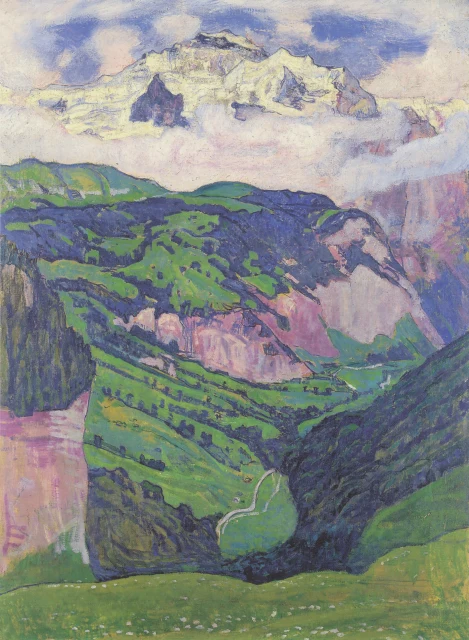 The Jungfrau seen from IsenfluhFerdinand Hodler, 1902
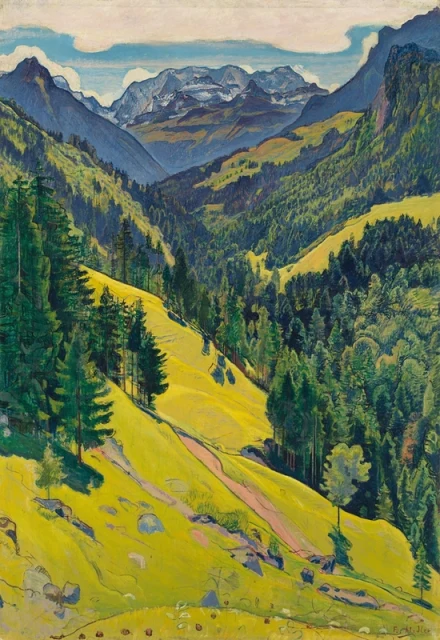 The Kien Valley with the Bluemlisalp MassifFerdinand Hodler, 1902
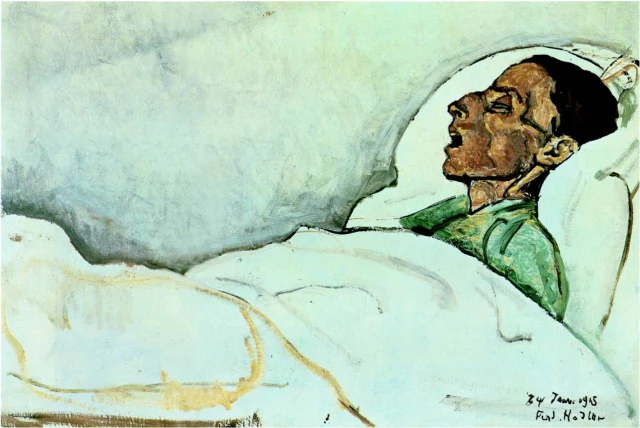 Valentine Godé-Darel one day before her deathFerdinand Hodler, 1915
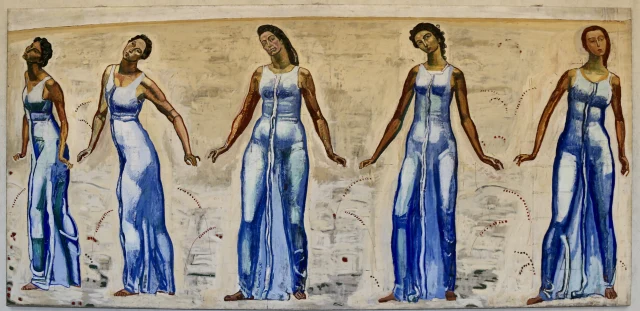 View into InfinityFerdinand Hodler