Ferdinand Olivier
1785–1841 · Anhalt-Dessau · Nazarene movement, Romanticism
The story
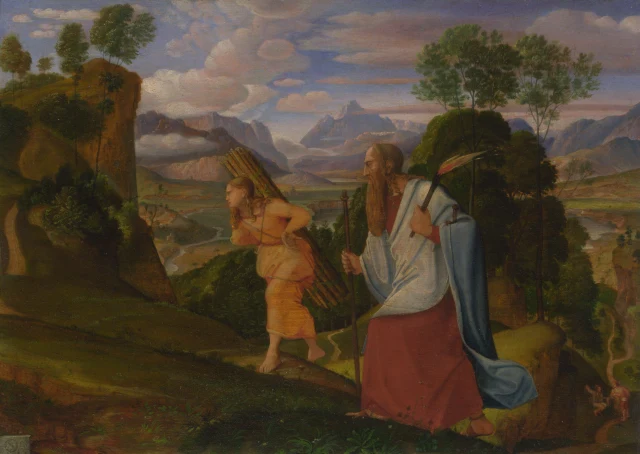
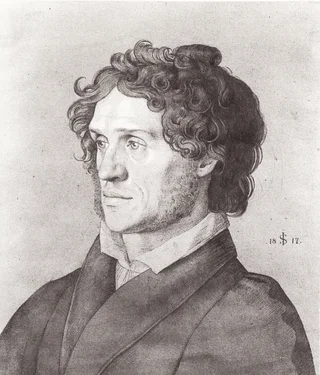
Ferdinand Olivier belonged to the Brotherhood of Saint Luke, the young German painters, founded in Vienna in 1809 and soon settled in Rome, who wanted to paint again like the masters before Raphael. They are remembered as the Nazarenes. Olivier never went to Italy himself. The landscape he made his own lay around Salzburg.
He was born in Dessau in 1785 and trained partly in Dresden. From 1807 to 1810 he held a secretary's post with a diplomatic mission in Paris, and there he studied the older German and Netherlandish painters. In 1811 he settled in Vienna. He went through a religious awakening, his Protestant faith deepened, and his studio became a meeting place for Protestant artists in a Catholic city. He joined the Brotherhood in the middle of the 1810s while still living there.
In 1815 and again in 1817 he travelled through the country around Salzburg and Berchtesgaden, on one of the trips with the painter Philipp Veit, a fellow Nazarene, and filled sheet after sheet with drawings. Out of them came his best-known work, nine lithographs published in 1823 as Seven Places in Salzburg and Berchtesgaden. Each real valley or village is assigned a day of the week, and two allegorical sheets bind the set together, so the mountains read as a week of Christian life.
In 1830 he moved to Munich, where he became secretary of the Academy of Fine Arts and, in 1833, its professor of art history. He died in Munich on 11 February 1841.