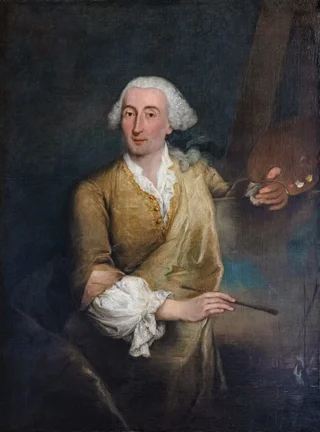
Francesco Guardi
1712–1793 · Republic of Venice · Rococo
The story
Francesco Guardi painted Venice as it was slipping toward its end. He worked in the second half of the 18th century, the last decades of the thousand-year Venetian Republic, which would fall to Napoleon just a few years after his death in 1793.
He is the great rival name to Canaletto in the trade of the veduta, the city view sold mostly to foreign visitors on the Grand Tour. Where Canaletto is crisp and exact, almost like a map, Guardi is loose and flickering. His lagoon dissolves into quick, nervous touches of the brush, the water and sky trembling with light, closer in spirit to what the Impressionists would do a century later.
He also loved the capriccio, an invented view that mixes real and imaginary buildings into a poetic ruin. In his own time the sharper, tidier Canaletto sold better, and Guardi worked hard for modest money. His reputation rose long after his death, once painters and collectors learned to prize exactly the shimmering, unfinished looseness his customers had once found too sketchy.
Works
9 works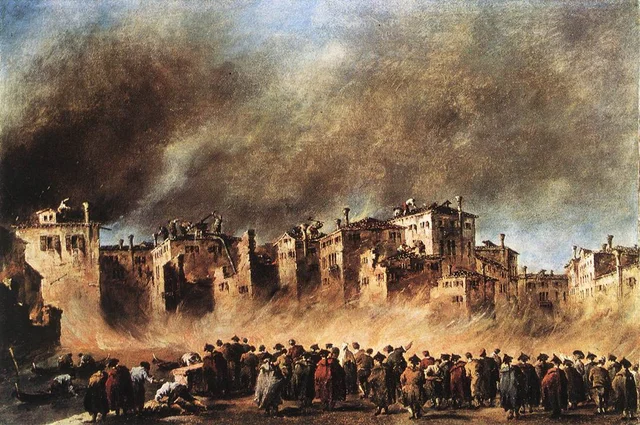 Fire in the Oil Depot at San MarcuolaFrancesco Guardi, 1790
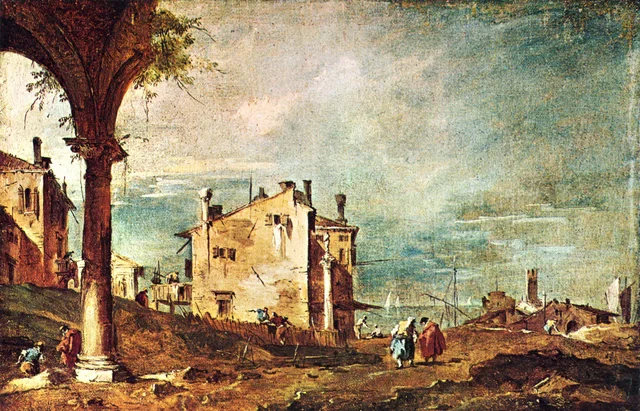 Capriccio: Ruins of an Arch and Farmhouses by a LagoonFrancesco Guardi
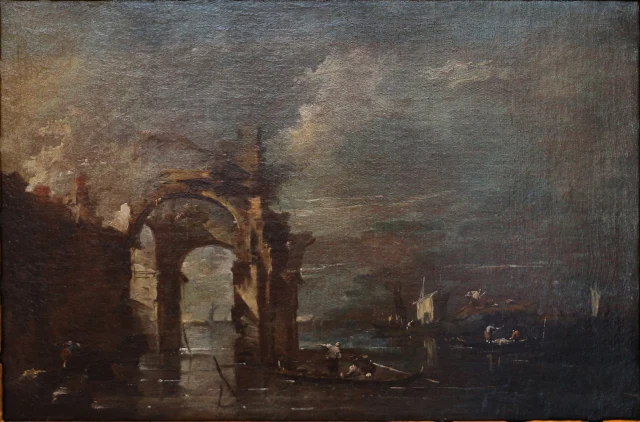 Capriccio with a Ruined Arch in the LagoonFrancesco Guardi
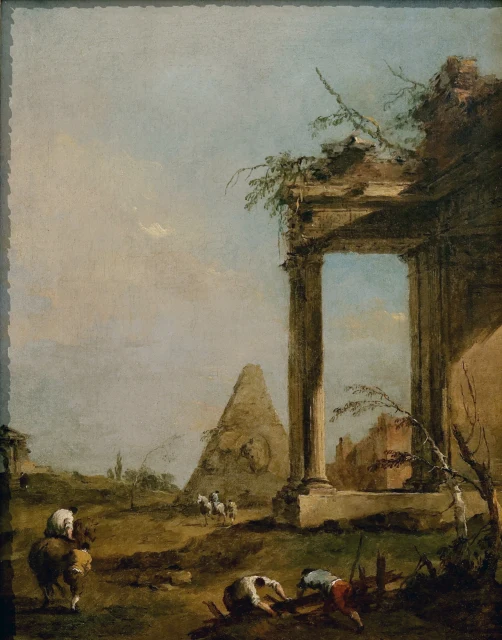 Capriccio with Roman RuinsFrancesco Guardi, 1775
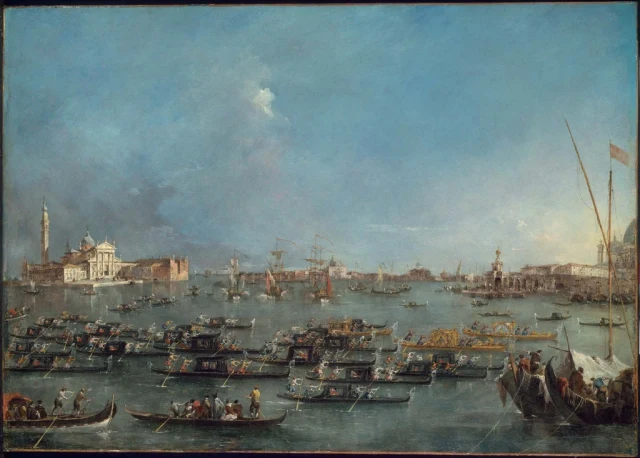 Procession of Gondolas in the Bacino di San MarcoFrancesco Guardi, 1782
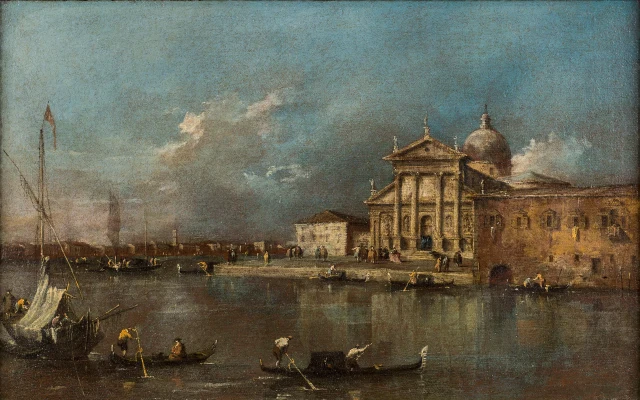 San Giorgio Maggiore, VeniceFrancesco Guardi, 1782
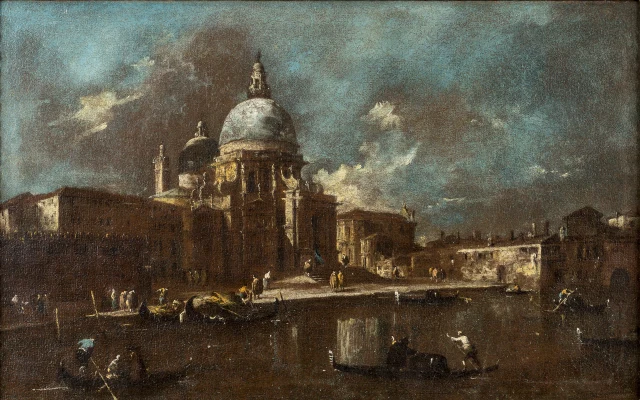 Santa Maria della Salute, VeniceFrancesco Guardi, 1781
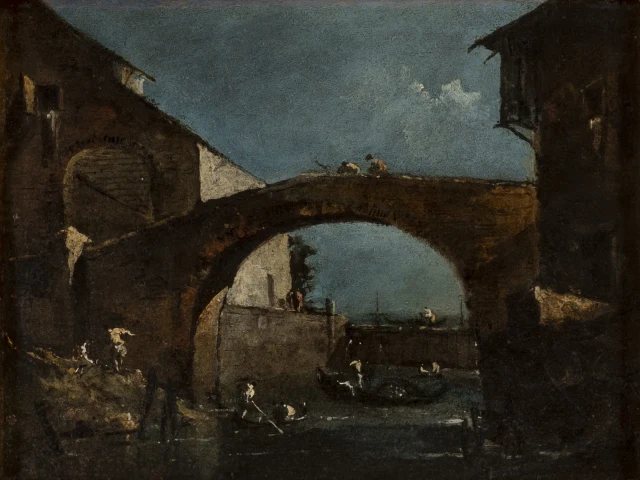 The Gate at DoloFrancesco Guardi, 1786
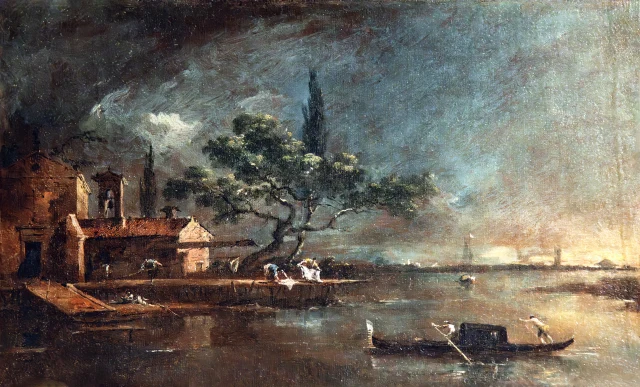 The Island of AnconettaFrancesco Guardi