Francesco Pesellino, Fra Filippo Lippi and workshop
Republic of Florence · Early Renaissance
The story
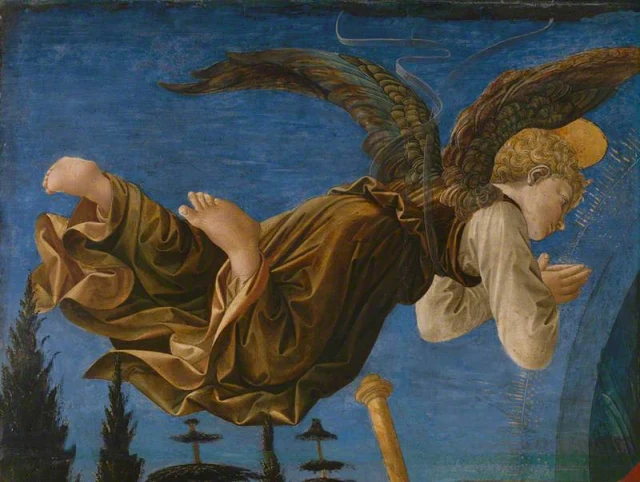
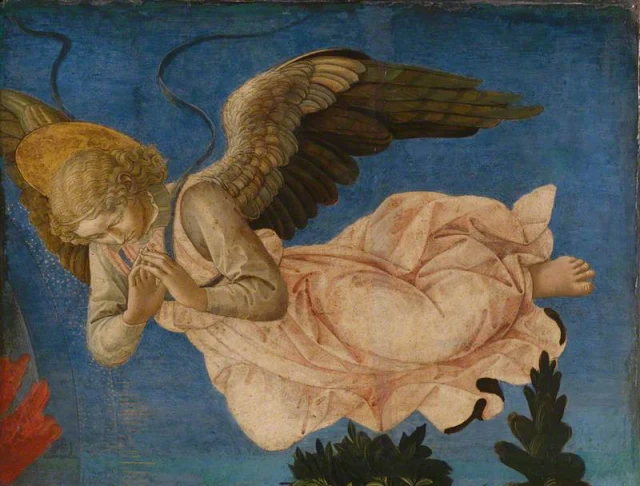
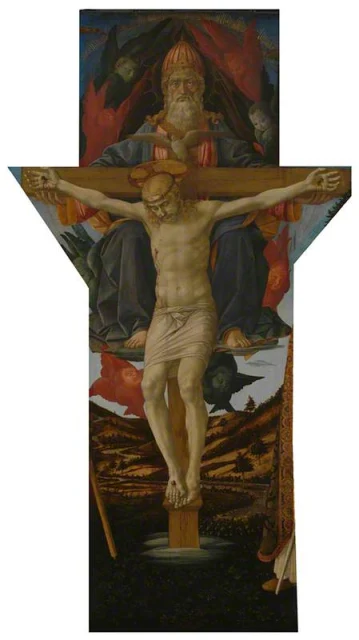
This name stands for one altarpiece painted by several hands. The confraternity of priests at the church of the Holy Trinity in Pistoia, a town northwest of Florence, ordered it from Francesco Pesellino in 1455, and it arrived in Pistoia in 1460, completed by Fra Filippo Lippi and his workshop.
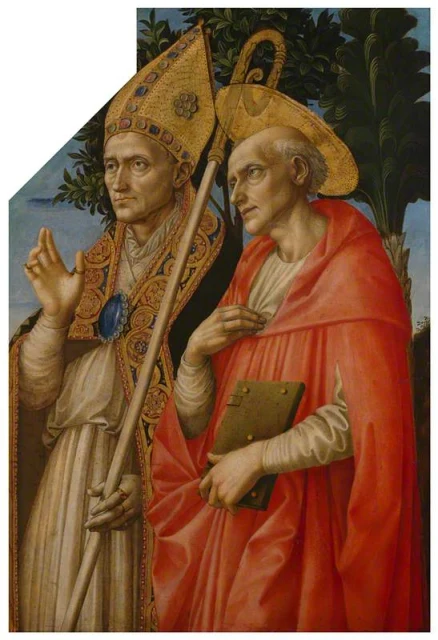
Technical study at the National Gallery in London has sorted out much of who did what. Beneath the paint the whole composition is drawn in fine, careful cross-hatching, and that drawing is Pesellino's. The two saints on the left, Mamas and James, are painted by him as well, and probably the two flying angels. Lippi was then busy with frescoes in the cathedral of Prato, and in 1458 the panel was carried there so that his workshop could finish it. The stippled bushes and reeds of the landscape are theirs, and so is the design of the predella, the strip of small scenes beneath the main picture, whose underdrawing is much looser. Among his helpers was Fra Diamante, a fellow Carmelite friar who assisted him in Prato.
The panel with Saints Mamas and James belongs to the British Royal Collection and has hung beside the rest on loan since 1919.