François Joseph Heim
1787–1865 · France · Neoclassicism, Academic art
The story
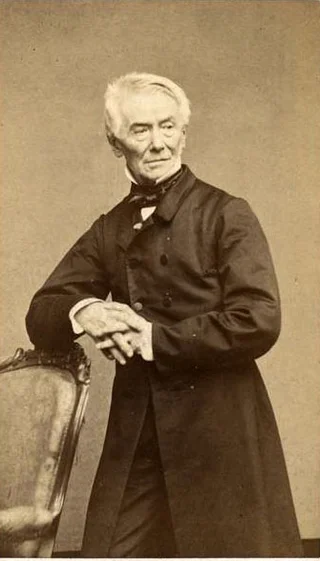
In 1859, at 71, François-Joseph Heim showed 64 pencil portraits at the Paris Salon, every one of them a fellow member of the Institut de France, the body that groups the country's national academies. It was the art establishment drawn by one of its own. Heim had belonged to it for 30 years and had served as president of its Academy of Fine Arts.
He came from Belfort, in the east of France, where his father taught drawing. At 15 he entered the Paris studio of François-André Vincent, a leading history painter, alongside the young Horace Vernet, and in 1807 he won the Prix de Rome, the state scholarship to study in Italy, with a picture of Theseus defeating the Minotaur.
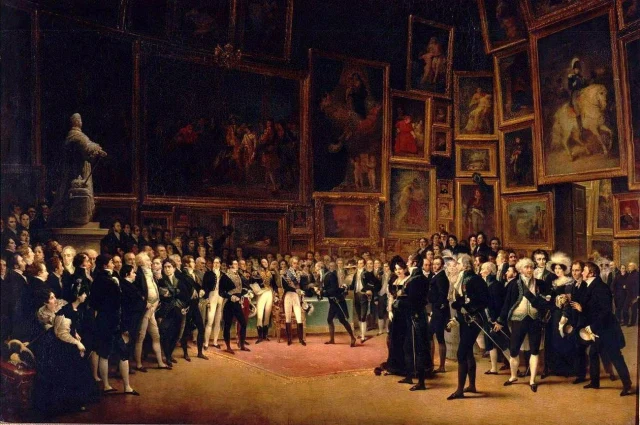
Back in Paris he became a painter of large official walls, the Bible scenes, martyrdoms and royal ceremonies the restored Bourbon monarchy commissioned. He painted a ceiling in the Louvre showing Vesuvius receiving from Jupiter the fire that would bury Pompeii, decorated the conference room of the Chamber of Deputies, and worked in the Paris church of Notre-Dame-de-Lorette. The Romantics mocked him as old-fashioned, and the Louvre curator Jean-Pierre Cuzin later called him perhaps the last representative in France of traditional painting.