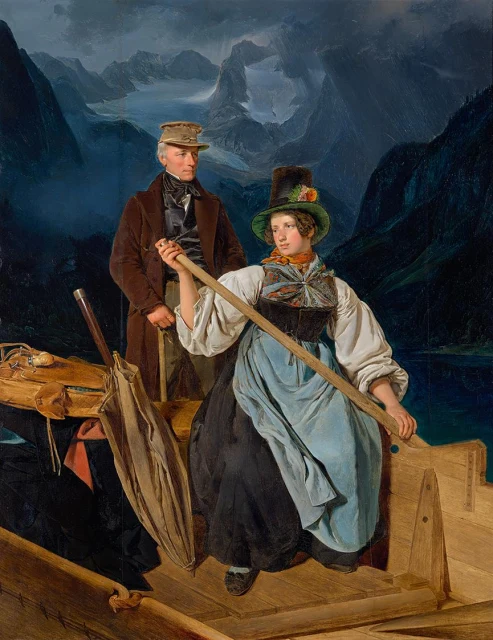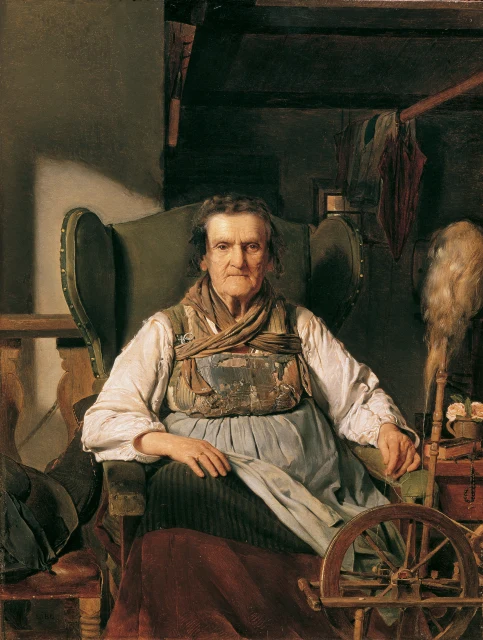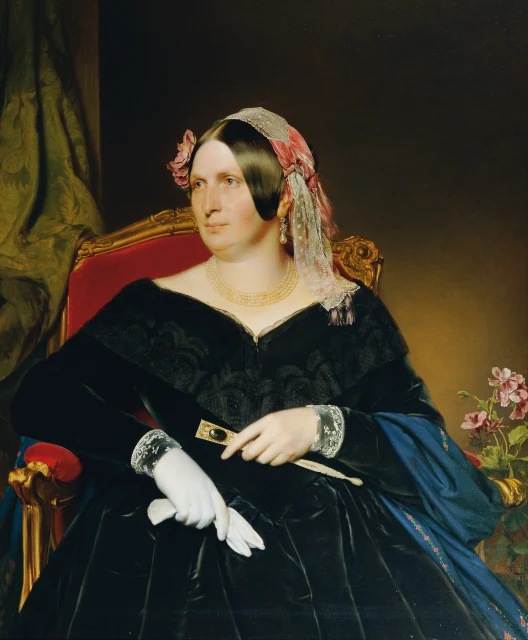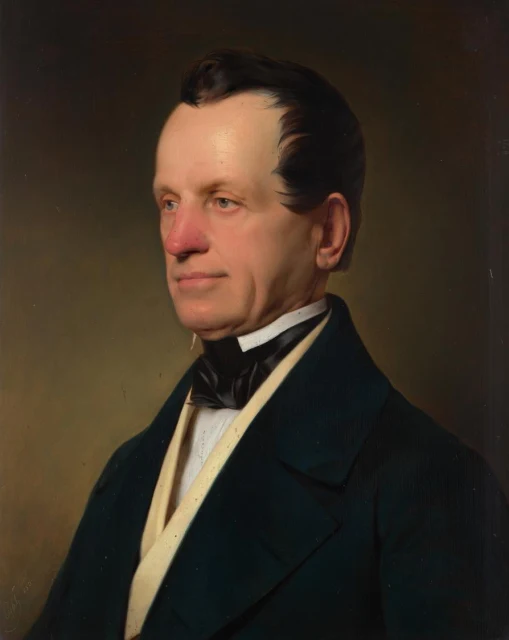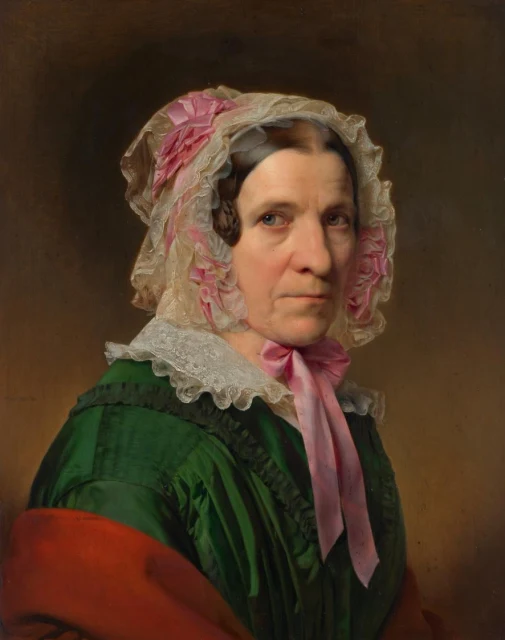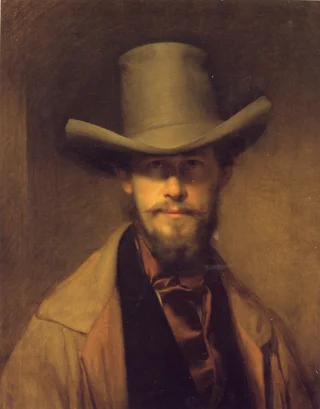
Franz Eybl
1806–1880 · Austrian Empire, Cisleithania · Biedermeier, Realism
The story
Franz Eybl painted the comfortable, inward-looking world that Vienna made for itself in the decades before the revolutions of 1848, the era later called Biedermeier, when middle-class families prized quiet rooms, good manners and a faithful likeness. He was one of the city's most sought-after portraitists, ranked in his day beside Friedrich von Amerling, the leading society painter of the moment.
Born in Vienna in 1806, Eybl entered the Academy of Fine Arts at just ten, and later worked in the softer, sunlit manner of Ferdinand Georg Waldmüller, the great Austrian painter of light. Alongside his portraits and genre scenes he produced more than 400 lithographs, the printed portraits that carried a face to a wide public before photography took over the task.
He spent his last years as a custodian of the imperial picture gallery in the Belvedere palace, and was buried in Vienna's central cemetery, among the city's composers.