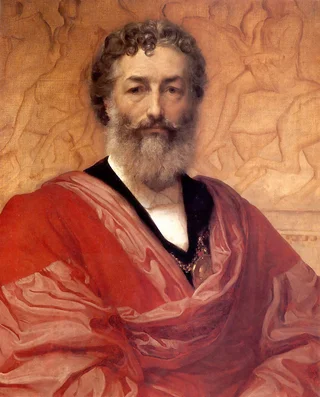
Frederic Leighton
1830–1896 · United Kingdom of Great Britain and Ireland · Academic art
The story
On the 24th of January 1896, Queen Victoria's honours list made the painter Frederic Leighton a baron, the first British artist ever raised to the peerage. He died the next morning, and because he had no heir the title went extinct after a single day, the shortest-lived peerage in the country's history.
By then Leighton had run British art for almost 20 years. Trained across Europe, in Frankfurt, Florence, and Paris, where as a young man he met the aging Ingres, the reigning master of French classicism, he came home fluent in a polished classical manner and from 1878 presided over the Royal Academy, the institution that decided what British painting was supposed to look like.
His subjects were Greek myth and biblical scenes, painted with a smooth, jewel-bright finish. The best known is Flaming June, from 1895, a woman in a translucent orange gown asleep in the heat, curled into a near-perfect circle. He built himself a house in Holland Park in London with a domed Arab Hall lined in Islamic tiles he had collected on his travels, and it still stands as a museum. When he died the Royal Academy buried him in St Paul's Cathedral, near earlier Academicians such as Joshua Reynolds, its first president, and the landscape painter Turner.
Works
9 works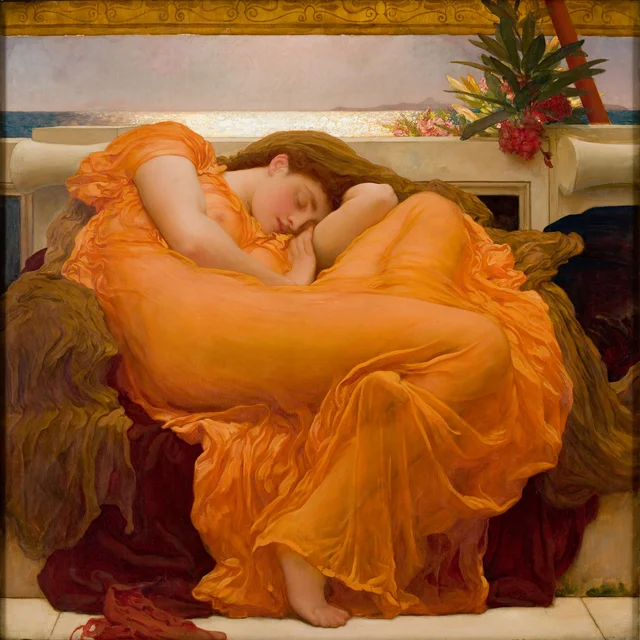 Flaming JuneFrederic Leighton, 1895
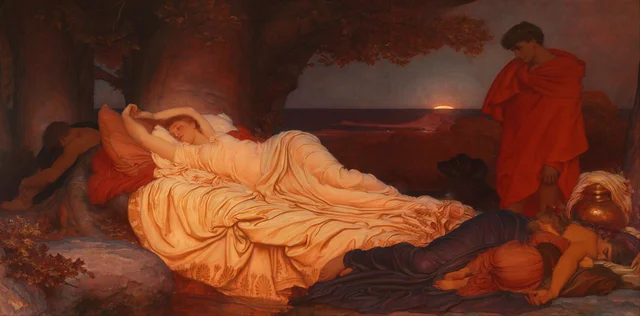 Cymon and IphigeniaFrederic Leighton, 1884
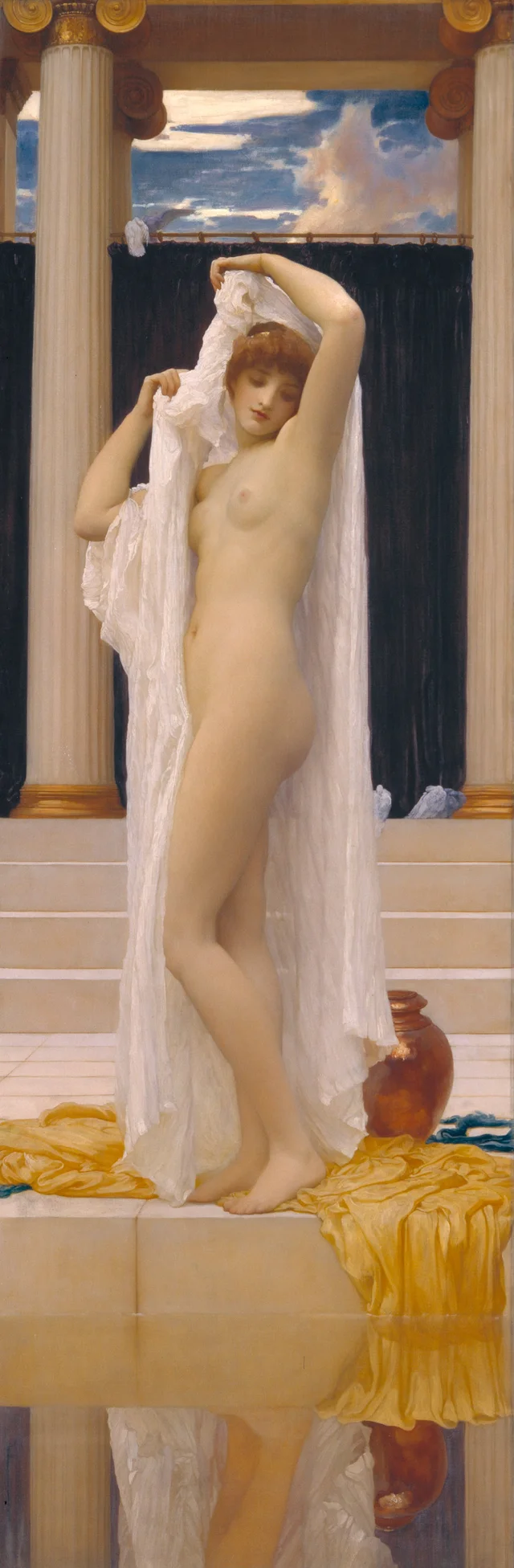 The Bath of PsycheFrederic Leighton, 1890
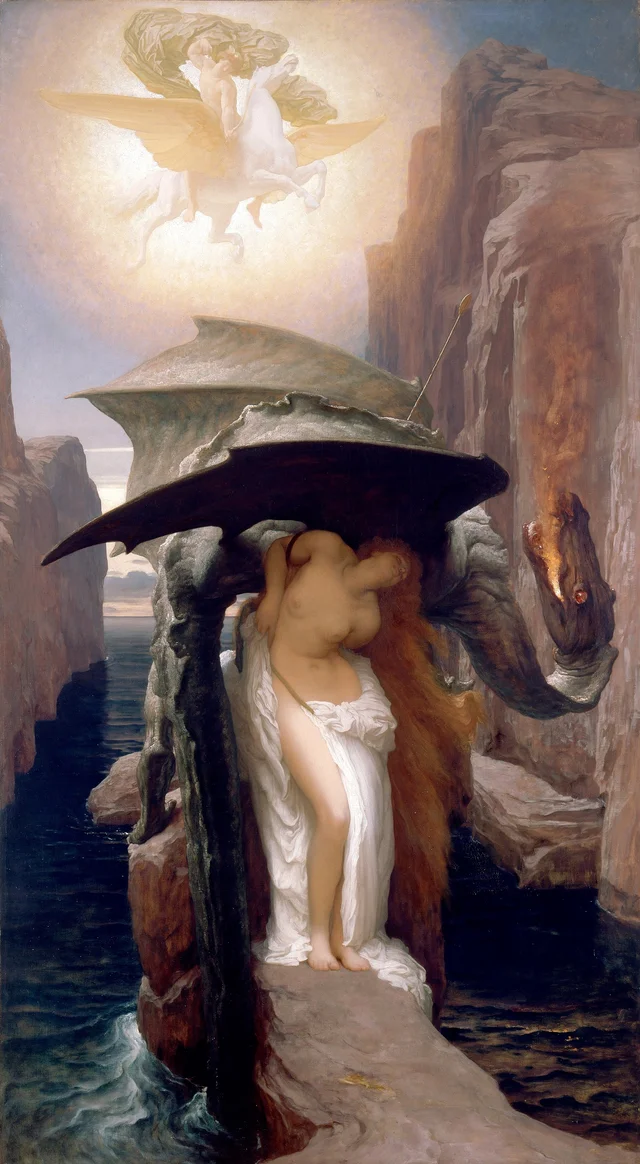 Perseus and AndromedaFrederic Leighton, 1891
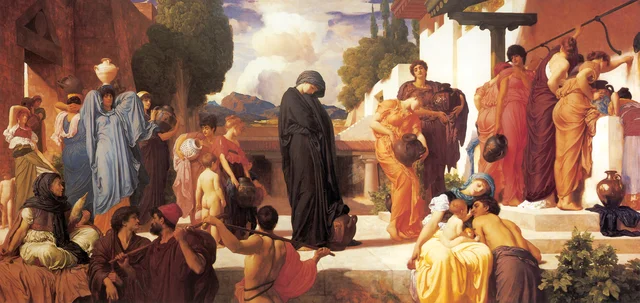 Captive AndromacheFrederic Leighton, 1888
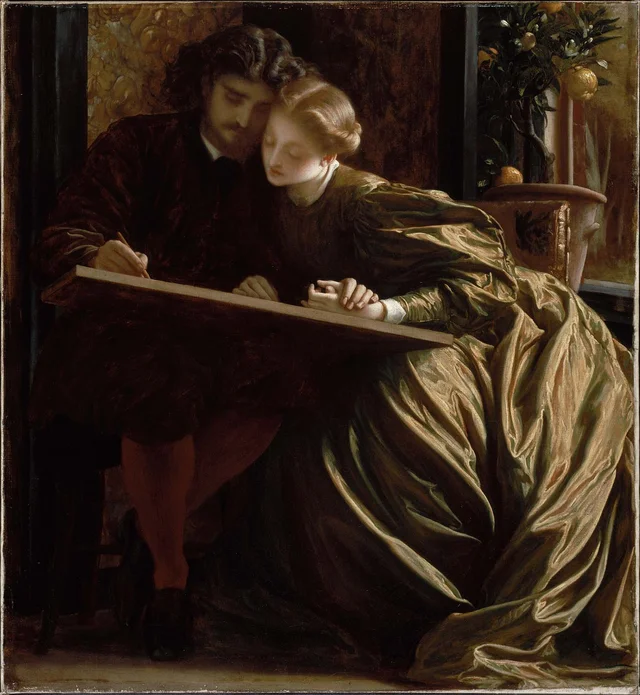 The Painter's HoneymoonFrederic Leighton, 1864
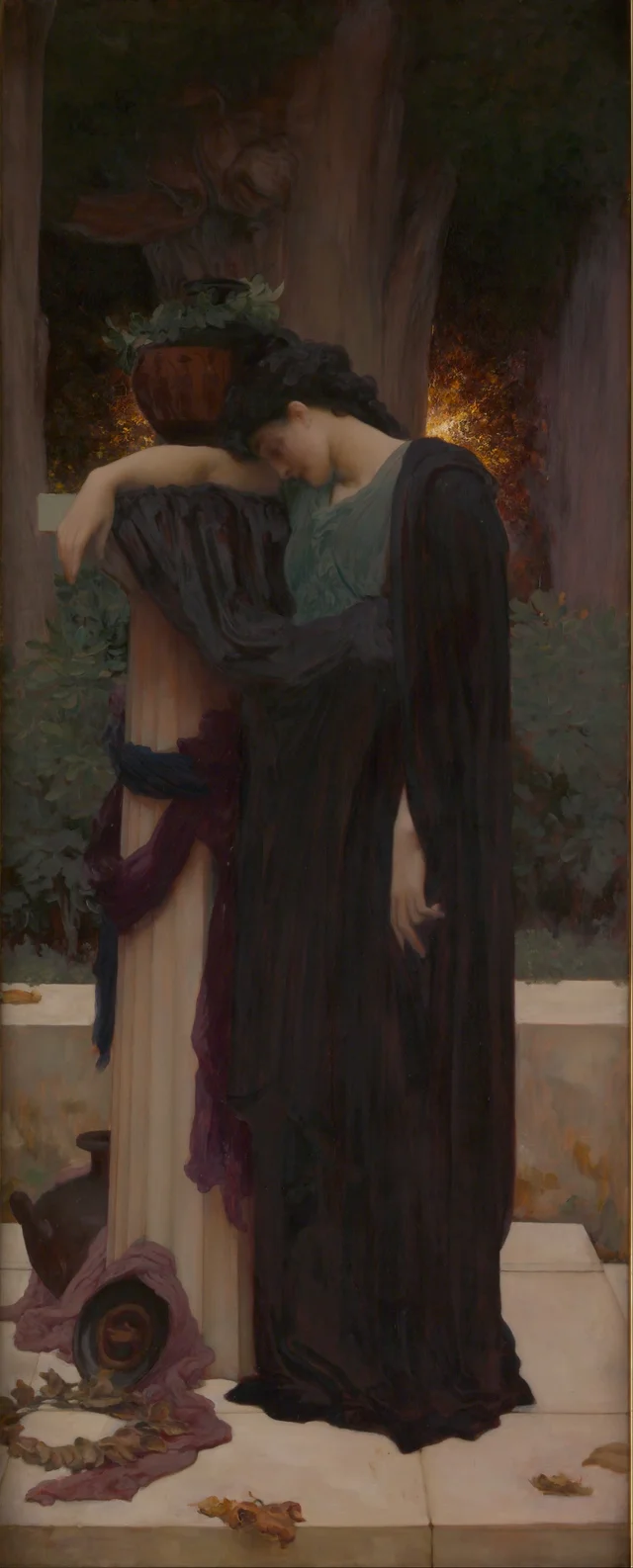 LachrymaeFrederic Leighton, 1895
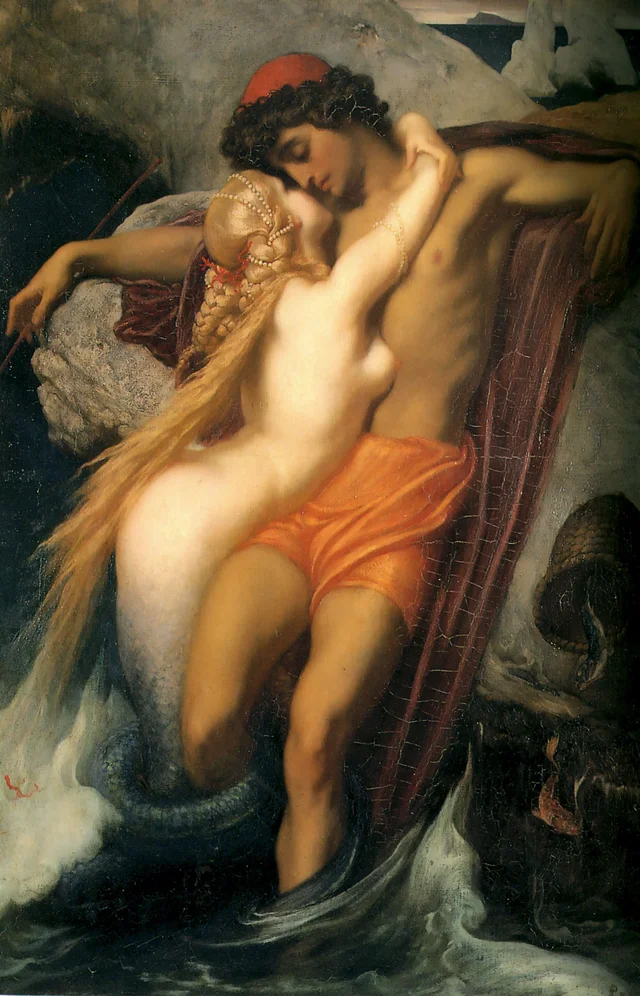 The Fisherman and the SyrenFrederic Leighton, 1858
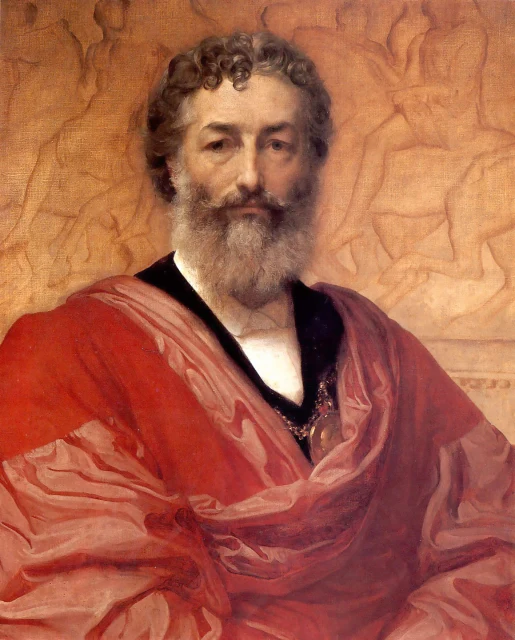 Self-portraitFrederic Leighton, 1880