Friedl Dicker-Brandeis
1898–1944 · Austria, Czechoslovakia · Bauhaus
The story
In the autumn of 1944, in the Theresienstadt ghetto north of Prague, Friedl Dicker-Brandeis packed two suitcases with about 4,500 drawings made by the children she had been teaching and hid them. Her husband had just been sent on a transport east. She volunteered for the next one, and on 9 October 1944 she was murdered at Auschwitz-Birkenau. Her husband survived, and so did the suitcases, which after the war went to the Jewish Museum in Prague.
Deported to the ghetto in December 1942, she had given the children secret art classes and asked each of them to sign their work. Of the roughly 660 children whose drawings survive, about 550 were killed in the Holocaust. Some of the drawings are on show today in Prague's Pinkas Synagogue.
Her own training had been among the most modern of its day. Born in Vienna in 1898, she followed her teacher Johannes Itten, the Swiss painter and colour theorist, to the Bauhaus in Weimar and studied there from 1919 to 1923, working in textiles, printmaking, bookbinding and typography. Back in Vienna she ran a design studio with her fellow Bauhaus student Franz Singer.
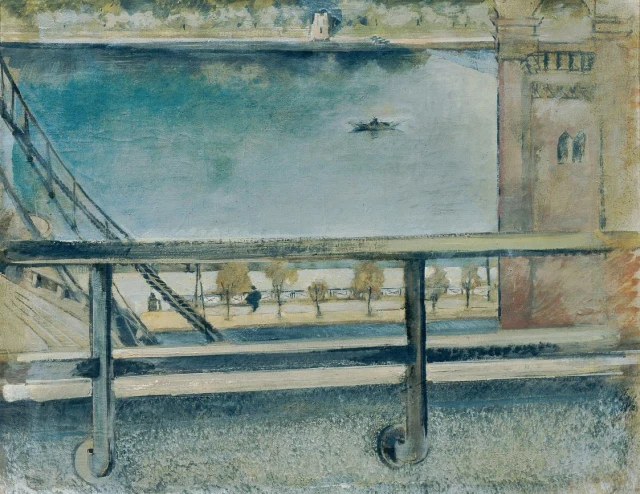
After an arrest for communist activity in 1934 she left Vienna for Prague, and in 1936 she married Pavel Brandeis. The Belvedere's View of the Vltava, Prague dates from that same year and shows the river at the heart of the city where she had found refuge. In 1938 the couple moved to the small Bohemian town of Hronov, and it was from there that they were deported four years later.