Gaspare Landi
1756–1830 · Duchy of Parma · Neoclassicism
The story
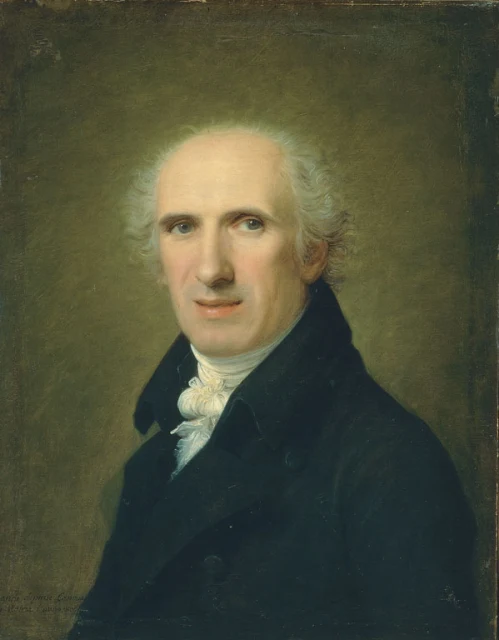
Early 19th-century Rome liked to argue about painting by setting two men against each other. Vincenzo Camuccini stood for drawing in the Roman and Tuscan tradition, firm and heroic. Gaspare Landi stood for colour, warmer, closer to the Venetians, more interested in what a face was feeling. In 1809 both had large canvases on show in the Pantheon before they went off to the churches that had ordered them.
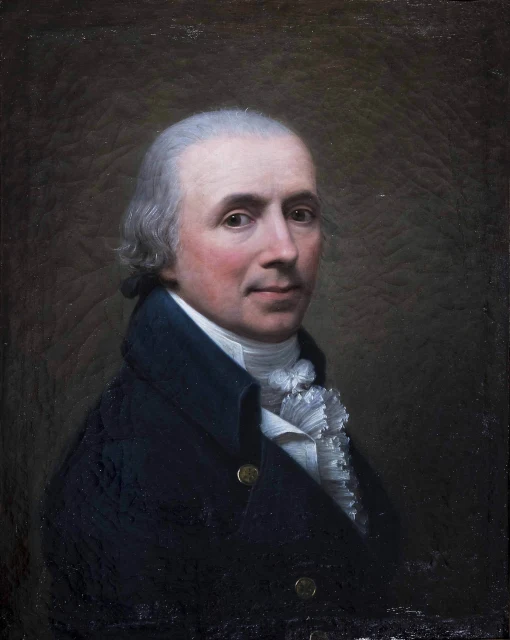
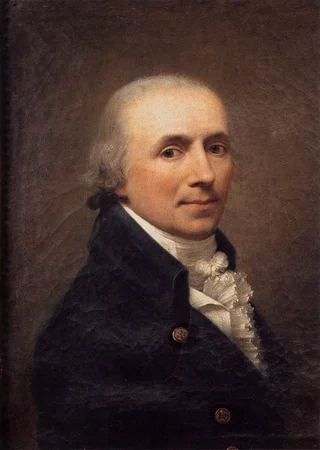
Landi was born in Piacenza on 6 January 1756. A distant relative, the Marquis Giambattista Landi, paid for him to study in Rome, and he arrived there on 20 June 1781, already 25, to train under the painter Domenico Corvi. He was elected to the Accademia di San Luca in 1805, made professor of painting in 1812, and in 1817 took the chair of its president from the sculptor Antonio Canova.
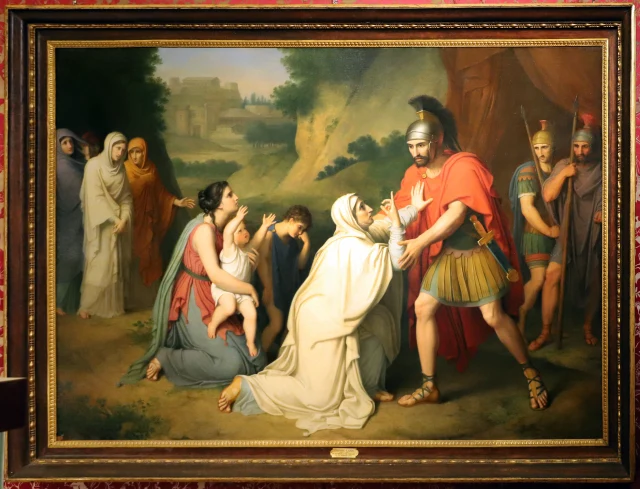
The canvas of 1819 that hangs in the modern gallery at Palazzo Pitti belongs to those academy years. It shows Veturia at the feet of her son Coriolanus, the Roman general she talked out of marching on his own city. Landi moved back to Piacenza around 1820, found provincial life dull and returned to Rome in 1824, turning down a professorship in Venice to stay. He went home to Piacenza again in 1829 and died there on 27 February 1830.