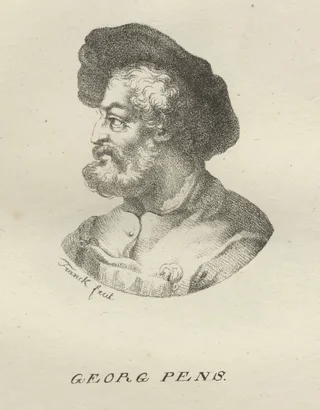
Georg Pencz
1500–1550 · Holy Roman Empire · Renaissance, Northern Renaissance
The story
In 1525 the city council of Nuremberg put three young painters on trial. Georg Pencz and the brothers Sebald and Barthel Beham were accused of denying baptism, Christ and the sacrament, and of leaning toward Thomas Müntzer, the radical preacher then leading peasants in revolt. The court called them the godless painters and banished them from the city. The exile was brief, and Pencz was soon back at work.
He had come to Nuremberg around 1523 and joined the workshop of Albrecht Dürer, the towering figure of German art. Like Dürer he travelled to Italy, absorbed Venetian painting, and probably worked with the Roman engraver Marcantonio Raimondi. He belongs to the group known as the Little Masters, prized for engravings so small they fit in the palm, dense with classical figures.
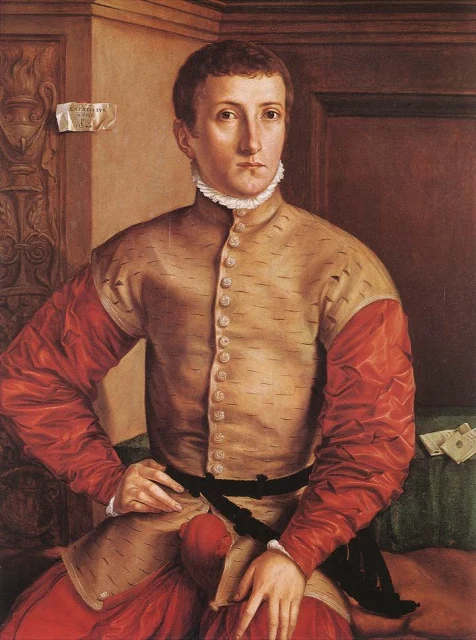
Alongside the prints he painted sober, Italian-flavoured portraits of Nuremberg citizens. He died around 1550, on his way to take up a post as court painter to the Duke of Prussia.