George Catlin
1794–1872 · United States · Realism
The story
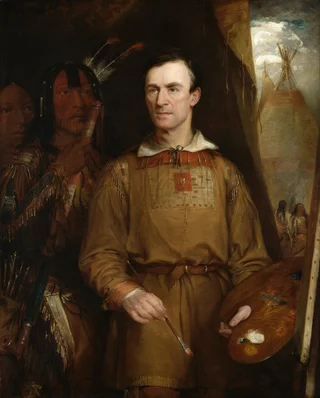
In the early 1830s an American lawyer gave up the courtroom, loaded his paints onto steamboats and headed up the Missouri River into the western Plains. George Catlin had decided that the Native nations of the interior were about to be swept aside by settlement, and he set himself the task of recording them before that happened.
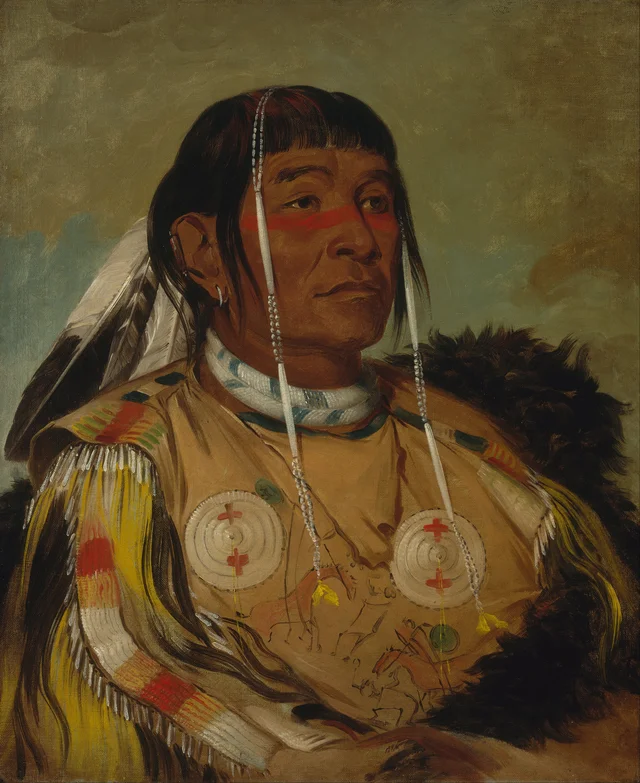
Over several summers he visited dozens of tribes and painted more than 500 works, portraits of named individuals in full regalia, plus buffalo hunts, dances and camps. He was an outsider with an imperfect eye, but he sat with people few white Americans had painted from life, and he took their faces seriously as portraits.
Back east he assembled it all into a travelling Indian Gallery, lecturing beside the canvases, and eventually took the show to London and Paris. The venture ruined him financially. Much of the collection now hangs in the Smithsonian in Washington, close to the government whose expansion Catlin had watched with dread.