Georges Valmier
1885–1937 · France · Cubism
The story
Georges Valmier made his living at two arts at once. He was a serious musician, a singer who performed Debussy, Ravel and Satie in concert halls and churches, and at the same time a painter who moved through nearly every current of early modern art. He was born in Angoulême in western France in 1885 and raised in Montmartre, the Paris hill crowded with studios and cabarets.
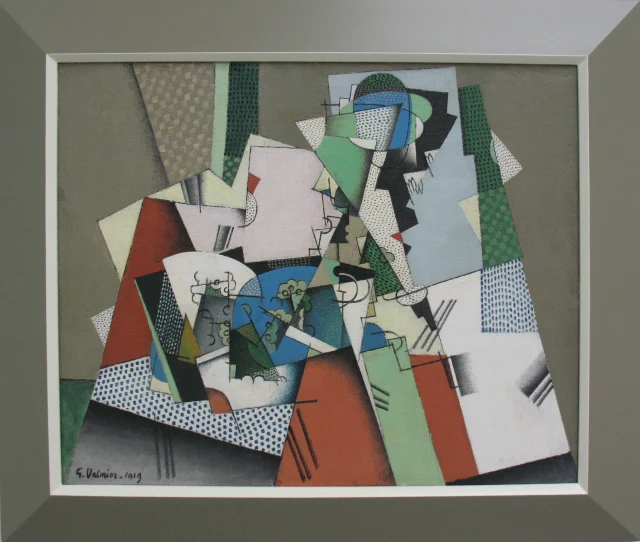
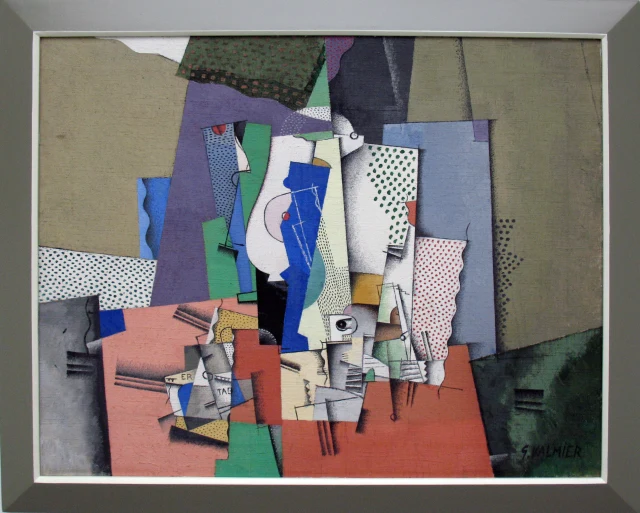
He began close to Impressionism, then was jolted by a room of Cézanne's canvases at a 1907 exhibition and turned toward Cubism, breaking the world into faceted planes. His real chance came after the First World War. Back in Montmartre in 1918 he met the dealer Léonce Rosenberg, who put him under contract and gave him a solo show in 1921 at his gallery of modern painting, the Effort Moderne. From about 1921 Valmier pressed on past Cubism into pure abstraction, arranging flat, bright shapes with the same feel for rhythm he brought to music.
He carried that sense of colour and pattern well beyond the canvas, designing sets and costumes for the stage and patterns for fabrics and carpets. He died in Montmartre in 1937, at 51.