Gerard Bilders
1838–1865 · Kingdom of the Netherlands · Hague School
The story
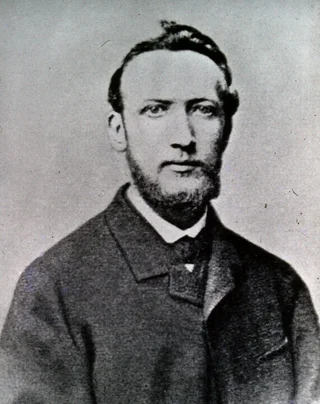
Gerard Bilders was 26 when he died in 1865, and most of what we know about how he thought comes from letters and diary notes that his patron published soon after. That patron was Johannes Kneppelhout, a wealthy Dutch writer who took promising young artists into his country estate near Arnhem. He paid Bilders's way and pushed him toward a more literary kind of painting, advice the young man politely refused.
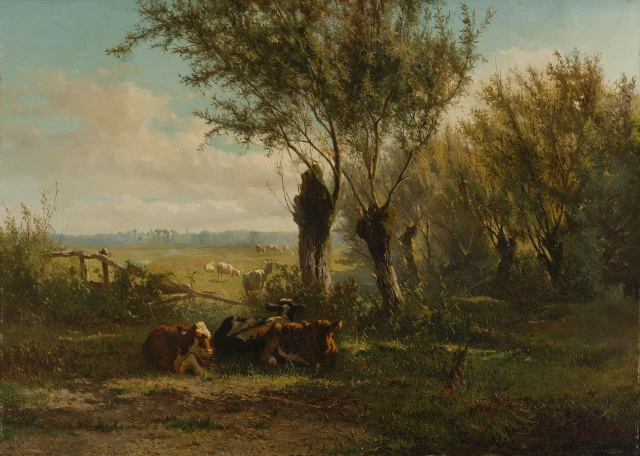
Bilders had his first lessons from his father, Johannes Warnardus Bilders, himself a landscape painter. From the late 1850s Gerard worked in the meadows around Leiden, painting cattle in flat Dutch fields and chasing one thing above all, a warm, coloured grey that could hold the mood of a damp afternoon. His experiments with soft, unbroken colour pointed straight toward the tonal painting that the Hague School would make famous a decade later.
He did not live to see it. Painters of his own generation like Anton Mauve and Willem Maris carried those low grey harmonies into the movement now called the Hague School. Bilders stands just before it, one of its forerunners, his best canvases finished while he was still in his early twenties.