Gerard de Lairesse
1640–1711 · Dutch Republic · Baroque
The story
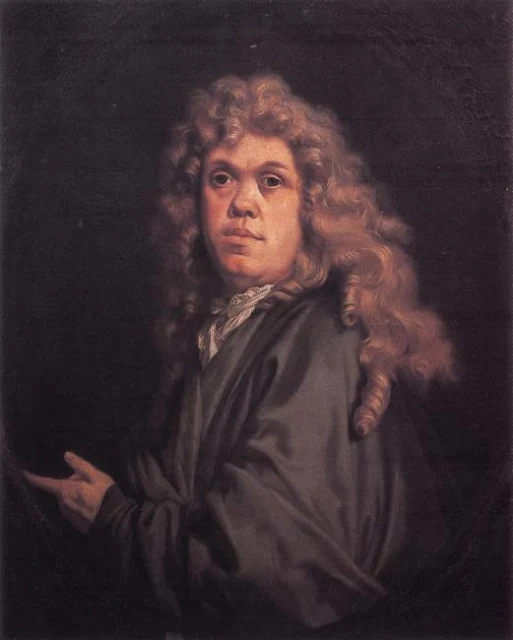
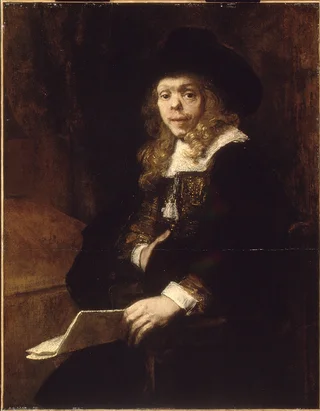
Around 1665 Rembrandt painted a young man with a strangely swollen face and a flattened, bulbous nose. The sitter was Gerard de Lairesse, then in his twenties, already a busy painter and already marked by the congenital syphilis that had disfigured him from birth.
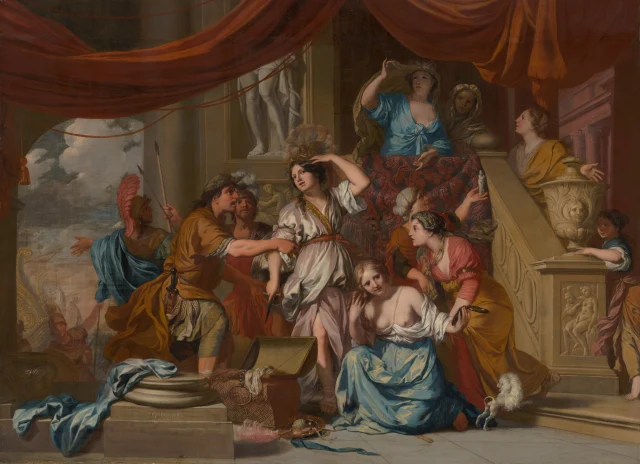
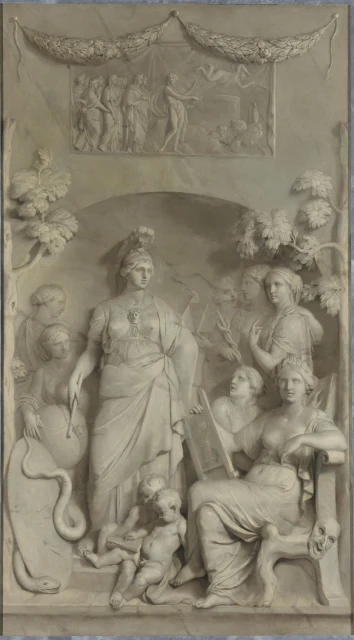
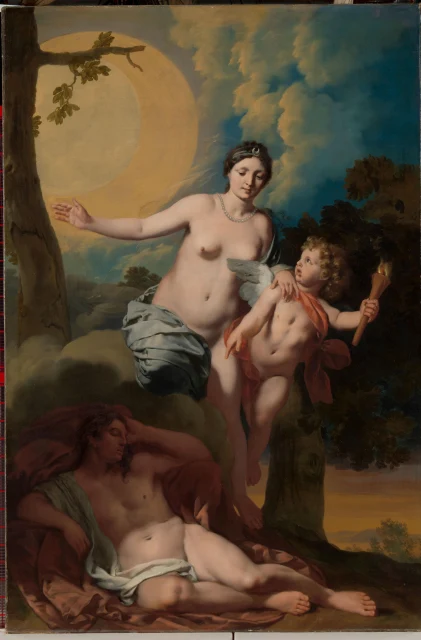
Lairesse worked in Amsterdam in a polished, classical manner, full of gods and smooth ideal figures, and he had little patience for the rougher Dutch realists. He once dismissed Rembrandt's thickly loaded paint as looking like liquid mud on the canvas, yet Rembrandt's portrait of him is gentle and full of dignity.
The same disease that shaped his face eventually took his sight. By about 1690 he had gone blind and could no longer paint, so instead he talked. He dictated two treatises, one on drawing and the large Groot Schilderboek, the Great Book of Painting, printed in 1707. Built on geometry and firm rules for the ideal, they became handbooks for European academies well into the 18th century. Translated into German, English and French, they were still being reprinted and argued over long after Dutch painters had abandoned the classical taste he preached.