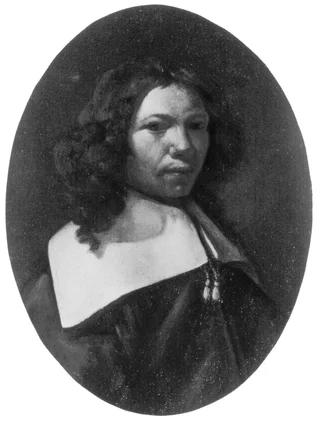
Gerrit Adriaenszoon Berckheyde
1638–1698 · Dutch Republic · Dutch Golden Age, Baroque
The story
Stand in front of one of his paintings and you are usually looking across a wide, sunlit square in Haarlem, the church of St. Bavo rising over the brick houses and the pavement nearly empty in the clear morning light. Gerrit Berckheyde built a career on this kind of view, the Dutch town seen plainly, its buildings measured and evenly lit.
He learned the trade beside his older brother Job, a painter eleven years his senior, and the two shared a house and probably a studio in Haarlem for most of their lives. In the 1650s they travelled up the Rhine to Heidelberg and worked for the Elector Palatine, the local prince, who gave them each a gold medal. Court life did not suit them, so they went home, and Gerrit joined the Haarlem painters' guild of Saint Luke in 1660.
His rival Jan van der Heyden, the other great townscape painter of the day, liked crowded canals. Berckheyde preferred a big open plaza with one monument catching the light. He painted the same corners of Haarlem, Amsterdam and The Hague many times over, shifting the hour and the angle. He died in Haarlem in 1698, said by an early biographer to have drowned in one of its canals.
Works
4 works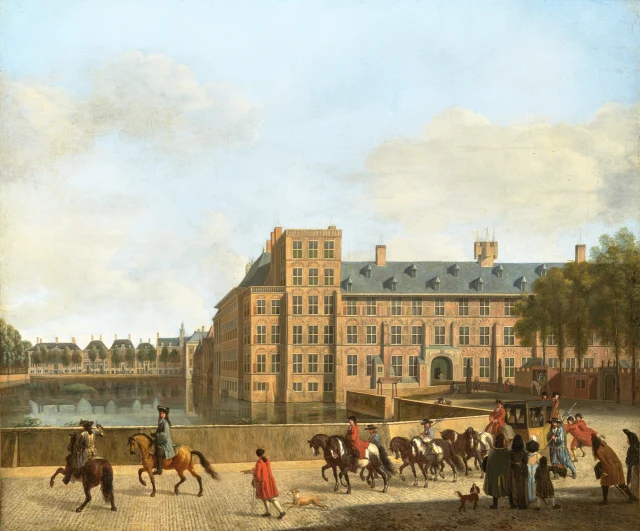 A Hunting Party near the Hofvijver in The Hague, Seen from the BuitenhofGerrit Adriaenszoon Berckheyde, 1688
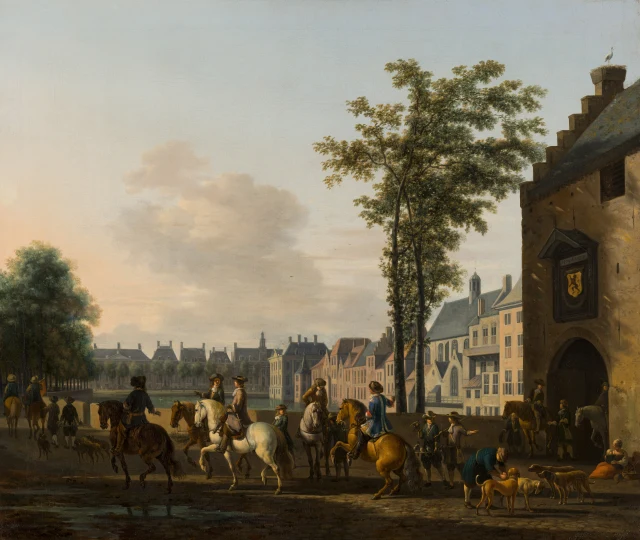 A Hunting Party near the Hofvijver in The Hague, seen from the PlaatsGerrit Adriaenszoon Berckheyde, 1690
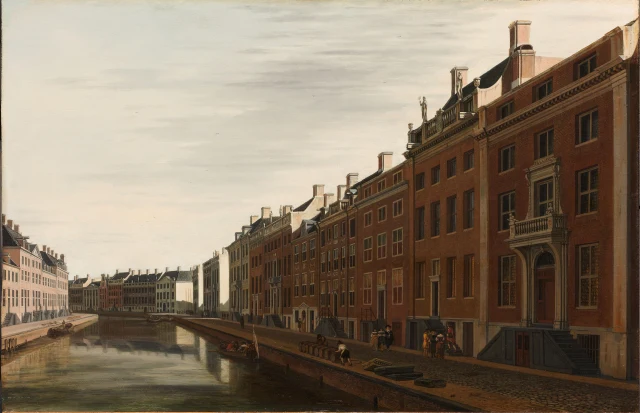 The ‘Golden Bend’ in the Herengracht, Amsterdam, Seen from the WestGerrit Adriaenszoon Berckheyde, 1672
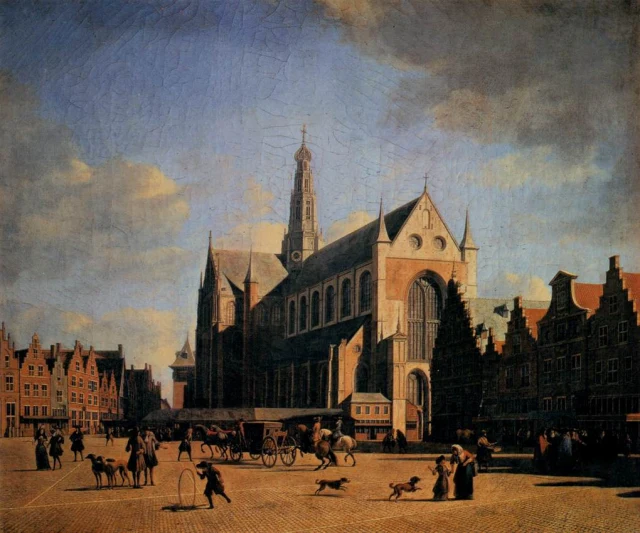 The Great Market (Grote Markt) in HaarlemGerrit Adriaenszoon Berckheyde, 1693