Gheorghe Tattarescu
1818–1894 · Romania · Neoclassicism, Academic art
The story
In Rome in 1849 a young painter studying at the Accademia di San Luca, the city's old academy of art, painted an allegory he called The Awakening of Romania. In Wallachia the revolution of 1848 had just been put down by Ottoman and Russian troops, and its leaders were scattered in exile. Gheorghe Tattarescu, born in 1818 in Focșani on the border between Moldavia and Wallachia, painted several of them abroad, among them the general Gheorghe Magheru, and in 1851 the historian and revolutionary Nicolae Bălcescu, in three almost identical versions.
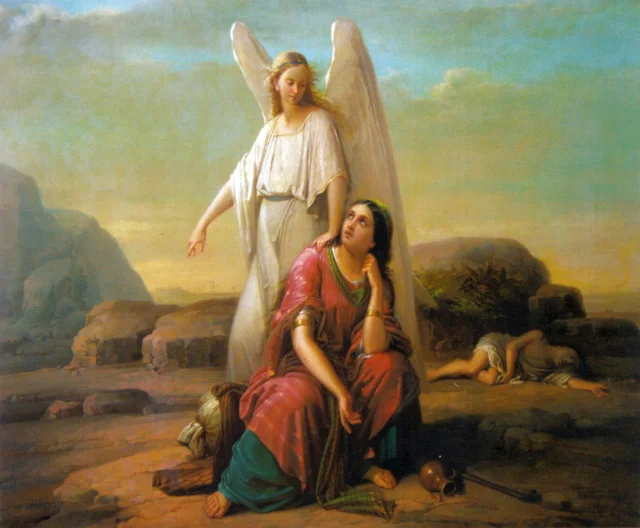
Back in Bucharest after his studies, he spent four decades on church walls, more than 50 churches in all, among them the Metropolitan Cathedral in Iași and Colțea church in Bucharest. He brought into them the Italian academic manner he had learned while copying Raphael in Rome, in place of the older post-Byzantine style of wall painting. In 1864 he and the painter Theodor Aman founded the School of Fine Arts in Bucharest, and in 1865 he published a handbook on the proportions of the human body. His house in Bucharest, with his studio, has been a memorial museum since the 1950s.