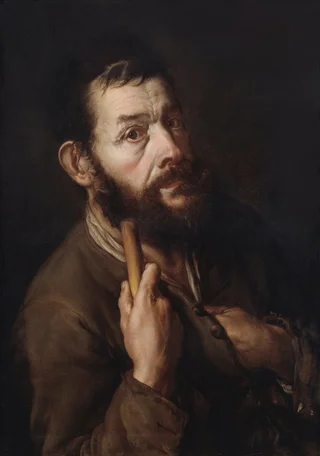
Giacomo Ceruti
1698–1767 · Duchy of Milan · Baroque
The story
Most painters of the early 18th century who wanted to eat kept their brushes on saints, gods and aristocrats. Giacomo Ceruti spent much of his career on beggars, laundresses, porters and ragged children, and painted them life-size, the scale usually reserved for the powerful. It earned him the nickname Pitocchetto, roughly 'the little beggar.'
He worked mainly around Brescia, a city in Lombardy in northern Italy, from the 1720s on. His figures sit or stand and look back at the viewer with a plain steadiness, each clearly a particular person rather than a type. Where other artists used the ragged poor as background colour, Ceruti made them the whole subject and gave them room.
This was not only private conscience. In 1736 the Marshal of the Venetian Republic's army, Johann Matthias von der Schulenburg, a serious collector, commissioned a group of these beggar pictures from him, so there was a market among the wealthy for exactly these faces. Ceruti also painted the altarpieces and portraits a working artist needed to survive. His largest surviving group of the poor, made for a villa at Padernello near Brescia, is still known as the Padernello cycle.
Works
5 works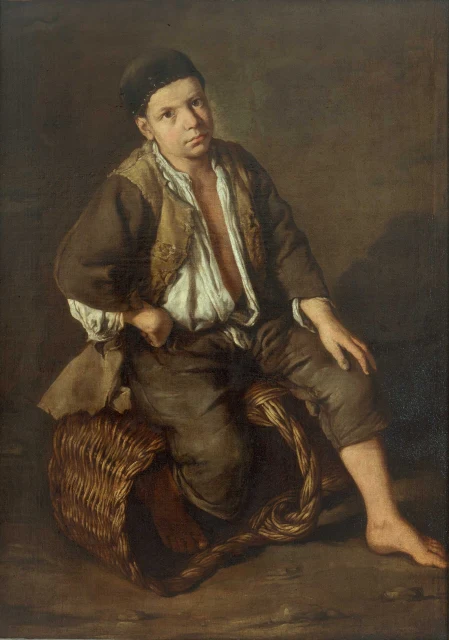 Errand Boy Seated on a BasketGiacomo Ceruti, 1735
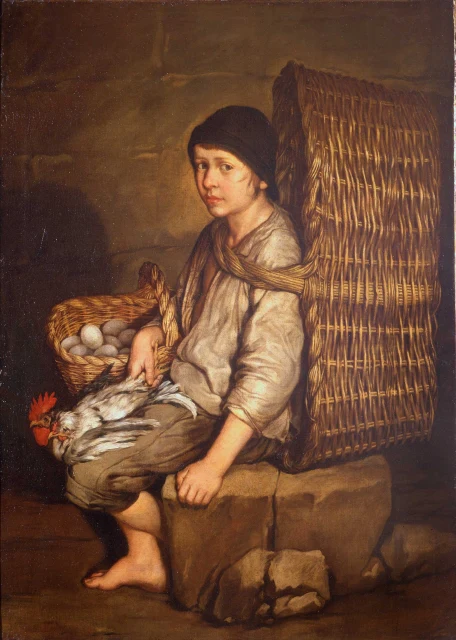 Errand Boy Seated with a Basket on His Back, Eggs and PoultryGiacomo Ceruti, 1735
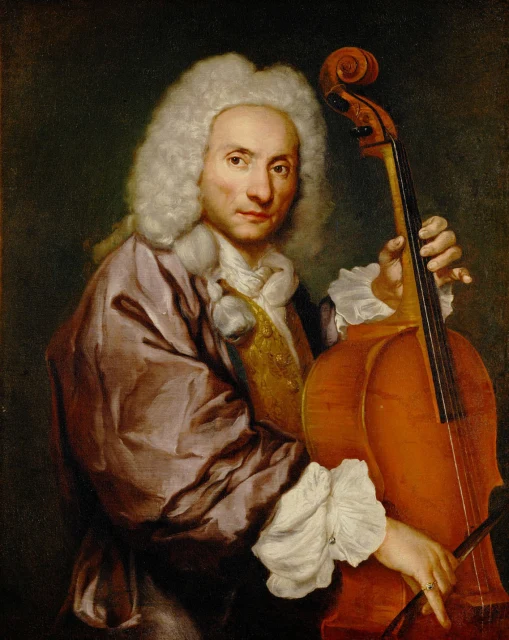 Portrait of a CellistGiacomo Ceruti, 1747
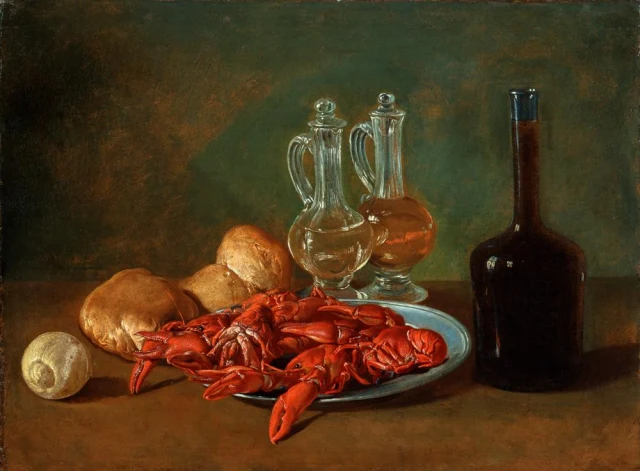 Still Life with Pewter Plate, Shrimps, a Lemon, Glass Cruets, Bread and a Bottle of WineGiacomo Ceruti, 1755
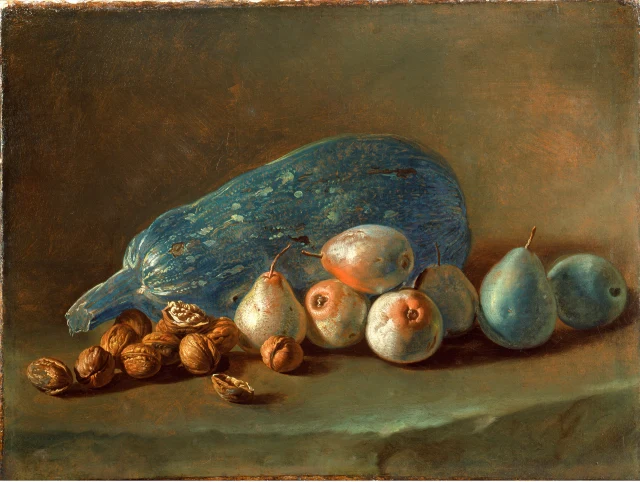 Still Life with Pumpkin, Pears and WalnutsGiacomo Ceruti, 1755