Giacomo Grosso
1860–1938 · Kingdom of Italy · Academic art
The story
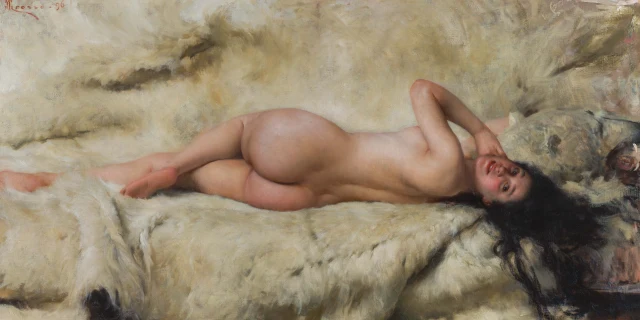
In December 1900 a fire broke out in an old building on Broadway in New York, where an Italian painting was on show for ten cents a ticket, and the canvas was destroyed. It was Supremo convegno, The Supreme Meeting, by Giacomo Grosso of Turin, a group of naked women gathered around the coffin of Don Juan. Five years earlier it had been the sensation of the first Venice Biennale. The Patriarch of Venice, Giuseppe Sarto, the future Pope Pius X, condemned it, the novelist Antonio Fogazzaro defended it, and visitors gave it the prize of the popular vote.
Grosso had come a long way to that scandal. He was the ninth of 11 children of a carpenter in Cambiano, a village near Turin, and he left a seminary to study at the Accademia Albertina, Turin's art academy, on a small monthly grant from his village council. To make ends meet he repainted tobacconists' tin signs and hand-coloured enlarged portrait photographs, work that taught him to catch a likeness fast. Once, after two days without food, he walked all the way home to Cambiano to eat.
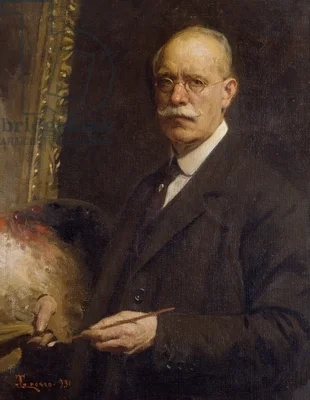
That quick eye made him the portraitist Turin's aristocracy wanted, and his sitters ranged from members of the royal family to the conductor Arturo Toscanini. From 1906 he held the chair of painting at the Accademia Albertina, and in 1929 he was appointed a senator of the Kingdom of Italy. He liked to say he was only a painter, and with a touch of irony he called colleagues who rejected the academic tradition artists. He is buried in Turin's Monumental Cemetery.