Giottino
1324–1369 · Italian · Trecento
The story
In the middle of the 14th century, a generation after Giotto had remade Italian painting, Florence remembered a painter it called Giottino, the little Giotto, for how closely he followed the master's solemn, solid figures. His real name is still argued over. Vasari, writing two centuries later, confused him with others, and scholars have since tried to untangle a Tommaso di Stefano from the legend.
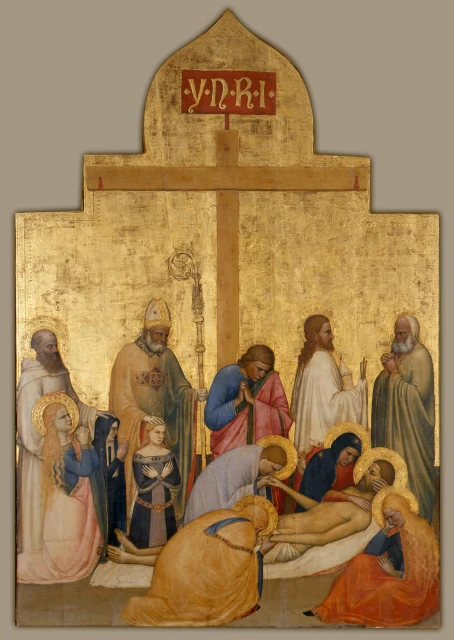
What survives under his name is thin, which makes the one certain masterpiece matter more. The Pietà now in the Uffizi, painted around 1365 for the Florentine church of San Remigio, shows the dead Christ mourned by a tight, grieving group, with two contemporary donors kneeling at the edges in the plain dress of their own day. Vasari admired his soft, unified handling of light and colour, what he called sweet and united painting.
Giottino died young, probably in his forties, sometime in the 1360s, and left almost nothing else that can be firmly tied to his hand.