Giovanni Battista Crespi
1573–1632 · Duchy of Milan · Baroque, Mannerism
The story
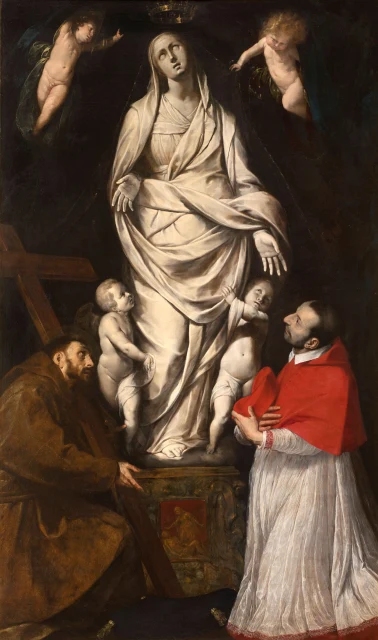
When Milan set out to honour Carlo Borromeo, the reforming archbishop who had steered the city through plague and the Counter-Reformation, much of the painting fell to the man they called il Cerano, after the small town where he grew up. He had befriended the powerful cardinal Federico Borromeo, Carlo's cousin, in Rome, and came back to Milan as the artist the Church there most trusted with a sacred image.
His great commission was the Quadroni — enormous canvases, some over four metres tall, telling the life and miracles of Carlo Borromeo as the city pressed Rome to make him a saint. They were painted to hang high in Milan Cathedral, and they still come out each November on his feast day, carried up between the pillars so the crowd can follow the story from below.
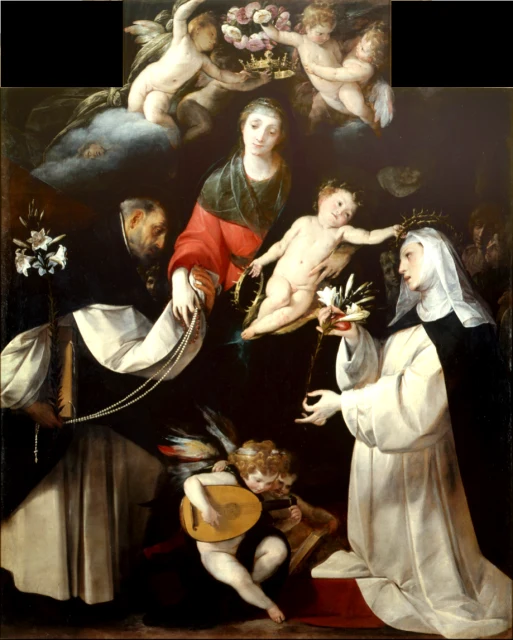
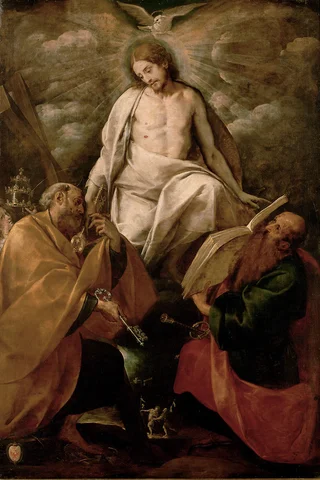
Crespi worked in the tense, devout mood of Counter-Reformation Milan, where a painting was meant to move ordinary people to prayer. His crowded scenes and steep angles keep the nervous energy of Mannerism, the style he trained in, while the feeling grows warmer and more human. He did more than paint, too: he ran the city's academy of art founded by Federico Borromeo, and worked as a sculptor and architect on the cathedral itself.