Giovanni Biliverti
1585–1644 · Spanish Netherlands, Grand Duchy of Tuscany · Mannerism, Baroque, Florentine school
The story
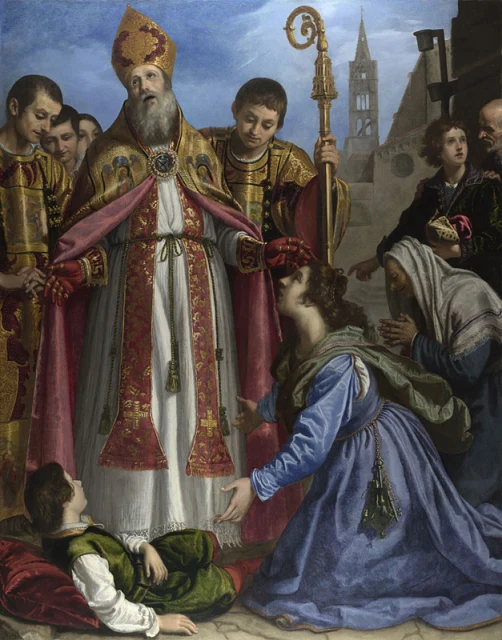
A bishop in embroidered vestments stands over a small boy lying dead in a street, while the boy's mother kneels beside him. Giovanni Bilivert painted this miracle of Saint Zenobius, the 4th-century bishop of Florence, for his close friend Giuliano Girolami, whose banking family claimed descent from the saint. The large canvas, probably painted between 1610 and 1620, now hangs in the National Gallery in London.
Bilivert's roots lay in the Low Countries. His father, a goldsmith named Bijlevelt, came from there to work for the Medici, the grand dukes of Tuscany, and the family name was softened into Italian as Bilivert or Biliverti. Giovanni trained with Cigoli, the leading painter in Florence at the time, and followed him to Rome from 1604 to 1607.
Back in Florence he entered the Accademia del Disegno, the city's academy of artists, in 1609. From 1611 to 1621 he also designed inlaid stone work for Grand Duke Cosimo II. When Cigoli died in 1613, it was Bilivert who completed some of his unfinished pictures. His best-known Florentine canvases include the Chastity of Joseph, with Joseph pulling free of Potiphar's wife, and the Angel refusing the gifts of Tobias, in the Pitti Palace. He ran one of the busiest workshops in the city, training painters such as Cecco Bravo, and died in Florence in July 1644.