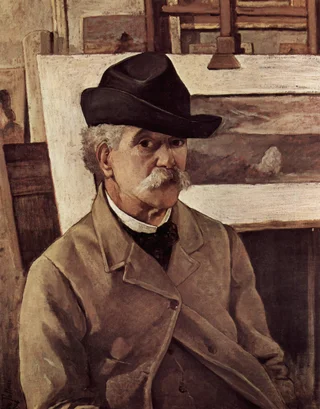
Giovanni Fattori
1825–1908 · Grand Duchy of Tuscany · Macchiaioli
The story
In the 1860s Italy was stitching itself together out of separate states, and the wars of the Risorgimento, the struggle for its unification, filled the newspapers with cavalry charges and heroic dead. Giovanni Fattori, a painter from the port of Livorno, looked at that same war and painted the parts nobody put on a monument: soldiers waiting, horses tethered in the sun, a muster in an empty field, a wounded man carried down a white road.
He worked in a manner his circle called the macchia, the patch or blot. Fattori and his friends, the Macchiaioli, met in a Florence cafe and argued that light and shadow could be built from blunt patches of tone laid straight onto the canvas, years before the French Impressionists became known for a related idea. He was the strongest painter among them.
He kept returning to the Maremma, the flat marshy coast of Tuscany, painting its herdsmen, its long horizons and its white oxen. His pictures are often small, bright and very quiet. One of the best known, The Palmieri Rotunda, sets a row of women in pale dresses on a seaside terrace, the whole scene squeezed into a thin band of colour under a wide sky. He went on painting these bare, sunlit scenes into his eighties, long after the fashion had moved on.
Works
9 works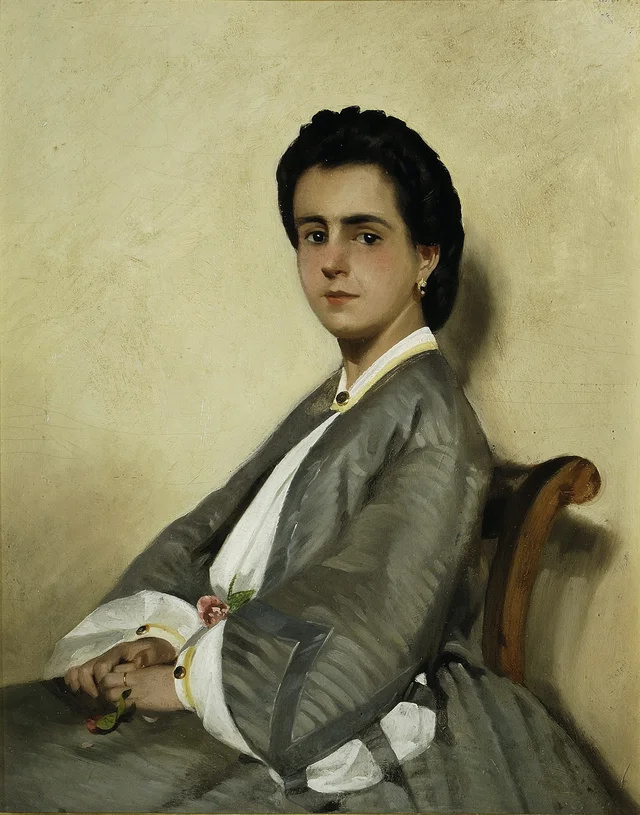 Cousin ArgiaGiovanni Fattori, 1861
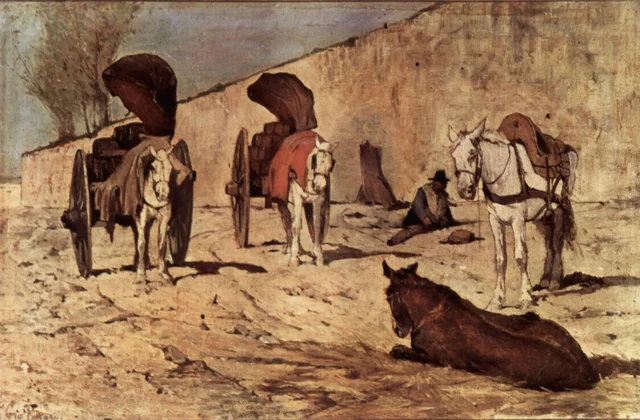 Roman cartsGiovanni Fattori, 1872
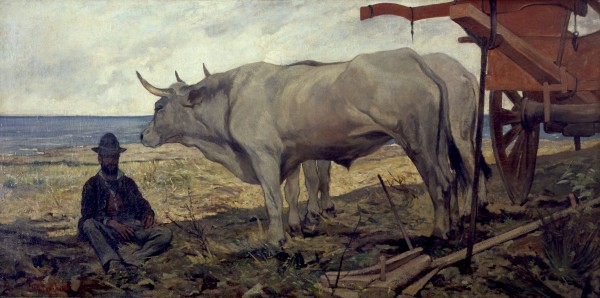 The restGiovanni Fattori, 1887
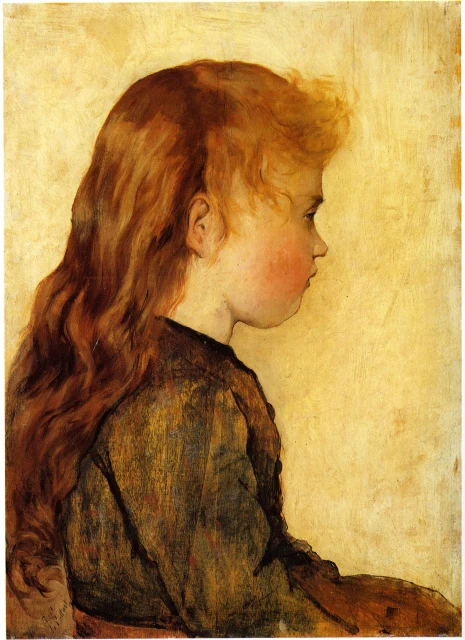 Little Red CheeksGiovanni Fattori, 1882
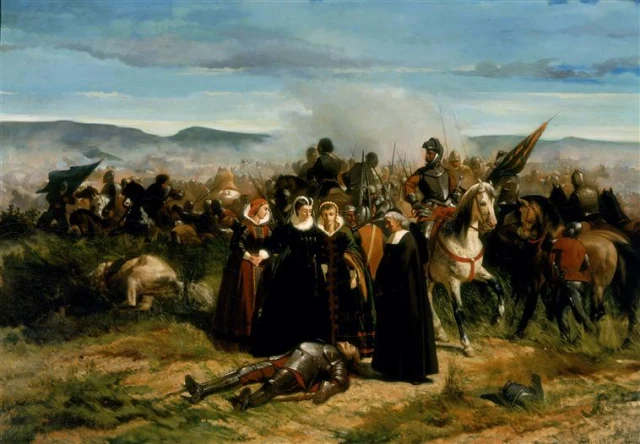 Mary Stuart at the Camp of CrookstoneGiovanni Fattori, 1861
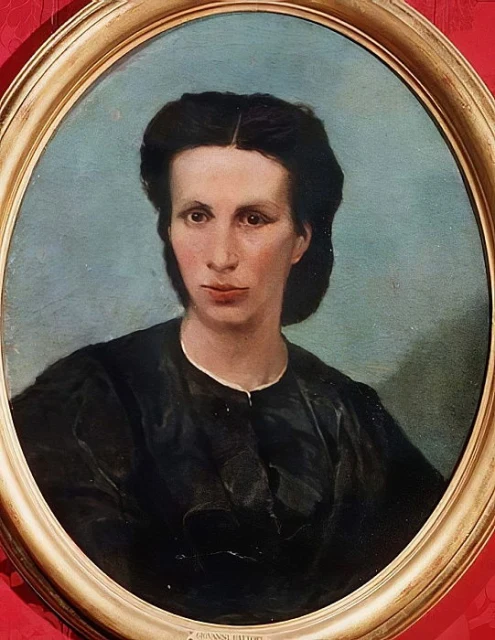 Portrait of Signora BiliottiGiovanni Fattori, 1865
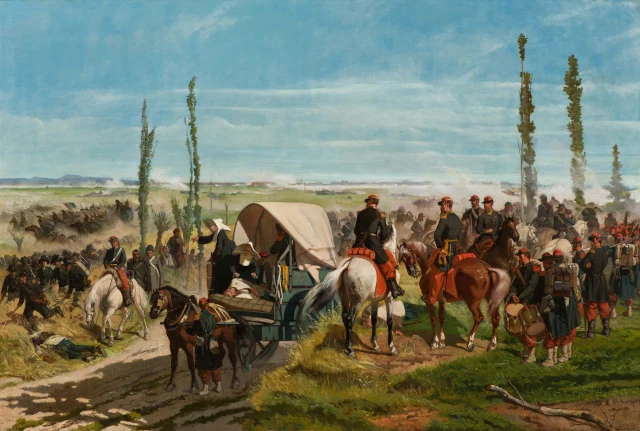 The Italian Camp after the Battle of MagentaGiovanni Fattori, 1862
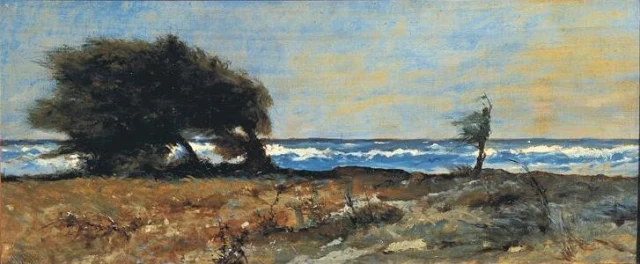 The LibecciataGiovanni Fattori, 1882
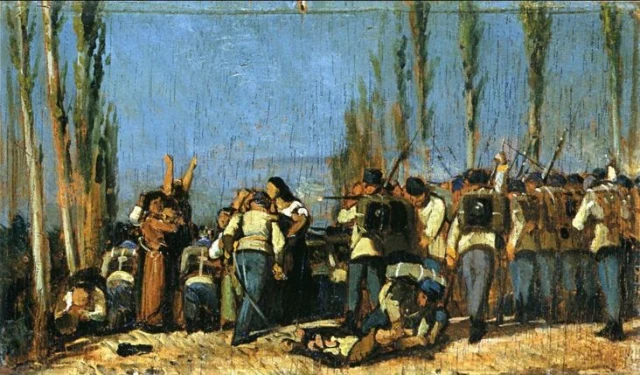 The Massacres of MantuaGiovanni Fattori, 1859