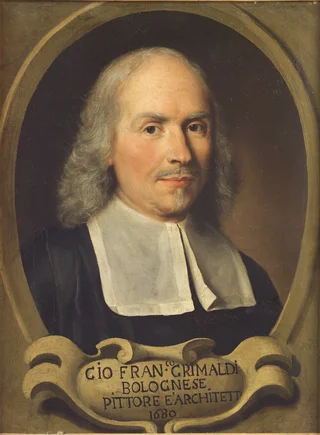
Giovanni Francesco Grimaldi
1606–1680 · Papal States · Baroque, Classical landscape painting
The story
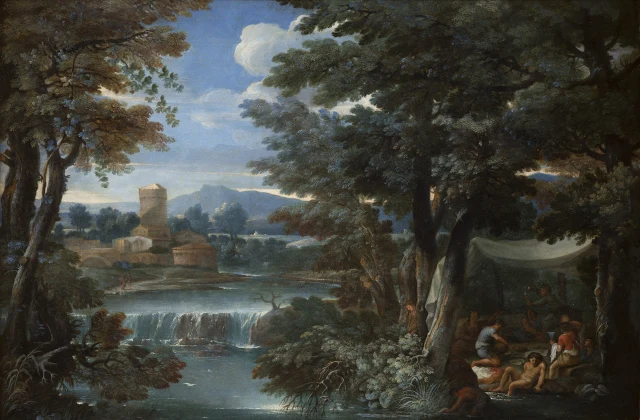
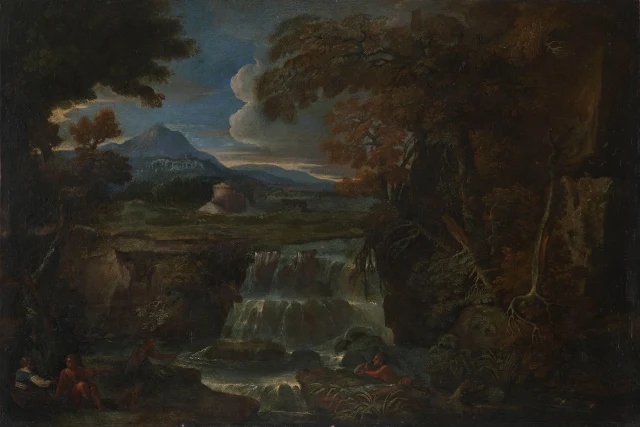
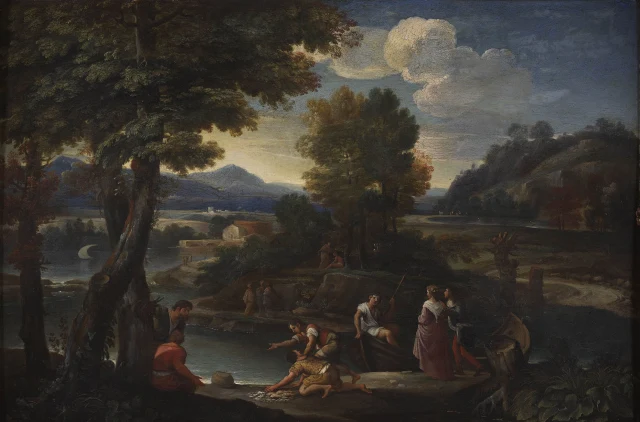
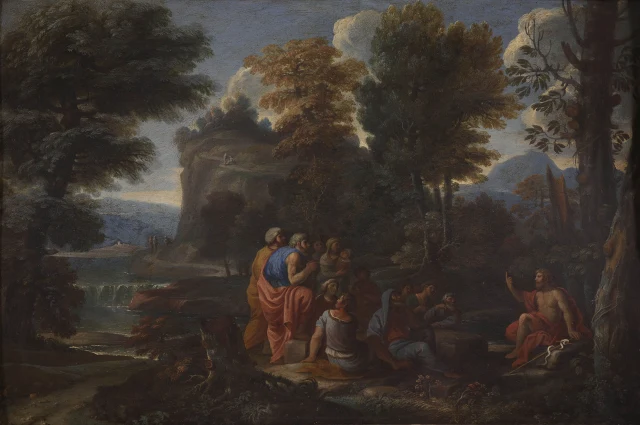
In 1678, two years before he died, Giovanni Francesco Grimaldi was paid 926 scudi by Prince Giovan Battista Borghese for a group of paintings made while the family palace by the Tiber, the Palazzo Borghese at Ripetta, was being refitted. Four of them are now at the Galleria Borghese, small landscapes on copper with a waterfall, with fishermen, with a scene under a tent and with Saint John the Baptist preaching. Grimaldi painted comparatively few easel pictures, most of his work being frescoes, so the set carries unusual weight.
He was born in Bologna in 1606, trained in the orbit of the Carracci, the family of painters who reshaped Bolognese art, and moved to Rome around 1626. There he carried on the ideal landscape of Annibale Carracci and Domenichino, with ordered trees, water and small figures. He was also an architect and etched 57 landscape prints. In 1649 Cardinal Mazarin brought him to Paris to work on his palace and at the Louvre, and in 1666 the Accademia di San Luca, Rome's painters' academy, elected him its head. The waterfall copper, with bare roots at the water's edge, shows the more romantic turn of his last years.