Giovanni Mochi
1831–1892 · Grand Duchy of Tuscany, Kingdom of Italy · Academic art, Realism
The story
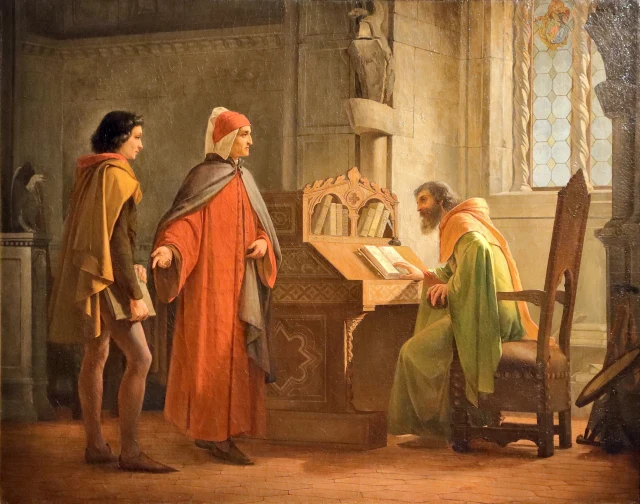
In July 1875 in Paris, Chile's minister there, the novelist Alberto Blest Gana, signed a contract with a Florentine painter in his forties to go and run a painting school in Santiago. Giovanni Mochi had trained at the Accademia in Florence and shown history pictures in the city through the 1850s, the 1855 Dante presenting Giotto among them, and he had exhibited at the Paris Salons through the 1860s, staying on after the Franco-Prussian war of 1870. He sailed the following year, and in Chile he became Juan Mochi.
He was the third head of the Academia de Pintura and the last foreigner to hold the post, and his contract was renewed six times. He put students in front of the model and the life around them, and the painters who came through his studio — Alfredo Valenzuela Puelma, Alberto Valenzuela Llanos, Juan Francisco González, and the sisters Aurora and Magdalena Mira — are the generation Chilean writing calls its great masters. His own work went local too. Campesinos chilenos, two riders on a road under the mountains, hangs today in the national fine arts museum in Santiago, the institution he was appointed to run in 1880, when it opened in the upper rooms of the Congress building as a museum of paintings. He stayed in that post until 1887 and taught until 1891.
He died in Santiago in 1892. When he was born is still open: 1827, 1829 and 1831 all appear in print, and a 2023 study that worked through both the Italian and the Chilean archives found nothing decisive. The catalogue sheet in Florence for the Dante painting closes his dates with "post 1892".