Giulio Aristide Sartorio
1860–1932 · Kingdom of Italy · Romanticism, Byzantine Revival, Symbolism, Realism, Art Nouveau
The story
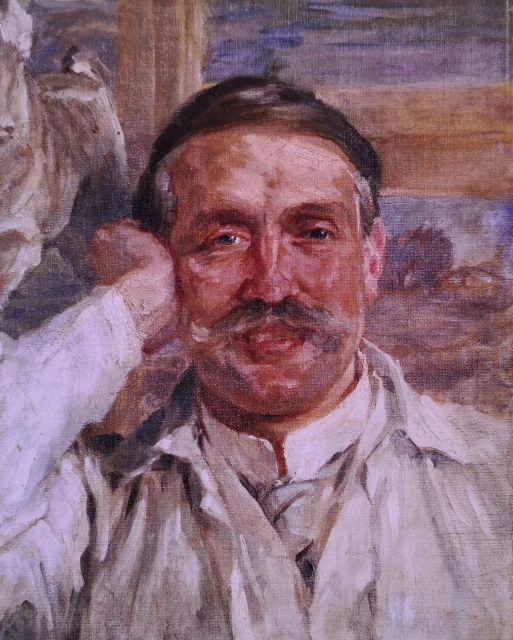
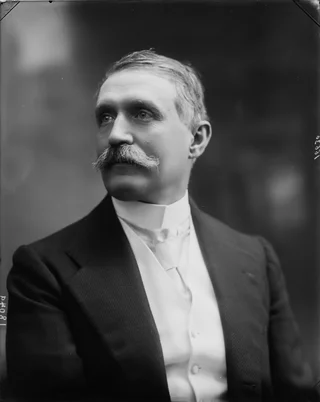
Rome in the 1880s was full of young men trying to be both artists and legends, and Giulio Aristide Sartorio fit right in. He trained at the city's fine-arts institute, then fell in with the poet Gabriele D'Annunzio, a friend whose taste for myth and grandeur ran straight into Sartorio's own work. His pictures filled with Symbolist dream-figures, a Gorgon among fallen heroes, Diana of Ephesus ringed by slaves, the dense literary allegory that won him a gold medal in Paris in 1889 and, a few years later, a teaching post at the art academy in Weimar, in Germany.
His great public commission came at home. Between 1908 and 1912 he painted an enormous frieze around the chamber of Palazzo Montecitorio, the seat of Italy's parliament in Rome, a running band of allegorical figures meant to sum up the nation. Then, in 1919, he did something few painters of his standing tried: he directed a feature film, Il mistero di Galatea, and cast his own wife in the lead.
The First World War had marked him first. He served, was wounded, and afterwards spent the 1920s travelling as far as Japan and Latin America. He died in Rome in 1932, by then a member of the Royal Academy of Italy. The Montecitorio frieze remains in place, running above the seats where Italy's deputies still sit.