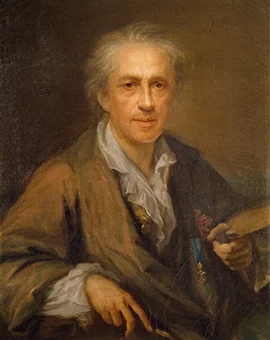
Giuseppe Bonito
1707–1789 · Kingdom of Naples · Baroque
The story
Naples in the early 1700s had one dominant painter, Francesco Solimena, whose vast studio turned out much of the city's religious and decorative work. Giuseppe Bonito trained there, and for a while his pictures are hard to tell from the master's, the same grand Baroque figures, the same warm shadow.
What set Bonito apart was a second, plainer subject. Alongside the altarpieces he painted ordinary Neapolitan street life: hawkers, beggars, and characters lifted from the commedia dell'arte, the masked comic theatre of the day. Those genre scenes, full of local detail, are what many people remember him for now.
The Bourbon court noticed the man who could do both. From the 1730s he worked for the royal household at the Palace of Portici, near Naples, and in 1751 he was made official painter to the king. He portrayed the royal children and the queen, Maria Amalia of Saxony, was elected the next year to the academy of Saint Luke in Rome, and ended his career running the drawing academy in Naples, where he died in 1789.