Guido Cagnacci
1601–1663 · Papal States · Baroque, Bolognese School
The story
In 1628 Guido Cagnacci tried to elope with Teodora Stivivi, a widow from a noble family of Rimini. The attempt collapsed, he abandoned her and got out of the city ahead of the authorities, and in a small town where the customers were churches and confraternities the scandal trailed his career for years.
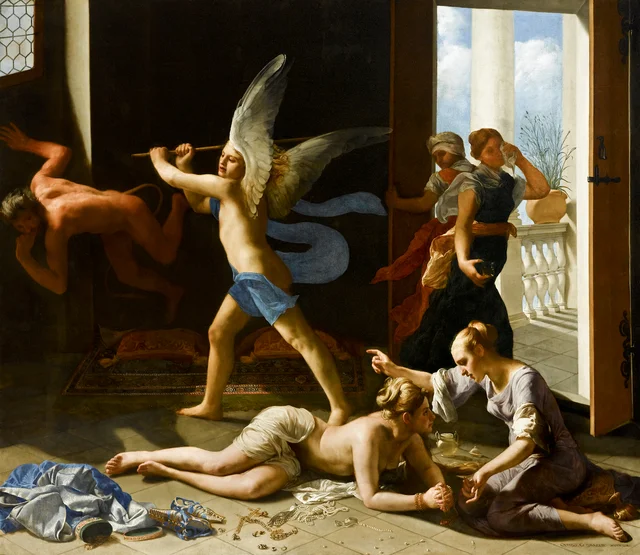
He was a tanner's son from Santarcangelo di Romagna, born in 1601, sent to Bologna in 1617 to learn painting and in Rome not long after, where he came among the followers of Caravaggio and kept their hard light for the rest of his life. He painted altarpieces around Rimini into the 1640s, then moved to Forlì and frescoed the chapel of the Madonna del Fuoco in its cathedral.
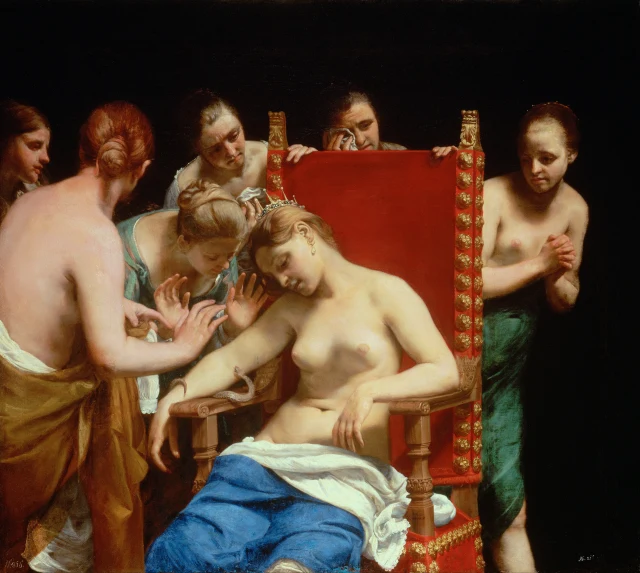
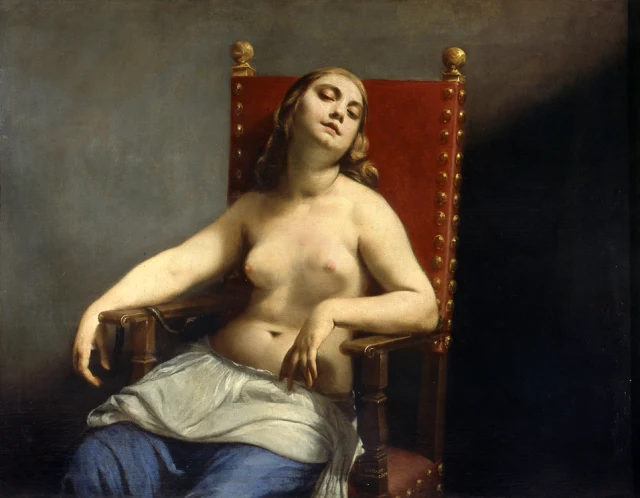
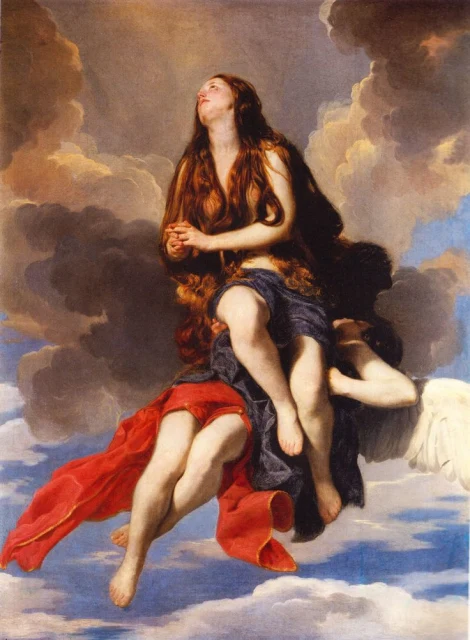
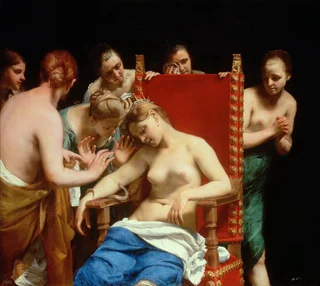
Around 1649 he went to Venice and began calling himself Guido Baldo Canlassi da Bologna. The new name came with new work. He largely left off church commissions and painted half-length women for private rooms, Lucretia, Cleopatra, the Magdalene, sold to collectors and carried further by engravings. In 1658 he travelled to Vienna, worked for the emperor Leopold I, and died there in 1663.
Little attention came his way for most of the next three centuries. An exhibition of 17th-century Bolognese painting held in Bologna in 1959 brought his canvases back together, and the monographs and one-man shows all date from after that.