Guido of Siena
Republic of Siena · Sienese school
The story
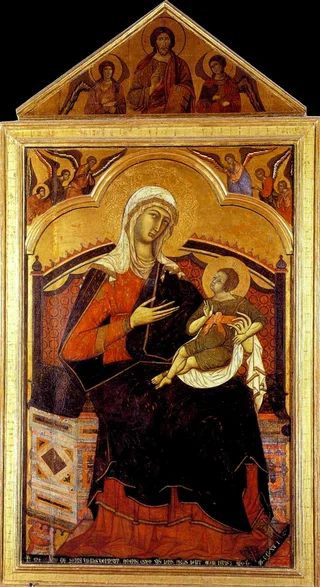
In the church of San Domenico in Siena there was a large panel of the Virgin and Child enthroned, carrying a rhymed Latin inscription that names its painter, Guido de Senis, Guido of Siena, and gives a date of 1221. Almost everything said about Guido starts from that one line, because signed and dated panels this early are very rare.
The trouble is the date. From the way the figures are drawn, most scholars place the picture in the 1270s, and some argue the 1221 was added later, when the panel was partly repainted around 1300. The faces of the Virgin and Child were scraped and redone in that later campaign, in the softer manner of Duccio, the painter who would soon define Sienese art, so what survives of Guido's own hand is mostly the rest.
Whether the inscription is honest or a later flourish, Guido is usually counted as the first real personality of the Sienese school, the tradition of glowing, Byzantine-tinged painting that Siena would carry for two centuries. The panel now hangs in the Palazzo Pubblico, the old town hall of Siena.