Gwen John
1876–1939 · United Kingdom · Modernism, Post-Impressionism
The story
Gwen John spent much of her life defined by other people's fame. She was the sister of Augustus John, the flamboyant star of British art in his day, and for years in Paris she earned her living as an artist's model, most famously for the sculptor Auguste Rodin, who became her lover in a long and consuming affair.
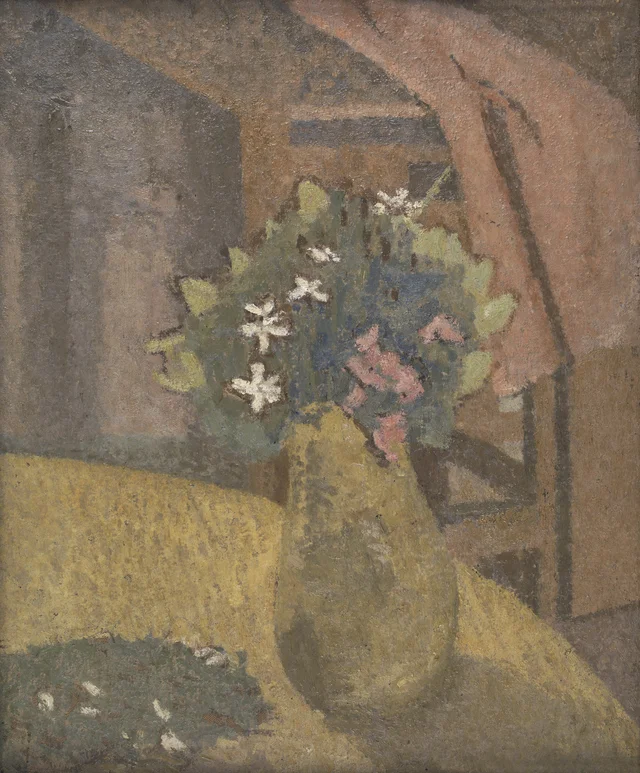
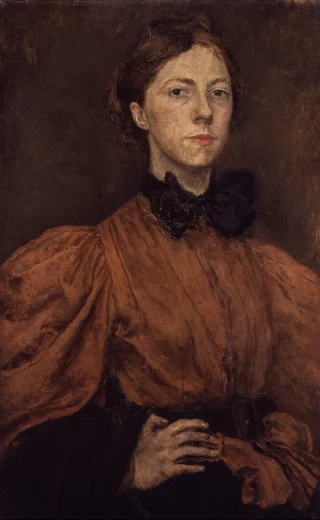
Her own painting went the opposite way from all that noise. Trained at the Slade School in London and then briefly by the American painter Whistler in Paris, she made small, still interiors and quiet portraits of anonymous women, worked out in narrow bands of grey, brown and dusty pink, often the same seated figure returned to again and again. She settled in France in 1904, became a Catholic in 1913, and drew steadily into a solitary life at Meudon on the edge of Paris.
She died in 1939 at Dieppe, having crossed to the coast as war broke out, and left behind a large body of work barely shown in her lifetime. Her brother Augustus, the celebrated one, had already made the prediction that came true: that he would be remembered as the brother of Gwen John.